BAGHDAD: Despite the recapture of swathes of territory from Daesh, the conflicts in Iraq and Syria are far from over as their governments face major political challenges, experts warn.
In July, the terrorists lost control of Iraq’s second city Mosul in a major setback three years after declaring a “caliphate” straddling the two countries.
Across the border around half of Daesh’s de facto Syrian capital Raqqa has been retaken by US-backed fighters.
But divisions across political, religious and ethnic lines will again rise to the surface in Iraq after the extremist group is driven out of its last bastions, said Mathieu Guidere, an expert on terrorist organizations.
A month before Iraq declared the liberation of Mosul, the country’s autonomous Kurdish region announced plans to proceed with a referendum on statehood in September.
The idea was not new but its timing was criticized by Baghdad, which opposes Kurdish independence, and by Washington, coming as it did with the anti-Daesh campaign still unfinished.
Analysts said the referendum is one of the many challenges facing the Iraq government along with the presence of a Shiite paramilitary force in Sunni-majority areas and the fate of minorities such as the Yazidis.
How the government deals with these thorny issues will determine whether it succeeds in a post-IS era, experts said.
The terrorist group “is the illustration — violent, long and complex — of the dystrophy that reigns in Iraq,” said Mohammad-Mahmoud Ould Mohamedou, professor of international history at Geneva’s Graduate Institue.
Ould Mohamedou advocates a “new national covenant” for Iraq that would allow the Shiite-dominated government to gain the trust of the Sunni population and other minorities, particularly in the northern Mosul region.
At the same time the government will also have to skilfully deal with the paramilitary Hashed Al-Shaabi umbrella organization which is dominated by Iran-backed Shiite militias.
Some of the components within Hashed Al-Shaabi, which battled Daesh in Iraq, have for years been sending fighters to support the Syrian regime in its conflict with various rebel groups.
Even as leaders in both Iraq and Syria savour the setbacks inflicted by their forces on Daesh, they still need to examine the reasons that led to the formidable rise of the jihadist group.
After declaring “victory over brutality and terrorism” in Mosul, Iraqi Prime Minister Haider Al-Abadi said there were “lessons to be learned” to ensure his country never again falls into the grip of Daesh.
“Huge mistakes have been made,” he said.
Syrian President Bashar Assad also faces huge challenges in the country’s multi-sided war, despite his forces being backed by allies Russia, Iran and the Lebanese Shiite movement Hezbollah in the battle against terrorists and rebels.
Daesh is steadily losing chunks of Raqqa to the Syrian Democratic Forces (SDF), a US-backed Arab-Kurdish alliance which broke into the northern city in June.
A Russian-backed government offensive has also targeted IS forces in the central Syrian desert.
Analysts said that if Raqqa falls, the Kurdish fighters that dominate the SDF could clash with regime troops.
Assad “does not want an autonomous administration” taking control of Raqqa, said Syria expert and geographer Fabrice Balanche.
Ould Mohamedou said the war in Syria “goes beyond the question of Daesh,” having erupted six years ago with peaceful anti-government protests that were brutally put down by the regime.
“In the name of the fight against terrorism, more and more Western governments have closed their eyes to the massacres perpetrated by the Syrian regime,” he said.
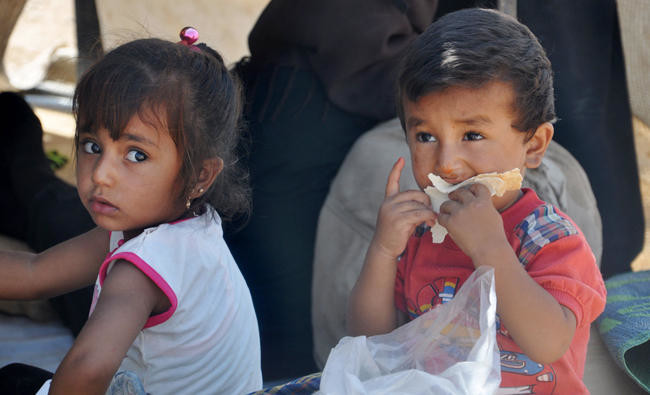
The war in Syria has killed hundreds of thousands of people while millions more have been displaced in the two countries.
Rebuilding infrastructure and restoring stability to allow the displaced to return home will be a massive challenge.
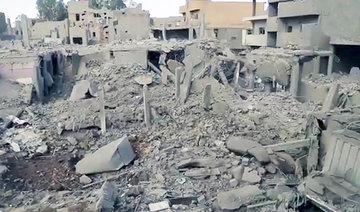
The UN has said the level of destruction in Mosul alone is one of the largest and most complex challenges it has faced.
Unless all these challenges are tackled, Daesh terrorists driven out of territory in Syria and Iraq could re-emerge as a more brutal and formidable force.
For Daesh “the key words now are reorganization and redeployment,” said Guidere.
Ould Mohamedou said that even if IS is defeated in Syria and Iraq “it will bounce back elsewhere and... with a new look.”


Conflicts in Syria, Iraq far from over despite Daesh setbacks
Conflicts in Syria, Iraq far from over despite Daesh setbacks


Ankara city hall says water cuts due to ‘record drought’
- Dam reservoir levels have dropped to 1.12 percent and taps are being shut off for several hours a day in certain districts on a rotating schedule in Ankara
ANKARA: Water cuts for the past several weeks in Turkiye’s capital were due to the worst drought in 50 years and an exploding population, a municipal official told AFP, rejecting accusations of mismanagement.
Dam reservoir levels have dropped to 1.12 percent and taps are being shut off for several hours a day in certain districts on a rotating schedule in Ankara, forcing many residents to line up at public fountains to fill pitchers.
“2025 was a record year in terms of drought. The amount of water feeding the dams fell to historically low levels, to 182 million cubic meters in 2025, compared with 400 to 600 million cubic meters in previous years. This is the driest period in the last 50 years,” said Memduh Akcay, director general of the Ankara municipal water authority.
Turkish President Recep Tayyip Erdogan has called the Ankara municipal authorities, led by the main opposition party, “incompetent.”
Rejecting this criticism, the city hall says Ankara is suffering from the effects of climate change and a growing population, which has doubled since the 1990s to nearly six million inhabitants.
“In addition to reduced precipitation, the irregularity of rainfall patterns, the decline in snowfall, and the rapid conversion of precipitation into runoff (due to urbanization) prevent the dams from refilling effectively,” Akcay said.
A new pumping system drawing water from below the required level in dams will ensure no water cuts this weekend, Ankara’s city hall said, but added that the problem would persist in the absence of sufficient rainfall.
Much of Turkiye experienced a historic drought in 2025. The municipality of Izmir, the country’s third-largest city on the Aegean coast, has imposed daily water cuts since last summer.