Pakistan says Iraq expressed ‘keen interest’ in JF-17 jets at air chiefs meeting

Pakistan’s Air Chief Marshal Zaheer Ahmed Baber Sidhu meets Commander of the Iraqi Air Force Lt. Gen. Staff Pilot Mohanad Ghalib Mohammed Radi Al-Asadi (right) in Iraq, on January 10, 2026. (ISPR)
Short Url
Updated 10 January 2026
Follow

Pakistan says Iraq expressed ‘keen interest’ in JF-17 jets at air chiefs meeting

  • Pakistan’s defense sector has drawn growing interest and investment since a four-day standoff with India in May last year
  • Many countries have since increased defense engagement, while multiple others have proposed learning from Pakistan’s expertise

ISLAMABAD: Pakistan’s military said on Saturday that Iraq had shown “keen interest” in its JF-17 Thunder and Super Mushshak aircraft at a meeting between chiefs of the two air forces.

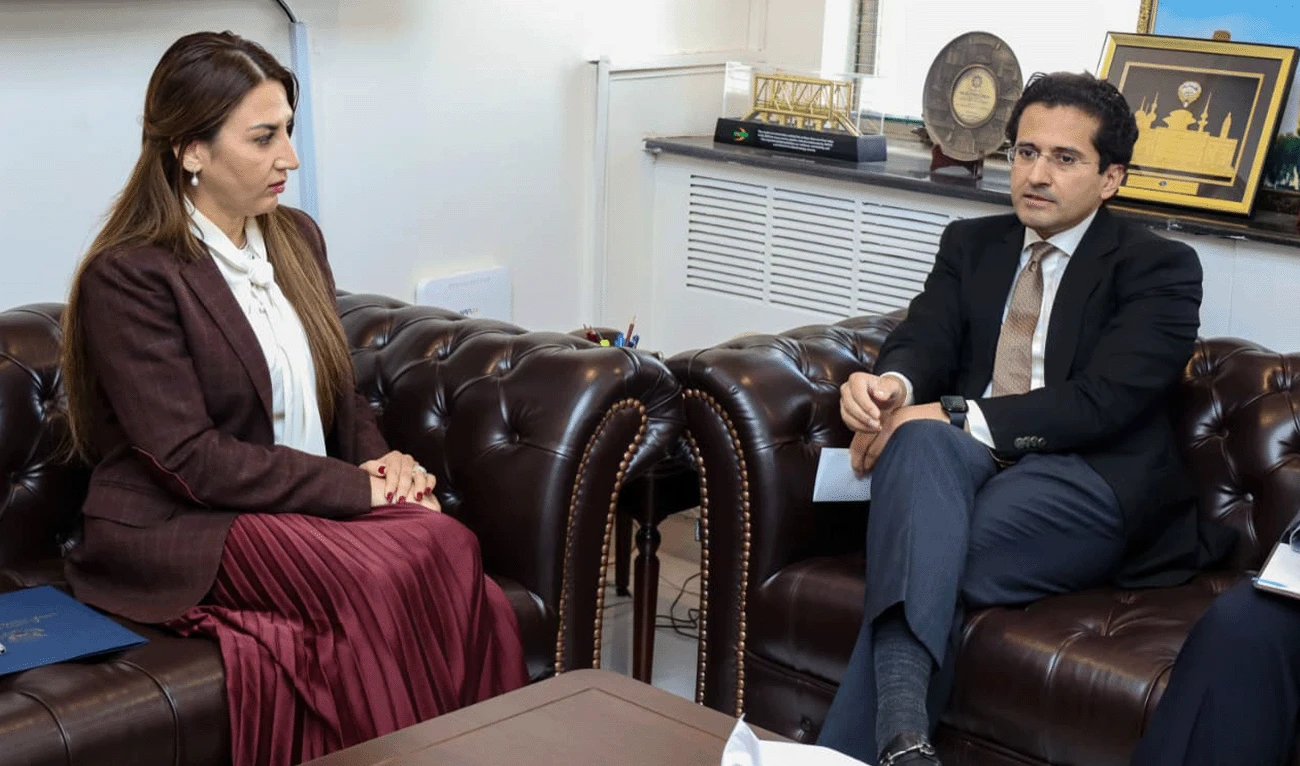
Pakistan’s Air Chief Marshal Zaheer Ahmed Baber Sidhu called on Lt. Gen. Staff Pilot Mohanad Ghalib Mohammed Radi Al-Asadi, commander of the Iraqi Air Force, during his official visit to Iraq.

The Pakistani air chief was accorded a guard of honor at the Iraqi Air Force headquarters, symbolizing the strong bond of mutual respect, according to the Inter-Services Public Relations (ISPR), the Pakistani military’s media wing.

“Discussions focused on enhancing bilateral military cooperation, with emphasis on joint training, capacity-building and improving operational cooperation,” the ISPR said.

“The Iraqi Air Chief praised PAF’s professionalism and technological advancement, expressed interest in benefiting from PAF’s world-class training and expressed keen interest in JF-17 Thunder fighter jets, Super Mushshak trainer aircraft.”

Pakistan’s defense sector has drawn growing interest and investment, particularly since a four-day India-Pakistan military standoff in May last year. Islamabad claimed victory in the standoff, saying it had shot down six Indian aircraft, including French-made Rafale jets. India acknowledged losses but did not specify a number.

Many countries have since stepped up defense engagement with Pakistan, while delegations from multiple other nations have proposed learning from Pakistan Air Force’s multi-domain air warfare capabilities that successfully demonstrated how advanced Chinese military technology performs against Western hardware.

Pakistan markets the Chinese co-developed JF-17 as a lower-cost multi-role fighter and has positioned itself as a supplier able to offer aircraft, training and maintenance outside Western supply chains.

Islamabad is in the final phases of striking a $1.5-billion deal to supply weapons and jets to Sudan in a major boost for Sudan’s army that has been battling the paramilitary Rapid Support Forces, Reuters reported this week, citing a former top air force official and three sources.

The South Asian country reached a deal worth over $4 billion to sell military equipment to the Libyan National Army, Reuters report last month, citing Pakistani officials. The deal, one of Pakistan’s largest-ever weapons sales, included the sale of 16 JF-17 fighter jets and 12 Super Mushshak trainer aircraft for basic pilot training.
Pakistan, China to sign multiple MoUs at major agriculture investment conference today

Updated 18 January 2026
Follow

Pakistan, China to sign multiple MoUs at major agriculture investment conference today

  • Hundreds of Chinese and Pakistani firms to attend Islamabad event
  • Conference seen as part of expanding CPEC ties into agriculture, trade

KARACHI: Islamabad and Beijing are set to sign multiple memorandums of understanding (MoUs) to boost agricultural investment and cooperation at a major conference taking place in the capital today, Monday, with hundreds of Chinese and Pakistani companies expected to participate.

The conference is being billed by Pakistan’s Ministry of National Food Security and Research as a platform for deepening bilateral agricultural ties and supporting broader economic engagement between the two countries.

“Multiple memorandums of understanding will be signed at the Pakistan–China Agricultural Conference,” the Ministry of National Food Security said in a statement. “115 Chinese and 165 Pakistani companies will participate.”

The conference reflects a growing emphasis on expanding Pakistan-China economic cooperation beyond the transport and energy foundations of the flagship China-Pakistan Economic Corridor (CPEC) into agriculture, industry and technology.

Under its first phase launched in 2015, CPEC, a core component of China’s Belt and Road Initiative, focused primarily on transportation infrastructure, energy generation and connectivity projects linking western China to the Arabian Sea via Pakistan. That phase included motorways, power plants and the development of the Gwadar Port in the country's southwest, aimed at helping Pakistan address chronic power shortages and enhance transport connectivity.

In recent years, both governments have formally moved toward a “CPEC 2.0” phase aimed at diversifying the corridor’s impact into areas such as special economic zones, innovation, digital cooperation and agriculture. Second-phase discussions have highlighted Pakistan’s goal of modernizing its agricultural sector, attracting Chinese technology and investment, and boosting export potential, with high-level talks taking place between planning officials and investors in Beijing.

Agri-sector cooperation has also seen practical collaboration, with joint initiatives examining technology transfer, export protocols and value-chain development, including partnerships in livestock, mechanization and horticulture.

Organizers say the Islamabad conference will bring together government policymakers, private sector investors, industry associations and multinational agribusiness firms from both nations. Discussions will center on investment opportunities, technology adoption, export expansion and building linkages with global buyers within the framework of Pakistan-China economic cooperation.