JEDDAH: The Saudi Interior Ministry confirmed on Monday that three men from a list of 23 wanted terrorists have surrendered to security forces.
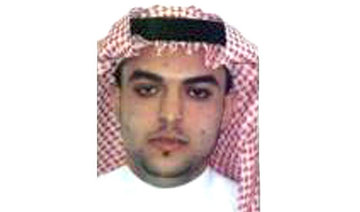
Ministry spokesman Maj. Gen. Mansour Al-Turki said that Ali H. Al-Zaid, Ramzi M. Al-Jammal and Mohammed Al-Lubbad, all Saudi citizens, gave themselves up to the security authorities.
Al-Turki said their voluntary surrender would be taken into consideration, and that they will be treated according to the laws in force.
It emerged on Sunday that two of the men had surrendered in Qatif in eastern Saudi Arabia, with confirmation of a third man having given himself up coming later.
The ministry warned of grave consequences for anyone sheltering, hiding or offering any kind of assistance to wanted criminals.
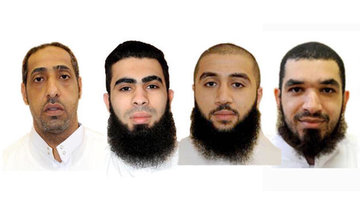
Only three fugitives are still at large from a list of 23 terrorists issued in 2012. They are Salman A. Al-Faraj, Fadel H. Al-Safwani, and Mohammed H. Al-Zaid.
The ministry had already renewed its call to the rest of the wanted fugitives to surrender, and called upon anyone with information about them to inform the authorities.
Sheikh Mohammed Al-Ebidan, former judge in the Court of Endowments and Inheritance in Qatif, called upon terrorist groups to give themselves up, refrain from carrying weapons, and answer the call of Eastern Province Gov. Prince Saud bin Naif.
Prince Saud told Al Arabiya News Channel earlier: “My message to those is to let this country remain stable and in peace. Enough with the innocent blood they have shed so far. I call upon them to give themselves up to the responsible authorities, and, God willing, they will see nothing but good matters.”
Sheikh Mohammed Al-Ebidan stressed that “terrorism and terrorists are a cancerous gland our secure country has been infected with.”
Concerning the damage terrorists brought upon Qatif and its people, Sheikh Mohammed said: “We all know the extent of harm which has been brought upon this area due to carrying weapons, resisting security forces, killing innocent people, and the adverse effects caused by such behavior. All this necessitated a strong and serious stance to put an end to the bloodshed, especially since this has drawn the region to unwanted miseries, and it may draw it in the future to other calamities.”
Sheikh Ebidan called for “the return of that spirit which existed, and still exists, among the people of Qatif, who strongly want peace.”


3 wanted terrorists surrender in Qatif: Saudi interior ministry

3 wanted terrorists surrender in Qatif: Saudi interior ministry


Saudi Arabia’s KAUST named FIFA’s first research institute in MENA
- KAUST President Prof. Sir Edward Byrne said that the university’s selection as the fifth FIFA Research Institute in the world — and the first in the region — marks a significant achievement, reflecting Kingdom’s growing presence in international football
RIYADH: FIFA has designated the King Abdullah University of Science and Technology as its first research institute in the Middle East and Asia to support the development of innovative football research, the Saudi Press Agency reported on Tuesday.
The recognition highlights KAUST’s commitment to integrating sports, academic research and industry through advanced, high-level initiatives grounded in rigorous scientific methodologies, contributing to the advancement of football studies.
KAUST President Prof. Sir Edward Byrne said that the university’s selection as the fifth FIFA Research Institute in the world — and the first in the region — marks a significant achievement, reflecting Saudi Arabia’s growing presence in international football.
The accreditation aligns with national efforts to invest in research and development and promote the knowledge economy, supporting Saudi Vision 2030’s goals of building an advanced sports system based on innovation and sustainability.
The collaboration’s first project focuses on developing advanced AI algorithms to analyze historical FIFA World Cup broadcast footage, transforming decades of match videos into structured, searchable data, according to the KAUST website.
This work opens new opportunities to apply state-of-the-art computer vision techniques and deepen understanding of how football has evolved over time.
The second project uses player and ball tracking data from the FIFA World Cup 2022 in Qatar and the FIFA Women’s World Cup 2023 in Australia and New Zealand to compile comprehensive datasets capturing in-game dynamics.
These datasets provide deeper insights into human movement, playing techniques and performance dynamics through AI-driven analysis.


