NEW YORK: US index provider MSCI said on Tuesday it will add mainland Chinese stocks to one of its key benchmarks, in a landmark decision for the global investment landscape and the Chinese government.
MSCI decided not to add Argentina to the benchmark index and will consult on adding Saudi Arabia. Nigeria will remain a frontier market, awaiting further review.
The full inclusion of domestic Chinese stocks in the widely Tracked MSCI Emerging Markets Index could pull more than $400 billion of funds from asset managers, pension funds and insurers into mainland China’s equity markets over the next decade, according to analysts.
MSCI’s decision to give so-called Chinese “A” share the green light – after having rejected them for three years – represents a symbolic victory for the Chinese government, which has been working steadily over the past few years to open up its capital markets.
“This decision has broad support from international institutional investors with whom MSCI consulted, primarily as a result of the positive impact on the accessibility of the China A market of both the Stock Connect program and the loosening by the local Chinese stock exchanges of pre-approval requirements that can restrict the creation of index-linked investment vehicles globally,” MSCI said in a statement.
The company has been in discussions with Chinese regulators and global investors for nearly four years on whether to add yuan-denominated shares listed in Shanghai and Shenzhen to the benchmark. It had left them out because of concerns over restricted access to China’s equity markets.
In March, however, MSCI moved to relax its investment criteria by cutting the number of stocks to 169 from 448 in a bid to address curbs on repatriating capital from China and concerns over the country’s high number of suspended stocks.
The revised proposal helped address these issues because the 169 stocks can be easily accessed by foreigners through the “Stock Connect” link launched in 2014 and significantly expanded in December.
MSCI said it planned to add 222 stocks – which will have an initial weighting in the index of just 0.73 percent – and will begin a review of the “A” shares and include them in provisional indexes beginning in August.
“The initial impact on the composition of regional and global indices will be extremely modest,” said Nick Beecroft, portfolio specialist of Asian equity at T. Rowe Price in Hong Kong. “However, over the long term, assuming further liberalization and regulatory reform of the mainland stock markets, the depth of China’s A-share market could mean China gains substantial weight within those broader indices.”
Argentina’s delay on reclassification to the emerging markets index came as a surprise to investors. The country’s shares will remain in the smaller frontier markets index, where it has been since being reclassified from the emerging index in 2009.
“While Argentina was not reclassified as an Emerging Market this year, we believe the country has made significant improvements in opening the country to foreign investments,” said Jay Jacobs, director of research at Global X Funds. “Argentina has long met the threshold as an emerging market based on levels of economic development, but historically has closed itself off from global capital markets.”
Saudi Arabia in April moved to a more favorable settlement cycle for institutional investors, which had been identified as the last major impediment for official watch-list inclusion.
If it were added to the emerging markets index in 2018, Acadian Asset Management estimates the country could end up with a 2 percent to 3 percent weighting or up to 5 percent if it moves forward with plans to float state oil giant Saudi Aramco.
Nigeria’s shares will remain in the frontier index until at least November 2017, when MSCI will again address the country’s access to markets.
(Reporting by Dion Rabouin, Richard Leong in New York, and Michelle Price in Hong Kong)


![]()
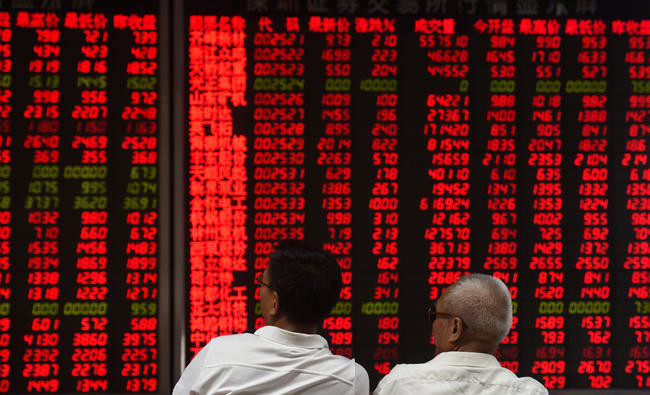
MSCI to add mainland China shares to key benchmark
MSCI to add mainland China shares to key benchmark
Latest updates





© 2026 SAUDI RESEARCH & PUBLISHING COMPANY, All Rights Reserved And subject to Terms of Use Agreement.