ABU SAMRA, QATAR-SAUDI ARABIA BORDER: Qatar’s normally bustling desert border with Saudi Arabia was deserted on Monday, with a few dozen frustrated travelers bemoaning a rift between Gulf powers that has frozen movement across Qatar’s only land border.
A week after the frontier was shut by the Saudis, soldiers in an armored pick-up truck looked out over a barbed-wire fence at sprawling empty dustland separating Qatar from Saudi Arabia.
Indian migrants who work at the border in green uniforms lay on inspection platforms sheltering from the sun.
Normally, thousands of passengers and hundreds of trucks from Saudi Arabia pass through the crossing each day, bringing fruit and vegetables, as well as construction materials for projects that include stadiums for the 2022 World Cup.
Qatar is the world’s richest country per capita, with just 2.7 million residents and income from the world’s biggest exports of liquefied natural gas (LNG). Nearly 90 percent of its population are foreign foreign workers, mostly from South Asia or poorer countries in the Middle East.
Qatar’s financial markets stabilized on Monday after a week of losses as the government showed it had ways to keep the economy running in the face of sanctions by other Gulf states.
At the land border, dozens of truck drivers had been stranded on the Qatari side. One Sri Lankan driver asked Qatari border guards if he could drive into Saudi Arabia if he agreed to leave his cargo, a tanker full of helium, behind in Qatar.
“We can do nothing,” the border guard told him. “Saudi has shut the border. There is no way to pass.”
On weekends, the land border is normally used by thousands of Saudis. A few miles from the border a vast sea-front complex with an aqua park and whitewashed villas is being built by the Hilton hotel chain for Saudi tourists.


![]()
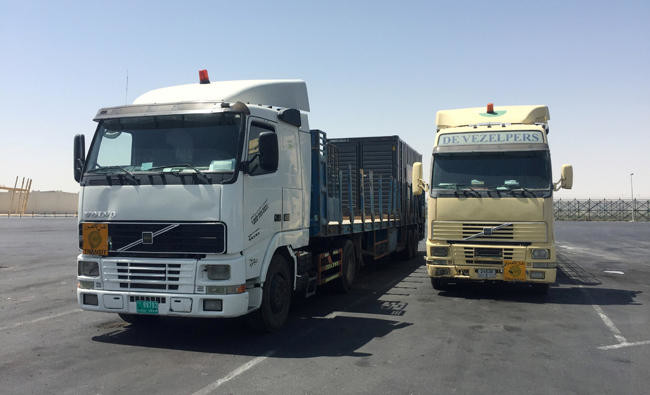
Qatar-Saudi land border deserted
Qatar-Saudi land border deserted


Latest updates





© 2026 SAUDI RESEARCH & PUBLISHING COMPANY, All Rights Reserved And subject to Terms of Use Agreement.