 AMMAN: Entrepreneurs and protesters have renewed calls for PayPal to start offering services in the Palestinian territories, saying the lack of provision is ‘discriminatory’ and hampers local startups.
The giant US online cash company does not allow anyone with a Palestinian address or bank account to register. Israelis, including settlers in the occupied territories, can easily join.
Ala Alaedine, the CEO of the technology company InterTech in Ramallah, told Arab News the absence of PayPal makes life harder for any startup.
“There are other alternatives, but they are not used globally as much as PayPal. In addition, the lack of e-banking solutions in Palestine makes PayPal more dependable.”
Zahi Khouri, CEO of Palestine’s National Beverage Co. and early-stage startup investor through the Ibtikar Fund, said: “All we want is equal access for our talented young people to bring their innovative products and ideas to the world.”
Under siege in Gaza and facing difficult political and economic situations, some Palestinians have tried to use their talents to create small one-person shops that are largely dependent on the digital economy. Without an easy and efficient pay system, however, they face a major hurdle.
PayPal claims it is not discriminating against Palestinians, although it is available in 203 countries and locations around the world.
Palestinian-American Sam Bahour, CEO of consulting firm Applied Information Management, took up the case with people in Silicon Valley.
He talked to peace activists in the US and encouraged them to do something to change this situation, which he said is hurting young Palestinian entrepreneurs.
“The message (PayPal is) indirectly sending is that they could not care less if these young people spend their time behind a keyboard or in the streets,” he explained.
Khaled Abu Al-Khair, CEO of the gaming startup PinchPoint, explained why PayPal’s entry to Palestine matters for his company: “One of PinchPoint’s best performing games is Al-Mamlaka, and over 60 percent of the players are based in Palestine. Many of them would like to purchase virtual items in the game, but are not comfortable paying through Facebook.
“Allowing these players to pay through PayPal will increase PinchPoint’s revenues from this game significantly.”
Several attempts in 2016 to get PayPal to fix the problem failed. In May this year, activists in the US and Middle East decided to escalate the campaign. On May 16, a demonstration was held outside PayPal’s headquarters in San Jose. Protestors included supporters of Jewish Voice for Peace, the Green Party, and the American Friends Service Committee. They delivered a petition, with 180,000 signatures from around the world, to PayPal executives.
Organizers said PayPal executives were very courteous but noncommittal. They assured the protest representatives that the issue was on the agenda of the company’s board.
Protestors against the policies of PayPal have spoken out against the giant online company. Civic activist Fadi Saba points out that PayPal serves illegal settlements in the occupied territories, but not Palestinians. “The Palestinian unemployment rate is 28 percent due to obstacles placed by the Israeli occupation. If PayPal is interested in a viable peace, it must allow for a viable Palestinian economy, which includes the tech industry that depends on online payment technologies.”
Nassim Nouri, council member of the Green Party of Santa Clara, wondered why PayPal would decide on such a “shameful and discriminatory practice” in the West Bank.
“PayPal is denying economic opportunity to disenfranchised Palestinians, while extending services to their Israeli neighbors. This is not an acceptable corporate practice in San Jose, so it should not be acceptable in the West Bank either,” Nouri said.
Wendy Greenfield, co-chair of South Bay Jewish Voice for Peace, questioned how PayPal would justify perpetuating a situation where its services are only available to a privileged population of Israeli settlers but not the Palestinians they live among. “The best route for PayPal would be to start outlining its plans to rectify this outrageous situation,” she said.
It is not clear what the real reason is behind the exclusion of Palestinians from PayPal’s services.
One organizer told Arab News the problem might stem from the company’s risk-management department. PayPal in 2008 bought the Israeli company Fraud Sciences for a reported $169 million and integrated its fraud-detection technology. Tomer Barel, a former Israeli army intelligence officer, has been the chief enterprise services officer and executive vice president of PayPal Holdings since January 2017.
PayPal declined to comment specifically on that issue when contacted by Arab News.
A spokesman for PayPal said: “PayPal’s ambition is for everyone to have access to our services for digital payments and commerce, in accordance with applicable regulatory requirements. We are in an ongoing dialogue with these organizations because, although we are not currently providing services in the Palestinian territories, we hope ultimately to be able to address the risk, compliance, regulatory and resource allocation issues to properly serve customers in this region and other nations where PayPal is not yet present.
“While we do not have anything to announce for the immediate future, we continuously work to develop strategic partnerships, address business feasibility, regulatory, and compliance needs and requirements, and acquire the necessary local authority permissions for new market entries.”


![]()
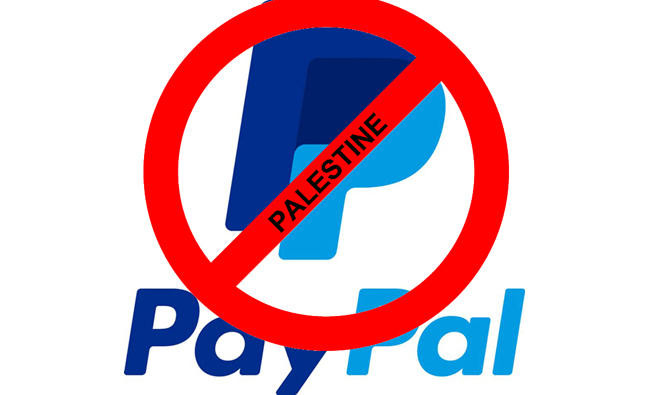
Criticism mounts over PayPal’s ‘discrimination’ against Palestinians
Criticism mounts over PayPal’s ‘discrimination’ against Palestinians
Latest updates


© 2026 SAUDI RESEARCH & PUBLISHING COMPANY, All Rights Reserved And subject to Terms of Use Agreement.