Terror list: 59 individuals and 12 Qatari-affiliated entities as listed in the Saudi, UAE, Bahraini, Egyptian statement

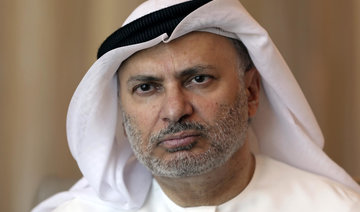
Yusuf Qaradawi
Updated 09 June 2017
Follow

Terror list: 59 individuals and 12 Qatari-affiliated entities as listed in the Saudi, UAE, Bahraini, Egyptian statement

JEDDAH: A joint statement by the governments of Saudi Arabia, UAE, Bahrain and Egypt have listed 59 individuals and 12 Qatari-affiliated entities on a combined list of what they described as "terrorist supporters."  


The joint statement said that the list was written as a result of "Qatar’s actions in contravention of its commitments include supporting and harboring elements and organizations that threaten the National security of other states." 


It added that Doha repeatedly ignored "calls for the fulfillment of its obligations under the Riyadh Agreement of 2013 and its associated Implementation Mechanisms, and in addition the Comprehensive Agreement of 2014"


The statement said that the majority of entities sanctioned are "linked to Qatar and are a manifestation of a Qatari government policy of duplicity.  One that calls for combating terrorism, whilst simultaneously overseeing the financing, supporting and harboring a vast array of terrorist groups and terrorist financing networks". 


List of designated individuals:


1. Khalifa Mohammed Turki al-Subaie - Qatari

2. Abdelmalek Mohammed Yousef Abdel Salam - Jordanian

3. Ashraf Mohammed Yusuf Othman Abdel Salam - Jordanian

4. Ibrahim Eissa Al-Hajji Mohammed Al-Baker - Qatari

5. Abdulaziz bin Khalifa al-Attiyah - Qatari

6. Salem Hassan Khalifa Rashid al-Kuwari - Qatari

7. Abdullah Ghanem Muslim al-Khawar - Qatari

8. Saad bin Saad Mohammed al-Kaabi - Qatari

9. Abdullatif bin Abdullah al-Kuwari - Qatari

10. Mohammed Saeed Bin Helwan al-Sakhtari - Qatari

11. Abdul Rahman bin Omair al-Nuaimi - Qatari

12. Abdul Wahab Mohammed Abdul Rahman al-Hmeikani - Yemeni

13. Khalifa bin Mohammed al-Rabban - Qatari

14. Abdullah Bin Khalid al-Thani - Qatari

15. Abdul Rahim Ahmad al-Haram - Qatari 

16. Hajjaj bin Fahad Hajjaj Mohammed al-Ajmi - Kuwaiti

17. Mubarak Mohammed al-Ajji - Qatari

18. Jaber bin Nasser al-Marri - Qatari

19. Yusuf Abdullah al-Qaradawi - Egyptian

20. Mohammed Jassim al-Sulaiti - Qatari

21. Ali bin Abdullah al-Suwaidi - Qatari

22. Hashem Saleh Abdullah al-Awadhi - Qatari

23. Ali Mohammed Mohammed al-Salabi - Libyan

24. Abdelhakim Belhadj - Libyan

25. Mahdi Harati - Libyan

26. Ismail Muhammad Mohammed al-Salabi - Libyan

27. Al-Sadiq Abdulrahman Ali al-Ghuraini - Libyan

28. Hamad Abdullah Al-Futtais al-Marri - Qatar

29. Mohamed Ahmed Shawky Islambouli - Egyptian

30. Tariq Abdelmagoud Ibrahim al-Zomor - Egyptian

31. Mohamed Abdelmaksoud Mohamed Afifi - Egyptian

32. Mohamed el-Saghir Abdel Rahim Mohamed - Egyptian

33. Wajdi Abdelhamid Mohamed Ghoneim - Egyptian

34. Hassan Ahmed Hassan Mohammed Al Dokki Al Houti - UAE

35. Hakem al-Humaidi al-Mutairi - Saudi / Kuwaiti

36. Abdullah Mohammed Sulaiman al-Moheiseni - Saudi

37. Hamed Abdullah Ahmed al-Ali - Kuwaiti

38. Ayman Ahmed Abdel Ghani Hassanein - Egyptian

39. Assem Abdel-Maged Mohamed Madi - Egyptian

40. Yahya Aqil Salman Aqeel - Egyptian

41. Mohamed Hamada el-Sayed Ibrahim - Egyptian

42. Abdel Rahman Mohamed Shokry Abdel Rahman - Egyptian

43. Hussein Mohamed Reza Ibrahim Youssef - Egyptian

44. Ahmed Abdelhafif Mahmoud Abdelhady - Egyptian

45. Muslim Fouad Tafran - Egyptian

46. Ayman Mahmoud Sadeq Rifat - Egyptian

47. Mohamed Saad Abdel-Naim Ahmed - Egyptian

48. Mohamed Saad Abdel Muttalib Abdo Al-Razaki - Egyptian

49. Ahmed Fouad Ahmed Gad Beltagy - Egyptian

50. Ahmed Ragab Ragab Soliman - Egyptian

51. Karim Mohamed Mohamed Abdel Aziz - Egyptian

52. Ali Zaki Mohammed Ali - Egyptian

53. Naji Ibrahim Ezzouli - Egyptian

54. Shehata Fathi Hafez Mohammed Suleiman - Egyptian

55. Muhammad Muharram Fahmi Abu Zeid - Egyptian

56. Amr Abdel Nasser Abdelhak Abdel-Barry - Egyptian

57. Ali Hassan Ibrahim Abdel-Zaher - Egyptian

58. Murtada Majeed al-Sindi - Bahraini

59. Ahmed Al-Hassan al-Daski - Bahraini


List of entities:


1. Qatar Volunteer Center - Qatar

2. Doha Apple Company (Internet and Technology Support Company) - Qatar

3. Qatar Charity - Qatar

4. Sheikh Eid al-Thani Charity Foundation (Eid Charity) - Qatar

5. Sheikh Thani Bin Abdullah Foundation for Humanitarian Services - Qatar

6. Saraya Defend Benghazi - Libya

7. Saraya al-Ashtar - Bahrain

8. February 14 Coalition - Bahrain

9. The Resistance Brigades - Bahrain

10. Hezbollah Bahrain - Bahrain

11. Saraya al-Mukhtar - Bahrain

12. Harakat Ahrar Bahrain - Bahrain Movement



Basic services resume at Syrian camp housing Daesh families as government takes control

Updated 3 sec ago
Follow

Basic services resume at Syrian camp housing Daesh families as government takes control

AL HOL: Basic services at a camp in northeast Syria holding thousands of women and children linked to Daesh group are returning to normal after government forces captured the facility from Kurdish fighters, a United Nations official said on Thursday.
Forces of Syria’s central government captured Al-Hol camp on Jan. 21 during a weekslong offensive against the Kurdish-led and US-backed Syrian Democratic Forces, or SDF, that had been running the camp near the border with Iraq for a decade. A ceasefire deal has since ended the fighting.
Celine Schmitt, a spokesperson for the UN refugees agency told The Associated Press that the interruption of services occurred for two days during the fighting around the camp.
She said a UNHCR team visited the recaptured came to establish “very quickly the delivery of basic services, humanitarian services,” including access to health centers. Schmitt said that as of Jan. 23, they were able to deliver bread and water inside the camp.
Schmitt, speaking in Damascus, said the situation at Al-Hol camp has been calm and some humanitarian actors have also been distributing food parcels. She said that government has named a new administrator for the camp.
Camp residents moved to Iraq
At its peak after the defeat of Daesh in Syria in 2019, around 73,000 people were living at Al-Hol. Since then the number has declined with some countries repatriating their citizens. The camp’s residents are mostly children and women, including many wives or widows of Daesh members.
The camp’s residents are not technically prisoners and most have not been accused of crimes, but they have been held in de facto detention at the heavily guarded facility.
The current population is about 24,000, including 14,500 Syrians and nearly 3,000 Iraqis. About 6,500 from other nationalities are held in a highly secured section of the camp, many of whom are Daesh supporters who came from around the world to join the extremist group.
The US last month began transfering some of the 9,000 Daesh members from jails in northeast Syria to Iraq. Baghdad said it will prosecute the transfered detainees. But so far, no solution has been announced for Al-Hol camp and the similar Roj camp.
Amal Al-Hussein of the Syria Alyamama Foundation, a humanitarian group, told the AP that all the clinics in the camp’s medical facility are working 24 hours a day, adding that up to 150 children and 100 women are treated daily.
She added that over the past 10 days there have been five natural births in the camp while cesarean cases were referred to hospitals in the eastern province of Deir Ezzor or Al-Hol town.
She said that there are shortages of baby formula, diapers and adult diapers in the camp.
A resident of the camp for eight years, who spoke on condition of anonymity due to concerns over the safety of her family, said there have been food shortages, while the worst thing is a lack of proper education for her children.
“We want clothes for the children, as well as canned food, vegetables and fruits,” she said, speaking inside a tent surrounded by three of her daughters, adding that the family has not had vegetables and fruits for a month because the items are too expensive for most of the camp residents.
‘Huge material challenges’
Mariam Al-Issa, from the northern Syrian town of Safira, said she wants to leave the camp along with her children so that thy can have proper education and eat good food.
“Because of the financial conditions we cannot live well,” she said. “The food basket includes lentils but the children don’t like to eat it any more.”
“The children crave everything,” Al-Issa said, adding that food at the camp should be improved from mostly bread and water. “It has been a month since we didn’t have a decent meal,” she said.
Thousands of Syrians and Iraqis have returned to their homes in recent years, but many only return to find destroyed homes and no jobs as most Syrians remain living in poverty as a result of the conflict that started in March 2011.
Schmitt said investment is needed to help people who return home to feel safe. “They need to get support in order to have a house, to be able to rebuild a house in order to have an income,” she said.
“Investments to respond and to overcome the huge material challenges people face when they return home,” she added.