LONDON: The terror threat to Britain has emerged as the key campaign issue ahead of Thursday’s election, amid mounting anger over apparent security flaws after a series of deadly attacks on UK soil.
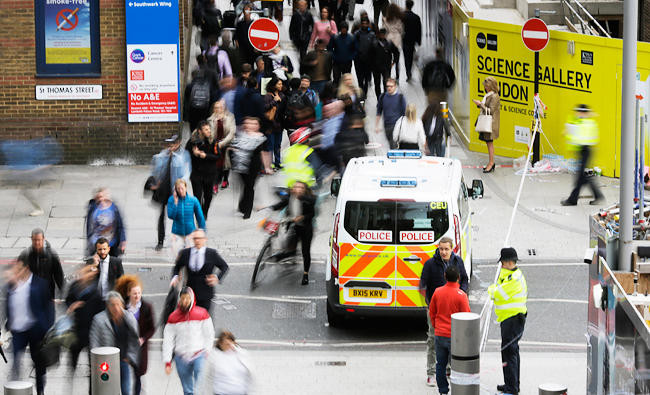
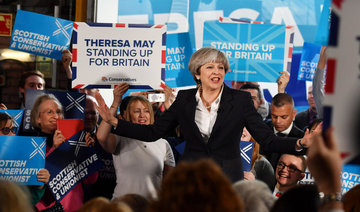
Britain’s ruling Conservatives, led by Prime Minister Theresa May, and the opposition Labour Party battled to defend their records on security on Tuesday, as further details emerged over the perpetrators of a violent attack that killed seven people in London on Saturday.
Khuram Shazad Butt, one of the attackers named, “was known to the police and MI5,” the domestic security service, but there was no intelligence to suggest the attack was being planned, police said. He had featured in a television documentary entitled “The Jihadis Next Door” and, according to British media, numerous people alarmed by his views had gone to the authorities.
It earlier emerged that the May 22 suicide bombing at the Manchester Arena was perpetrated by Salman Abedi, who was also known to British intelligence services.
May has vowed to crack down on extremists. But she is also facing criticism over the number of police officers in the UK, which reportedly declined by almost 20,000 between 2009 and 2016.
Opposition leader Jeremy Corbyn has pledged to hire thousands of officers for neighborhood duties, arguing that a grassroots approach would curb crime and radicalization.
A poll published by YouGov on Tuesday found that May is on track to win 304 seats in Britain’s Parliament, short of a 326-seat majority. Her party had 330 seats when the election was called in April.
Stephan Shakespeare, CEO and founder of YouGov, said, however, the polling firm did not believe the narrowing of May’s lead was a consequence of the terrorist attack over the weekend.
“This has been a highly volatile election, but I think May will remain in Number 10,” he told Arab News.
— With input from AFP, Reuters

Terror threat in spotlight on eve of UK election
Indonesia threatens to ban Musk’s Grok AI over degrading images of children and women
- Grok has been complying with user requests to alter images of real people
- Other countries, including Malaysia and France, have also threatened action against X
JAKARTA: Indonesia’s Communications Ministry threatened on Wednesday to ban Elon Musk’s X and its artificial intelligence chatbot Grok after degrading pictures of women and children generated without consent surged on the social media platform.
Grok has been complying with requests from X users to modify images of real women and children stripped to their underwear, creating a viral trend that has sparked concerns across the globe.
A preliminary investigation found that Grok “does not yet have explicit and adequate regulations to prevent the production and distribution of pornographic content based on real photos” of Indonesian citizens,” Indonesia’s Ministry of Communications and Digital Affairs said in a statement.
Indonesia has strict laws against the production and distribution of pornography, with the government regularly instructing internet service providers to block access to websites containing such content.
“The obligation to comply with Indonesian laws and regulations applies to all digital platforms operating in Indonesia,” the ministry said.
“Should there be non-compliance or lack of cooperation, the Ministry of Communications and Digital Affairs may impose administrative sanctions, including termination of access to Grok’s AI services and the X platform.”
Indonesia has joined a growing list of countries, which includes Malaysia, India and France, that are calling for investigations and threatening action against Grok.
Concerns grew after a December update to the chatbot made it easier for users to post photographs of people and ask for their clothing to be removed.
In a report published on Tuesday, European non-profit organization AI Forensics said Grok is “systematically ‘undressing’ women.”
Its analysis of 20,000 images generated by Grok between Dec. 25 and Jan.1 found that 53 percent of them contained individuals in minimal attire, with 81 percent of them being women, while two percent of the images depicted persons appearing to be 18 years old or younger.
Indonesia’s Communications Ministry said AI service providers and users are also subject to administrative or criminal sanctions under Indonesian law if they are proven to have produced or distributed pornographic content or modified personal images without permission.
“Every digital platform must ensure that the technology they provide does not become a medium for privacy violation, sexual exploitation or the degradation of a person’s dignity,” said Alexander Sabar, director-general of digital space at the ministry.
“We urge all parties to use artificial intelligence technology responsibly. The digital space is not a lawless space; every citizen’s privacy and right to their image must be respected and protected.”