LONDON: One of the men believed to have carried out the deadly weekend attack in central London was a known extremist who was filmed unfurling a black flag resembling the one used by Daesh and raised the suspicion of a neighbor after allegedly trying to lure local youngsters to join his radical campaign.
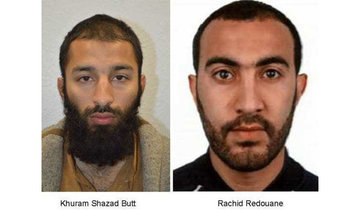
On Monday, British police identified that man, Khuram Shazad Butt, a 27-year-old Pakistan-born Briton, as one of the assailants, saying he was known to authorities, though they had no evidence he was planning an attack. They identified a second attacker who had not aroused suspicion prior to Saturday’s rampage that killed seven people.
As details about Butt emerged, however, they prompted questions of whether he could have been stopped sooner.
He had appeared in a documentary, “The Jihadis Next Door,” that aired on British television last year. Neighbors identified Butt from the film’s footage Monday, pointing to a scene in which he is shown participating in a provocative prayer session at Regents Park, near London’s biggest mosque helping to display a black flag covered in white Arabic lettering similar to the one used by the Daesh group, which took responsibility for the attack.
Butt is also seen in the film sprawling on the lawn and nodding as he listens to a sermon in which the speaker tells those gathered: “This is not the real life, my dear brothers. This is a passing time for us.”
Butt’s apparent zealotry led one neighbor, Erica Gasparri, to contact police about 18 months ago. The 42-year-old mother of three was working at a local school when she noticed Butt, who was also known as Abu Mohamed, meeting with local children and trying to draw them into his radicalism.
“It was wrong what he was doing,” Gasparri said. “He kept talking about (Daesh). I got very angry.”
Salaudeen Jailabdeen, who lived near Butt, said the alleged assailant had once been ejected from a local mosque for interrupting an imam. Another neighbor, Michael Mimbo, said he saw the van used in the attack near his home on Saturday, but didn’t see who was behind the wheel. He said the vehicle was seen going the wrong way down a one-way street and was later seen speeding off, followed closely by a small red car.
The second alleged attacker was identified by police as Rachid Redouane, who alternately used the surname Elkhdar, and claimed to be Moroccan and Libyan. He used two different birthdates that would make him either 25 or 30, authorities said.
Police have not yet released the identity of the third person involved in carrying out the attack on London Bridge, where the van swerved into pedestrians, and in nearby Borough Market, where the knife-wielding assailants slashed and stabbed anyone in their path. Besides the dead, dozens more were wounded by the men, who wore fake suicide vests to make themselves look even more imposing.
All three were ultimately shot and killed by police. Twelve others taken into custody have since been released.
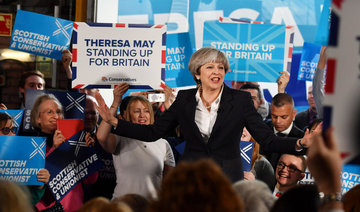
All of it happened in just eight minutes, and though police have won praise for their response, it has led to a political fight certain to dominate the waning days before Thursday’s national elections. The campaign roared back into public view Monday after a one-day hiatus, with Prime Minister Theresa May and Labour Party leader Jeremy Corbyn trading blame over one another’s security stances.
May served as home secretary for six years before becoming prime minister last year, a period in which the number of police dropped by about 20,000 officers. That fact provided a line of attack for Corbyn, who called on May to resign even as he said the best remedy was to vote her out.
“There’s an election on Thursday, that’s the chance,” he said, citing an “appalling” cut in police staffing levels. “We’re calling for a restoration of police numbers, and there’s a call being made for her to go, because of what she’s done on the police numbers.”
May said she has protected police budgets and increased the number of armed officers and matched Corbyn’s finger-pointing with some of her own, saying her opponent wasn’t fit to safeguard Britain at a time of heightened threat. “We have given increased powers to the police to be able to deal with terrorists, powers which Jeremy Corbyn has boasted he has always opposed,” she said.
Given the speed with which the attack was ended, it wasn’t clear whether having more police on the beat would have prevented it, but questions persisted over whether investigators had the resources to look into such complaints and whether crucial opportunities were missed that could have saved lives.
It was the third attack in as many months where suspects had been on the radar of British authorities.
Under the British government’s counterterrorism program, residents are encouraged to alert police to suspicious activity. Police then cross-check whether the person has been reported for similar activity. From there, a number of scenarios can unfold. The matter can be dropped or if the complaint seems warranted, police and security officials can open an investigation. The real test comes in determining whether the person has the potential to become violent and what resources are available to investigate. Watching a suspect around the clock can require some 20 officers or security agents.


![]()

London attacker featured in TV documentary ‘The Jihadis Next Door’
London attacker featured in TV documentary ‘The Jihadis Next Door’
Latest updates


© 2026 SAUDI RESEARCH & PUBLISHING COMPANY, All Rights Reserved And subject to Terms of Use Agreement.