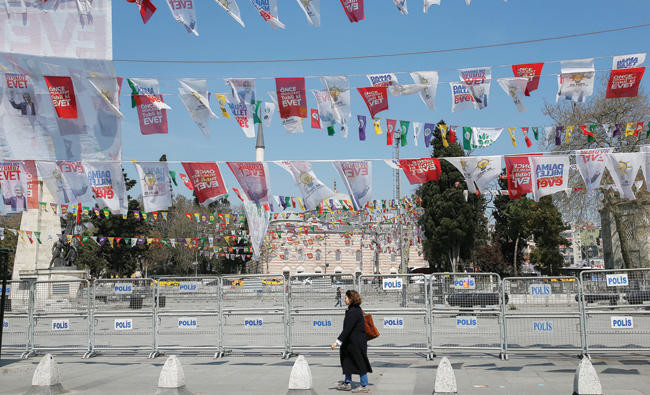
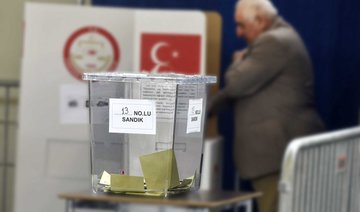
ISTANBUL: Turkey votes on Sunday in a referendum on expanding the powers of the presidency under Recep Tayyip Erdogan. But the outcome could more broadly influence all aspects of the country’s future. Coming 94 years after the foundation of modern Turkey by Mustafa Kemal Ataturk, the referendum is a landmark vote that may affect relations with the West, a peace process with Kurds and dynamics inside society.
Here are five ways the referendum could shape Turkey:
• If he wins the referendum, Erdogan will enjoy enhanced powers, be able to appoint ministers and have an entire bureaucracy centralized within his presidential palace. Opponents worry that the new system will lack the “checks and balances” that mark the US system, moving the presidency toward one man rule.
The new system would be implemented from November 2019 when presidential and legislative elections would be held simultaneously.
With the clock wound back under the new system Erdogan, who became president in 2014, could take two more terms, allowing him to stay in power until 2029 rather than 2024, currently.
The executive presidency system “amasses unprecedented power in the hands of one man,” said Alan Makovsky, senior fellow at the Center for American Progress.
Erdogan in combative speeches has not countenanced the prospect of a “No” vote and not given the slightest indication he would consider his future. But given the advantages of the “Yes” campaign a “No” would be a massive blow to his status as Turkey’s all-powerful leader.
• Relations between Turkey, a longstanding candidate to join the EU, and its EU partners plunged to bitter lows during the referendum campaign as the president lashed out at Europe for what he said was behavior reminiscent of Nazi Germany.
Erdogan has said Turkey’s membership bid would be “on the table” after the referendum and in every single campaign speech said he would sign any bill restoring capital punishment, a move that would automatically end its bid to join the bloc.
“The tactics of constantly bullying the EU... for domestic political purposes have now reached their limits,” said Marc Pierini, visiting scholar at Carnegie Europe.
In the event of an easy “Yes” victory, Erdogan could have the confidence to take a decisive move away from EU integration and show Turkey can forge alternative strategic alliances, including with Russia.
One alternative to full membership could be a strengthened customs union, but it is unclear if that would be palatable for Erdogan.
• Erdogan was the first Turkish leader to undertake peace talks with the outlawed Kurdistan Workers’ Party (PKK), resulting in an unprecedented cease-fire.
But the PKK truce shattered in 2015 and Erdogan has since waged a controversial campaign to destroy the group. In the event of a “Yes,” it is not excluded that Erdogan could adopt a more reconciliatory attitude on the “Kurdish problem,” even to the point of reopening dialogue.
“In the case of a narrow “Yes” win, he (the president) may feel compelled to be conciliatory,” said Asli Aydintasbas, senior fellow at the European Council on Foreign Relations (ECFR). “Turkey could return to the peace process.” Yet the Yeni Safak daily has claimed that the government will open a new front with cross border operation against PKK camps in Sinjar, northern Iraq, in a new effort to destroy the group.
• Turkey’s hugely diverse society has starkly polarized during Erdogan’s tenure as prime minister and president since 2003. Erdogan has frequently demonized opponents, saying those who wanted to vote “No” were playing into the hands of the PKK and US-based Muslim cleric Fethullah Gulen, blamed for the failed July 15 coup.
“He wins, but in the end half of the country is in love with him, and the other half loathes him, and herein lies the crisis of modern Turkey,” said Soner Cagaptay, author of a forthcoming book, “The New Sultan.”
While Erdogan has forged a coalition with nationalists, he has in the past showed considerable pragmatism in his alliances.
• Markets are cautiously expecting a “Yes” and hoping this will bring much needed stability. A rally in Turkish assets is expected in the event of a “Yes.” In the medium term the prospects are much more uncertain, with some economists fearing that any democratic deficits in Turkey and increased polarization in society, coupled with the government’s loss of its enthusiasm for reform, will hit long term growth rates.
“While a potential “Yes” may be cheered by the market in the near term, Turkish equities are not likely to trade above historical averages as growth remains subdued and the long term implications of the system untested,” said economists at BGC Partners in Istanbul.


![]()
5 ways the vote could change Turkey
5 ways the vote could change Turkey
Latest updates


© 2026 SAUDI RESEARCH & PUBLISHING COMPANY, All Rights Reserved And subject to Terms of Use Agreement.