MADINAH: The heritage neighborhood project in Madinah’s King Fahd Park encompasses many old-fashioned businesses imitating the commercial environment of the city decades ago. The project, covering 120,000 square meters, aims to preserve the city’s urban and architectural heritage, under a directive by Madinah Gov. Prince Faisal bin Salman.
The district imitates the city’s old residential and commercial areas. Old architectural-style buildings and restaurants selling Madinah’s traditional yagmoush, balila, manto, luqaimat and rice cooked in different styles surround an imitated Al-Oyayna market, which was the most famous market in Madinah for 300 years. As the market used to lead straight to the Prophet’s Mosque, it was demolished for the expansion of the mosque 30 years ago.
“A merchant who didn’t own a dukkan (shop) in Al-Oyayna market was considered a small businessman,” said Omar Barnawi, who showcased the profession of chair-banding — the occupation of adorning rope chairs — which no longer exists. “Demand for such chairs is now very weak because of developments in chair manufacturing, but some people still like to buy them. A set of these chairs costs about SR2,500 ($667).”
Blacksmith Mousa Hawsa, who makes antique lanterns, doors and windows, said he learned the profession from his father since childhood.
Carpenter Adam Hassan has been in the trade for 40 years. “I make doors, windows and Madinah-style balconies known as rawasheen in different sizes and styles,” he said. One rowshan takes two weeks to make, he said, adding that the spread of the use of aluminum and metals in manufacturing reduced demand for wood products. “Besides, new generations don’t like carpentry,” he said.


![]()
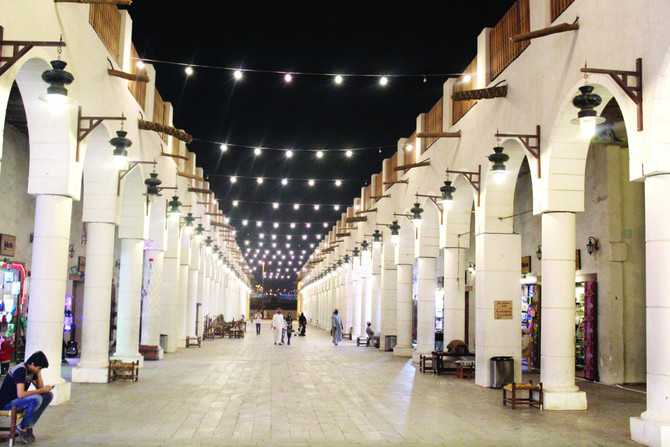
Madinah heritage district: A story from the past
Madinah heritage district: A story from the past


Latest updates


© 2026 SAUDI RESEARCH & PUBLISHING COMPANY, All Rights Reserved And subject to Terms of Use Agreement.