March 26 is our great Independence Day. This is the day of breaking the shackles of 24 years of subjugation — a day of reaching the enlightened world from the abyss of darkness.
On this very day in 1971, the Bengalee nation started the War of Liberation against the misrule, exploitation and torture of the Pakistani autocratic regime with the clarion call of our Father of the Nation Bangabandu Sheikh Mujibur Rahman.
On this very day, I recall with deep reverence the great hero and the greatest Bangalee of all time, Bangabandu Sheikh Mujibur Rahman, whose vigorous leadership inspired the Bengalee nation in the War of Liberation.
I pay my homage to our 3 million martyrs and 200,000 mothers and sisters whose supreme sacrifice ushered us an independent and sovereign Bangladesh colored in red and green.
I remember all the martyrs of all the movements and struggles — from the anti-colonial movement to the historic language movement and mass upsurge of 1969 — whose blood colored our homeland and their memory is shining in our national flag. Achievement of our independence has made these sacrifices glorious and meaningful.
The occupation forces unleashed a sudden attack and started killing innocent and unarmed Bangalees on the black night of March 25, 1971.
They killed thousands of people in cities and towns, including Dhaka.
The present Parliament unanimously adopted a resolution on March 11, 2017 to observe March 25 as the “Day of Genocide” marking the brutality carried out by the Pakistani Army on the black night of March 25, 1971.
March 26 is a day to remember Bangabandu Sheikh Mujibur Rahman, war heroes and their contributions as well as to take oath to realize the spirit of our liberation war which motivated the Bangalee nation to make supreme sacrifices.
This is also an occasion to introduce our new generation to the true history of our War of Liberation.
The government of Prime Minister Sheikh Hasina has been working tirelessly to materialize the dream of the Father of the Nation for a secular as well as hunger and poverty-free, prosperous Bangladesh. As a result, Bangladesh is marching forward with a per capita income of $1,466, more than 7.1 percent growth rate and $32 billion of foreign currency reserve.
Today, Bangladesh is a role model to the outer world.
These changes in Bangladesh are toward prosperity and welfare. And, you, my expatriate brothers and sisters are a part of this onward movement.
Today’s remittances worth more than $14.91 billion are the outcome of your love for the motherland as well as your families.
These remittances are contributing significantly to the development process of Bangladesh.
To keep up with this pace of development, we all will be working unitedly under “Vision 2021” declared by the premier to transform Bangladesh into a middle-income country by 2021 and follow the path of development to take it to the level of a developed country by 2041.
We pledge this on this day of independence.
Joi Bangla.
Joi Bangbandhu.


Expat remittances play key role in national growth
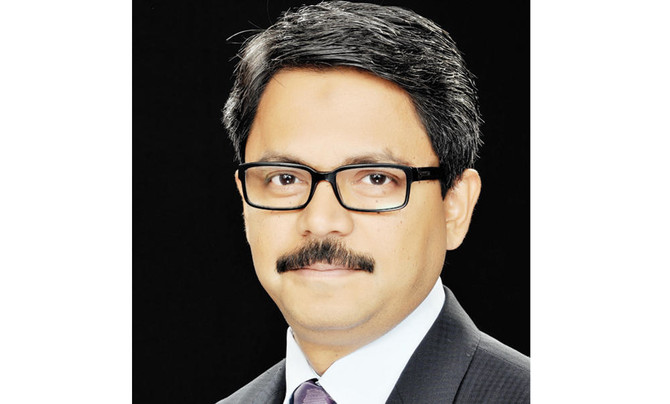
Expat remittances play key role in national growth

Jeddah students get closer look at electric motorsport
- A PIF-linked initiative highlights technical and engineering careers behind electric racing events
JEDDAH: Students from local and international schools in Jeddah were introduced to STEM-related career pathways in electric motorsport this week, as part of an education program linked to the UIM E1 World Championship held on the Red Sea.
The sessions formed part of Driving Force Presented by the Public Investment Fund, an initiative run by Formula E and its electric racing series partners, to familiarize students aged eight to 18 with science, technology, engineering and mathematics through electric racing and sustainability-focused industries.

The programme took place alongside the 2026 E1 Jeddah GP and included workshops, school visits and trackside access designed to show how engineering, data, broadcast technology and event operations function within professional motorsport.
According to organisers, the initiative reached more than 60,000 students globally in 2025, with further expansion planned this year.
HIGHLIGHTS
• The program took place alongside the 2026 E1 Jeddah GP and included workshops, school visits and trackside access.
• Students learned about E1 races and their technical and environmental dimensions and discussed the engineering and marine aspects of electric boats.
• According to organisers, the initiative reached more than 60,000 students globally in 2025, with further expansion planned this year.
John Williams, managing director at E1, told Arab News: “The PIF is absolutely vital to everything we do here at the E1. They were crucial initial investment partner since the start of the championship and they continue to support us in a number of ways and more specifically around the Driving Force program.”

Elaborating more on the program, he said: “What we are doing is presenting and showing these students the available careers of science, technology, engineering and mathematics, as well as careers in sports, not only pilots but also engineers and mechanics.”
Williams added that the main key to the program was bringing a new generation to the mechanism of sport.
“We are introducing to these exciting new technologies around the race but it could be our technology on the boat or our broadcast products, as well as how to manage the event its self. There are a range of opportunities to show it to the children in addition to enjoying the excitement of the race and meeting the pilots.”
The program’s Jeddah activities began at King Abdulaziz University’s faculty of maritime studies, where students took part in a hands-on workshop focused on STEM careers in the motorsport and sustainability areas conducted by technology experts and famous water pilots such as Dani Clos, Emma Kimilainen and Patricia Pita.
Students learned about E1 races and their technical and environmental dimensions and discussed the engineering and marine aspects of electric boats.
They also enjoyed exclusive behind-the-scenes access at the E1 Jeddah GP, pilot meet-and-greets, and front-row seats to watch the RaceBird boats in action.


