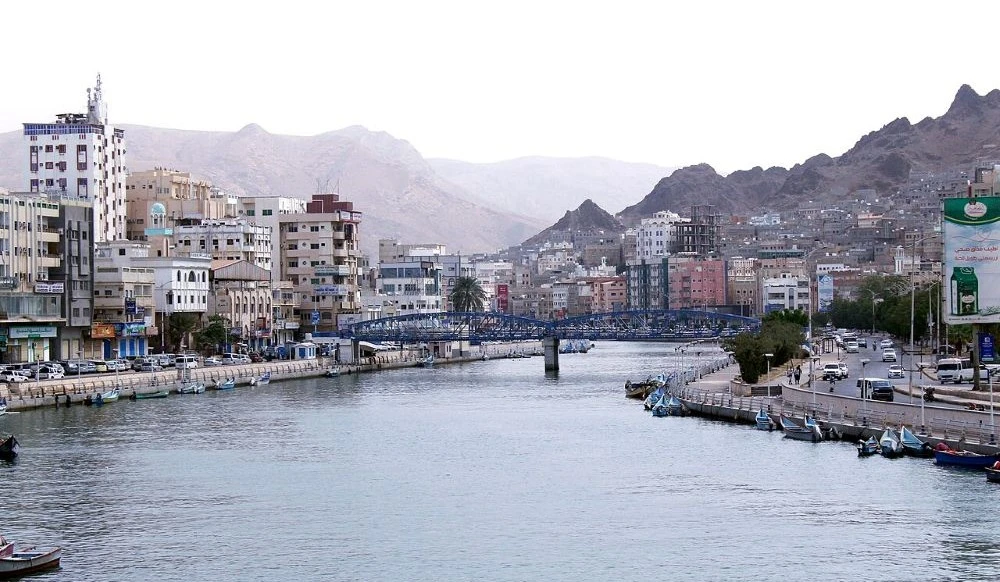
AL-MUKALLA: Nearly a week into the new school year in Yemen’s port city of Al-Mukalla, Eman Bamafoudh has still been unable to buy new clothes, notebooks or other school supplies for her four children.
“I haven’t been able to buy them anything,” Eman told Arab News, sitting in the modest guest room of her home in a densely populated neighborhood on the eastern outskirts of Al-Mukalla.
“They came back from school with textbooks, and their teachers asked them to buy notebooks and pay the school fees.”
Thousands of primary and secondary school students returned to classrooms on Sunday in Al-Mukalla and other government-controlled parts of Yemen, as families grapple with soaring prices and dwindling purchasing power.
In Houthi-controlled areas, the school year began about three months earlier, at the start of the new Hijri year.
Eman and many other parents say the cost of school uniforms, notebooks and other supplies has soared in recent years, while incomes have dwindled and jobs have become increasingly scarce.
Eman’s husband, Omer Salem, is a fisherman who said he earns barely $10 from each fishing trip and is able to go to sea only a few days a month. On many days, he stays home because of high fuel prices or shortages.
“Sometimes I earn 12,000 riyals ($8) from a fishing trip, sometimes 15,000, and on a good day 20,000,” Salem told Arab News as his four children sat around him.
“That money is not enough to cover my family’s food, let alone buy school supplies for the children.”
For the family, buying school clothes alone would cost about 140,000 Yemeni riyals ($93), while they need at least another 60,000 riyals for notebooks, stationery and school fees.
Unable to afford the roughly 200,000 riyals needed to prepare their children for school, the family has put off buying the supplies, hoping for a donation or to borrow money from a friend or neighbor — although they are not optimistic that either will happen.
“They came home from school with their textbooks and said the school had asked them to buy notebooks. We told them to be patient and that God will provide,” Eman said.
“I try to calm them down by telling them to be patient, that God will provide us with money and that I will buy them new clothes. I don’t want them to lose hope or drop out of school.”
Until they can find the money, the parents have asked their children to reuse clothes and other items from previous years. The children walk to and from school instead of using paid transportation, while the family has also cut back on food expenses in an effort to save enough for school supplies.
Eman said her eldest son, Salem, now in his first year of secondary school, has worn the same school clothes for the past four years and will continue wearing them even though they are worn out.
“His brother Saeed, who is now in the ninth grade, has been wearing the same school clothes since he was in the fourth grade, using them throughout the fifth, sixth, seventh and eighth grades and now again in the ninth,” she said.
Frustrated by poverty and their parents’ repeated inability to meet their requests for new clothes, school supplies and pocket money, the children became angry when they learned that, as in previous years, their parents would not be able to buy them new clothes.
“When I tell them we don’t have enough money to buy their school supplies, they get angry and say, ‘Poverty, poverty, poverty! You never make us happy by buying us what we need for school!’” Eman said.
Yemen has been mired in conflict between the internationally recognized government, backed by the Arab coalition, and the Iran-backed Houthis since late 2014, when the militia seized control of Sanaa, placed then-President Abed Rabbo Mansour Hadi under house arrest and expanded into other parts of the country.
The war has killed and wounded thousands of people, displaced millions and devastated the economy and vital sectors, including education.
The Yemeni riyal has lost most of its value during the conflict, falling from about 215 to the US dollar in early 2015 to around 1,500 today in government-controlled areas.
The sharp depreciation has also eroded the value of public-sector salaries, with a monthly wage worth about $350 a decade ago now equivalent to roughly $100.
Teachers and school principals across the country told Arab News that many students have been unable to buy new school clothes, while others are reusing clothes and notebooks from previous years.
“About 70 percent of students have yet to buy new notebooks, with some still using those left over from last year. Most students are also wearing the same school clothes they wore last year,” Saleh Abdullah, a primary school principal in the rural Daw’an district of Hadramout, told Arab News.
The difficulties facing families at the start of the new school year are also evident in stationery shops across Yemeni cities.
In Al-Mukalla’s Sharj neighborhood, home to many stationery and school-supply shops, customer traffic has been unusually low this year.
Shop owners said that in previous years, large numbers of parents and children would flock to the area at the start of the school year to buy notebooks, pens, bags and other supplies.
“There are far fewer customers this year than last year. How do you expect people to buy new school supplies when a teacher’s salary is less than 70,000 riyals?” a stationery shop owner in Al-Mukalla, who asked not to be named, told Arab News.
He spoke as his shop stood empty of customers in the evening — something he said he had not experienced in years.
Despite their hardship, Eman and her husband are determined to keep their children in school.
“We encourage them to continue their education; perhaps the situation will change,” Eman said in a low, tired voice.
“They are young and have a future ahead of them. We don’t want them to suffer like their father does at sea. I hope they grow up, become self-reliant and help us.”
Her husband shared the same determination.
“Education is important. We want them to build a future for themselves and be able to help us,” Salem said. “I don’t want them to become fishermen. We toil at sea, and I don’t want them to toil like I do.”
Sitting in a corner of the room, Salem, the family’s eldest son, said what frustrated him most was his family’s inability to buy him new school clothes and supplies, as well as the intense heat in classrooms during power cuts.
Despite the hardships, he dreams of studying medicine in Iraq one day.
“My ambition is to become a doctor and study medicine in Iraq,” he said.
“My family gives me very little money for the morning, and I wish I had more. The classroom is hot, and sometimes there are no teachers. I want clothes, notebooks and pens.”
Yemeni families struggle with soaring costs as children return to school