- Democrats’ midterm gains are unlikely to reverse Washington’s engagement with Damascus, say analysts, but could bring closer scrutiny without the sustained attention Syria seeks
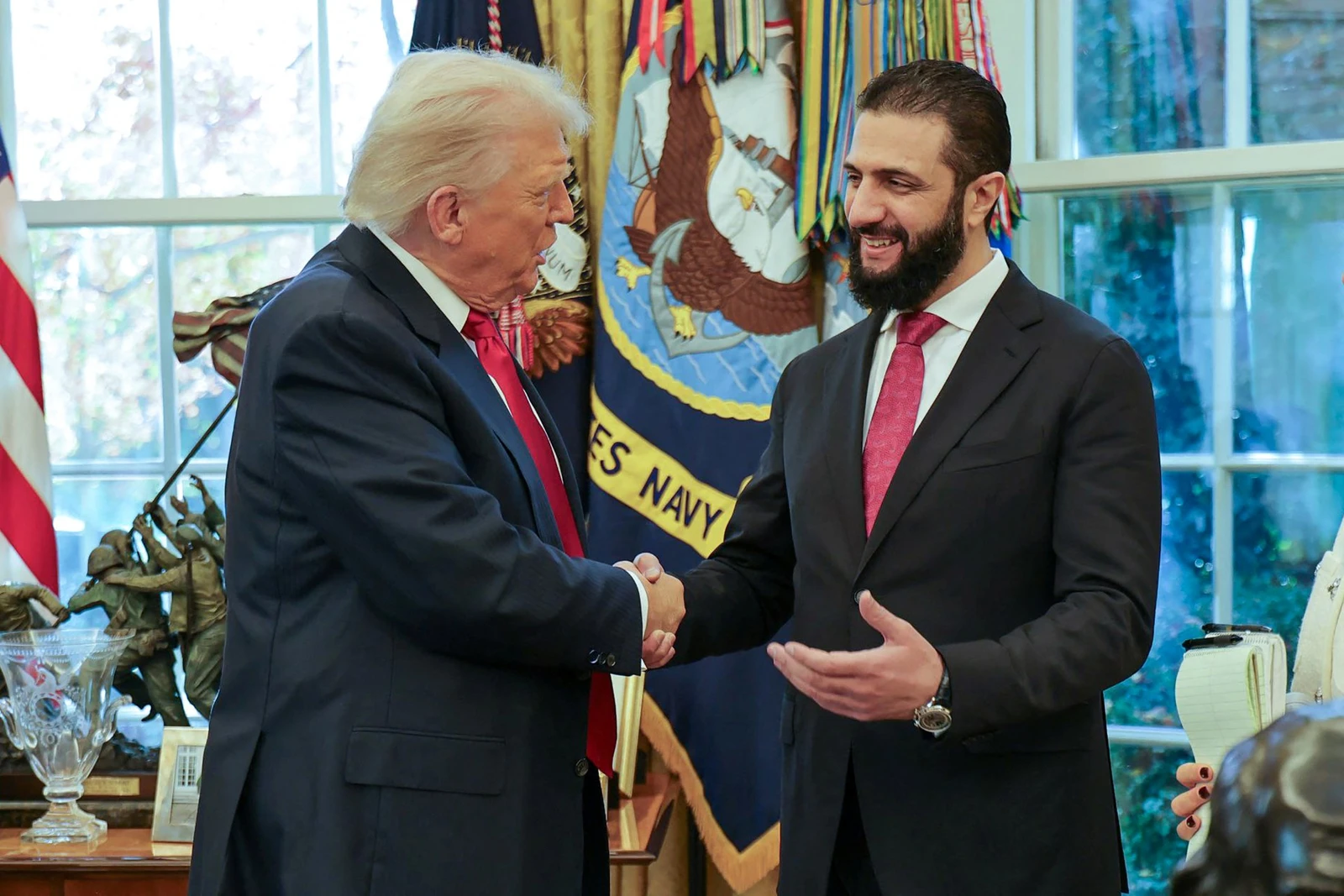
LONDON: Syria’s new leaders relied on US President Donald Trump to help end their country’s international isolation after the fall of longtime President Bashar Assad in late 2024. Now, his party’s midterm defeat raises a question: How durable is Washington’s rapprochement with Damascus under a divided US government?
Democrats’ midterm victories are unlikely to reverse Washington’s rapprochement with Damascus, analysts say. Both parties broadly favor a stable Syria that keeps Iran and Hezbollah at a distance, prevents a Daesh resurgence and reaches an accommodation with Israel.
But agreement on those goals does not guarantee agreement on how to pursue them. Democratic control of both chambers of Congress could bring closer scrutiny of diplomacy shaped heavily by Trump and his envoys, while competing priorities could leave Syria struggling for sustained American attention.
For Damascus, the immediate question is less whether Washington will abandon engagement than how much political capital it will invest, particularly in negotiations with Israel.
Elizabeth Tsurkov, a senior nonresident fellow at the Washington-based New Lines Institute, also expects little immediate change in the direction of US policy.
“The president generally sets foreign policy,” Tsurkov told Arab News. “I therefore don’t believe that Democrats taking both houses of Congress will have any effect on Syria.”
Damascus has also avoided binding its future to one American party, she said, giving it room to maintain relations through changes in Washington.
“So far, Syria’s new leadership has not clearly aligned itself with any party in the US,” she said. “Israel, by contrast, put all its chips on the Republican Party.”
A future Democratic administration, however, could put greater emphasis on human rights, an area in which she said Syria remains deficient.
Joshua Landis, director of the Center for Middle East Studies at the University of Oklahoma, said the relationship rests on more than Trump’s personal ties with Syrian President Ahmed Al-Sharaa.
“One thing that both Democrats and Republicans agree on is their basic Syria policy,” Landis told Arab News. “Both support the Al-Sharaa government in Damascus, both have supported lifting sanctions, and both want Syria to rebuild and become stable.”
Visits to Damascus by Democratic Rep. Jimmy Panetta and Sen. Jeanne Shaheen as part of bipartisan delegations illustrate that support, he said: “They are both interested in Syria keeping Iran, Hezbollah and Russia at arm’s length, both will help Al-Sharaa fight a resurgence of (Daesh), and both will urge a truce with Israel.”
Yet shared strategic interests have not resolved lawmakers’ questions about Syria’s political future. “Democrats find Syria as puzzling as Republicans do,” Landis said. “It is a minefield of sectarian backbiting with no organized political parties or opposition,” leaving both parties uncertain about the transition.
“As the crucial five-year mark for government transition in Syria approaches, American lawmakers in both parties will want to push Syria toward writing a permanent constitution and establishing an elected parliament with real powers.”
Nonetheless, even without a fundamental policy shift, the way Washington engages with Damascus could change.
Mutlu Civiroglu, a Middle Eastern affairs analyst and advisory board member at the Middle East Minorities Institute, said Democratic committee leaders would have greater scope to examine an approach concentrated in the White House.
“Over the past two years, US engagement with Damascus, as well as key regional partners like Turkiye, has been driven largely through personal rapport with the White House and special envoys like Tom Barrack rather than broad institutional consensus,” Civiroglu told Arab News.
That concentration has already generated “significant skepticism among lawmakers and policy experts in Washington regarding how events in Syria have unfolded and how heavily policy has been concentrated in the hands of a few presidential insiders,” he said.
Democratic control, Civiroglu argued, would give critics more opportunities to question officials, scrutinize spending and challenge administration decisions.
“As a result, the strong, largely unchallenged backing the administration has extended to the central government in Damascus is likely to face much heavier scrutiny and could begin to moderate.”
Civiroglu says the longer-term test is whether ties built through presidential access can develop into a broader institutional relationship.
Shared interests in preventing instability and limiting Iranian influence offer a foundation, but support across Congress, the State Department and other institutions would make cooperation less dependent on a handful of officials.
Still, some of the decisions most consequential for Syria will remain in the White House, particularly those involving Israel.
Tsurkov said Trump’s support for Syria’s new leadership had been crucial in restraining Israeli military action: “This applies particularly to the airstrikes that Israel kept carrying out on various targets across Syria, until the Trump administration essentially halted them.”
She cited the aftermath of an Israeli raid on Beit Jinn in late 2025 as an example of presidential pressure affecting developments on the ground. At least 13 people, including two children, were killed and 25 wounded during the Nov. 28 incursion into the town in the Damascus countryside, according to Syrian state media. Several Israeli soldiers were also reported wounded in clashes.
On Dec. 1, Trump publicly warned Israel against destabilizing Syria and its new leadership, shortly before speaking by telephone with Israeli Prime Minister Benjamin Netanyahu.
But the months before Israel’s election showed what could happen when Washington pulled back, Tsurkov said.
“The Trump administration greatly reduced the pressure on Netanyahu to advance the negotiations with Damascus,” she said. “The result was a static situation with no progress in the talks.”
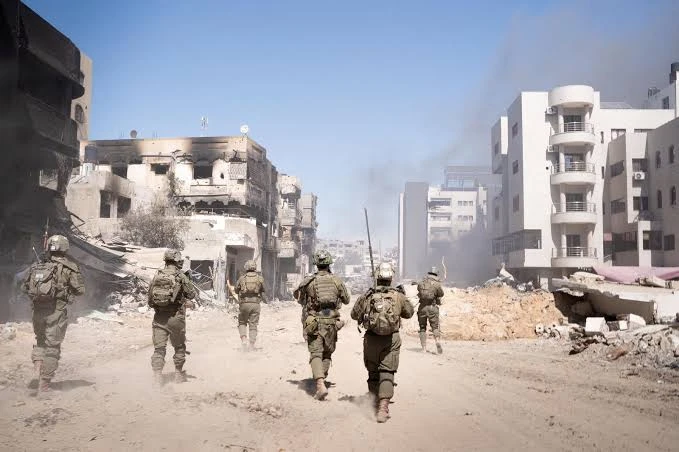
Israel also bombed the Abu Al-Duhur air base in northern Syria in August, Tsurkov said, while Israeli forces’ conduct in the south became increasingly aggressive, with raids growing more frequent, particularly since September.
Indeed, data from the conflict-monitoring organization ACLED also showed a shift toward more shelling and violence against civilians ahead of Israel’s Oct. 27 election.
Overall Israeli activity rose 10 percent between August and September, although incursions fell from 94 to 84, ACLED Middle East analyst Muaz Al Abdullah said in an Oct. 15 report.
Shelling incidents increased from 18 to 34, mostly in Quneitra, Daraa and Rural Damascus, while incidents involving violence against civilians rose from 11 to 17.
Israeli incursions and raids in Quneitra and Daraa have also intensified in recent weeks as Netanyahu, now caretaker prime minister, and opposition figure Gadi Eisenkot seek to form a new government.
In Tsurkov’s assessment, US involvement matters not only for reaching a security agreement but also for containing violence while negotiations remain unresolved. “Even if the talks do not produce an agreement, US engagement is clearly needed to prevent escalation.”
Landis was less convinced that Trump had been willing to use American leverage to secure a deal. He said the president had not shown “any real interest in pressing Israel to make peace with Syria,” despite Damascus’ eagerness for an agreement.
“Not only has Trump been campaigning for Netanyahu but he has failed to place any real pressure on Israel to curb its policies in Gaza, Lebanon or Syria,” Landis said. “By jumping in behind Israel on Iran, he committed himself to Netanyahu’s maximalist policy in the Middle East.”
Civiroglu said the midterm result would neither substantially diminish Trump’s diplomatic authority nor necessarily make him more receptive to demands that he pressure Netanyahu.
A Democratic Congress could scrutinize military assistance and seek to constrain the administration’s broader regional agenda, Civiroglu said, but diplomatic mediation would remain largely in the president’s hands.
“His unilateral leverage remains largely intact,” he said. “It would be a mistake to view Trump as a weakened ‘lame duck.’ He retains full authority as Commander in Chief until early 2029, has openly embraced the role of ‘Mr. Veto’ to block congressional efforts he opposes, and is largely insulated from domestic political pressure because he no longer faces another election.”
Trump earlier this month signaled that he intends to resist legislative challenges. Asked by CBS News before polls closed in the midterms about the prospect of a Democratic-controlled Congress, he said: “I have the ultimate power — it’s called ‘veto’.”
For Syria, a more assertive Congress may not mean a more attentive Washington.
Landis expects the country to remain relatively low on a crowded list of Middle East priorities. Civiroglu said domestic economic pressures, the war with Iran and investigations into the administration’s conduct would compete for Democrats’ time.
Broader congressional efforts to reassert oversight of US policy in the Middle East could still affect Syria, Civiroglu said, even without a major initiative focused on the country. But closer scrutiny would not necessarily bring the sustained diplomacy its leaders seek.
That leaves Damascus facing an outcome that may be more complicated than either a reversal of US policy or an uninterrupted continuation of Trump’s approach.
Bipartisan support offers protection against an abrupt break. Turning that support into a durable relationship will require ties that extend beyond the White House and a willingness in Washington to act when diplomacy with Israel falters.