- 5 aid groups say US-backed Gaza peace plan failed to protect civilians and deliver humanitarian relief, a year after UN Security Council endorsement
- Over half of Gaza's population remains in temporary shelters, with severe shortages of aid amid ongoing violence, the groups say
LONDON: The US-backed peace plan for Gaza has failed to deliver promised protection and humanitarian relief, five aid organizations said on Thursday, giving it a failing grade as Palestinians face continued attacks, severe aid shortages and another winter in makeshift shelters.
The groups awarded the Trump administration’s 20-point plan four points out of a possible 26, down from five in an assessment in April. Their latest scorecard, released a year after the UN Security Council endorsed the plan, found that more than half of Gaza’s population remained in temporary shelters.
The assessment was produced by the Danish Refugee Council, Norwegian Refugee Council, Oxfam, Refugees International and Save the Children.
It measures progress against the plan’s commitments on civilian protection, humanitarian access, reconstruction, economic development, and freedom of movement and return.
“One year into the so-called ceasefire, Palestinians are still waiting for the safety and humanitarian relief they were promised,” said Jeremy Konyndyk, president of Refugees International.
“People are still being killed, Israeli forces are expanding control of Gaza, and families are facing another winter in flooded tents while desperately needed supplies sit just across the border.”
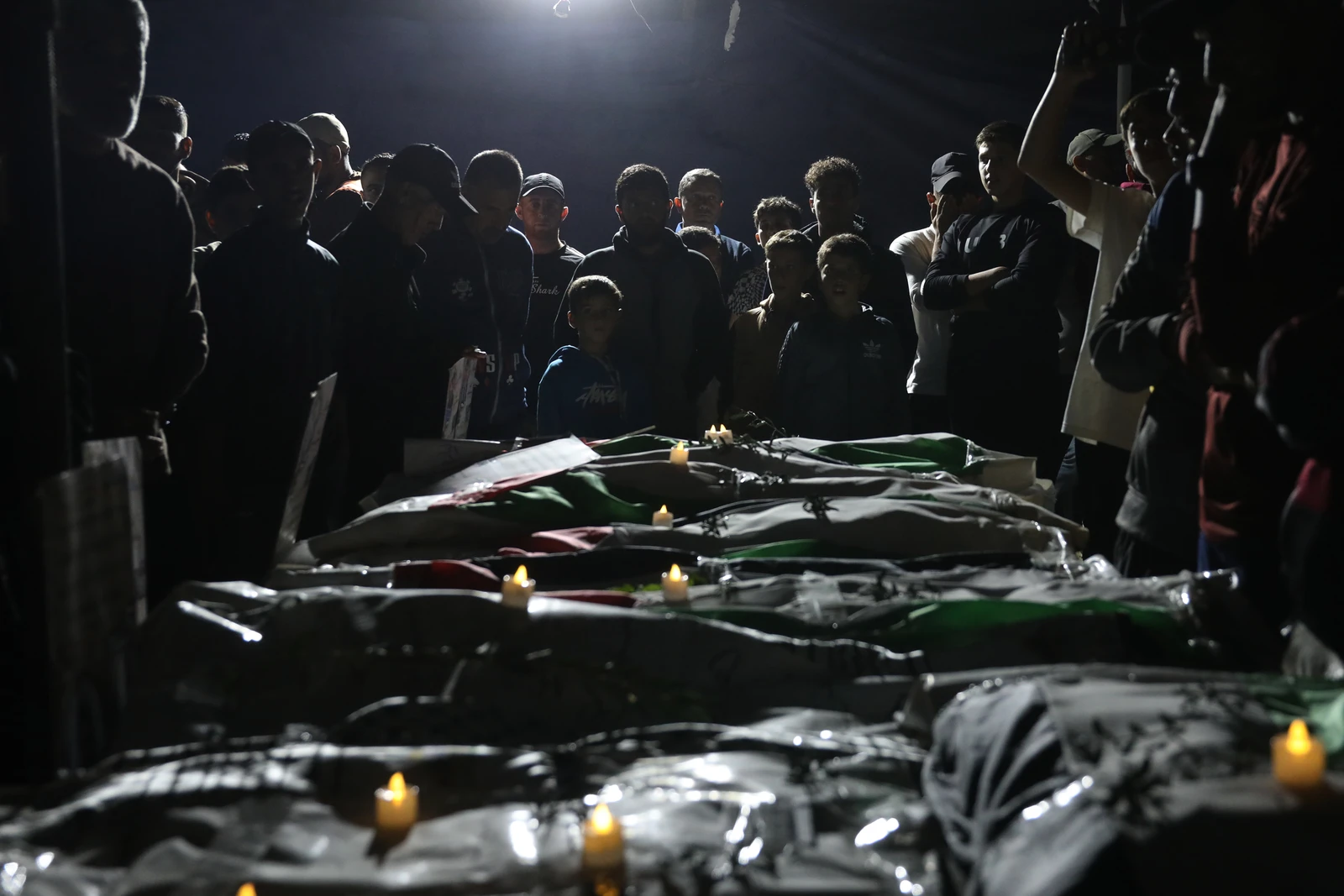
At least 1,614 Palestinians have been killed and 5,849 wounded since the ceasefire took effect in October 2025, Gaza’s health authorities said on Nov. 10.
The aid groups said Israeli forces now control about 70 percent of Gaza, compared with 58% at the start of the ceasefire. They also cited UN reports of near-daily Israeli airstrikes in densely populated areas over the past year.
Lilu Thapa, the Danish Refugee Council’s executive director for the Middle East, Asia and Europe, said the expansion of the “Yellow Line,” which marks the boundary of the area under Israeli military control, was forcing displaced families into an increasingly confined space.
“Families that have already fled up to a dozen times are forced to move again when gunfire and explosions erupt, often with no warning,” Thapa said. “This is displacement by design, and a ceasefire that allows it is a ceasefire in name only.”
Aid deliveries have also fallen far short of the plan’s commitments, the organizations said. Against a stipulated minimum of 600 UN-coordinated aid trucks a day, an average of 49 entered Gaza daily in September. Only 2 percent carried medical supplies.
The scorecard gave humanitarian access zero points, unchanged from April.
The groups said shortages of basic medicines and supplies had caused deaths from treatable injuries and illnesses.
They said Israeli authorities were continuing to obstruct deliveries of shelter materials, medical equipment and supplies needed to restore water and sanitation services, leaving nearly all of Gaza’s 2.1 million people struggling to obtain clean water, health care and adequate food.
All six wastewater treatment plants remain out of service, the groups said.
Separately, Medical Aid for Palestinians reported in October that none of Gaza’s hospitals were fully operational.
Those conditions have left families particularly vulnerable as winter approaches. Nearly 1 million Palestinians live in sites at medium or high risk of flooding, and 89 percent of households report rodents inside their shelters, according to UN figures.
“One year ago, the world was promised that Gaza’s children would finally see safety, relief and a chance to rebuild their lives,” said Inger Ashing, CEO of Save the Children International. “Instead, they are colder, hungrier, more traumatized and more at risk than they were before.”
The organizations urged the Security Council, the Board of Peace and U.N. member countries to use their leverage to secure immediate humanitarian access and enforce the ceasefire.
They called for all crossings to open, restrictions on aid operations to be lifted, and medical evacuations and freedom of movement to be restored.
They also proposed replacing Israeli aid approval and inspection procedures with an independent, transparent verification system.
To strengthen enforcement, the groups urged countries to establish UN-mandated ceasefire monitoring and quarterly humanitarian reporting, backed by diplomatic, legal and economic measures to secure compliance.
Reconstruction efforts must protect Palestinians’ freedom of movement and right to return, rather than entrench displacement, they said.
“The United States and other UN Security Council members must use their leverage to ensure those obligations are met,” Konyndyk said. “The commitments made a year ago mean little if they do not change the reality on the ground.”