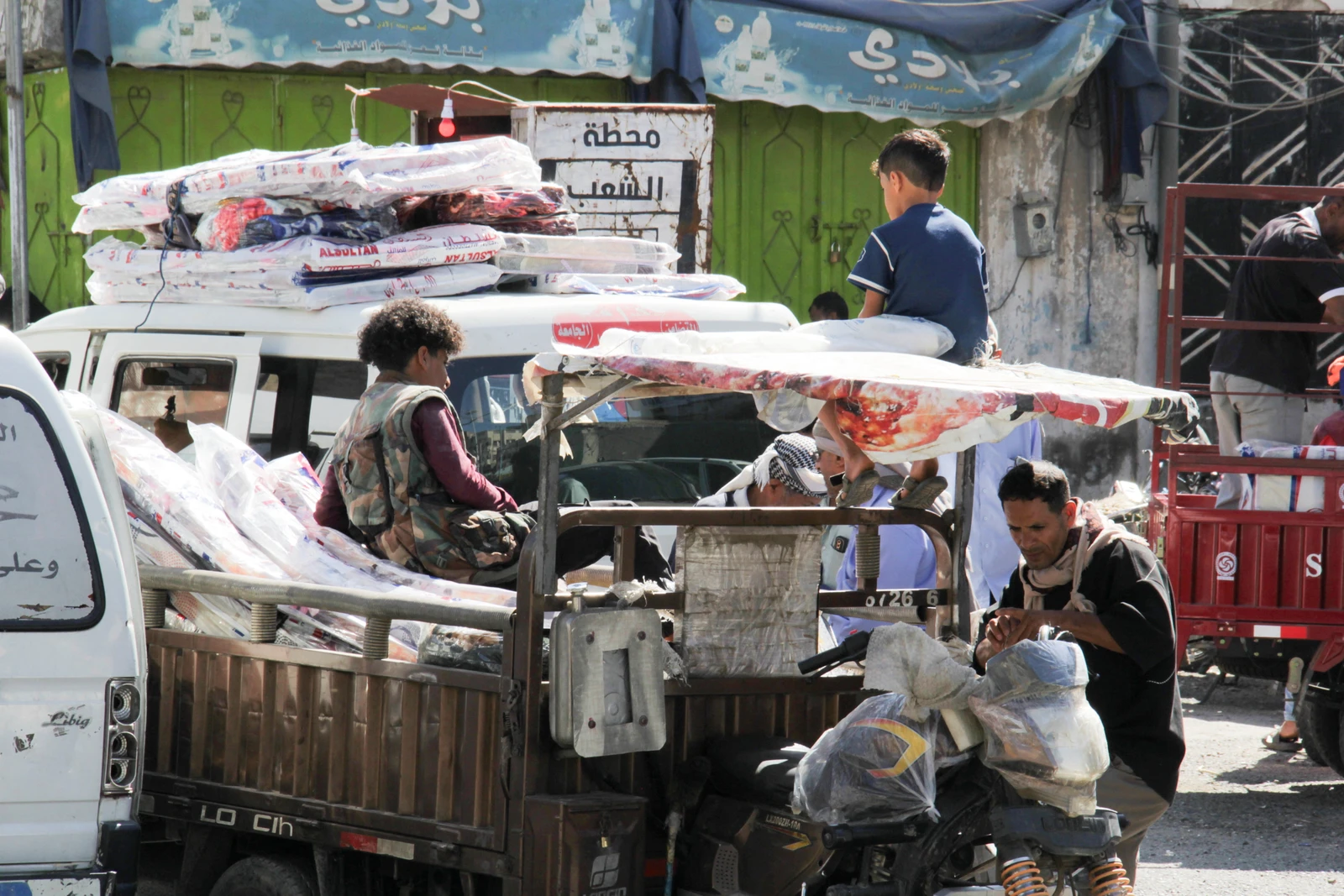
- Nearly two-thirds of minelaying incidents reported are concentrated in Taiz, with dangerous explosives observed along community access routes
LONDON: Explosive devices hidden beneath soil, tucked inside roadside bags or disguised as rocks, bricks and thermos flasks pose a growing threat to civilians fleeing intensifying fighting in Yemen, the HALO Trust warned on Monday.
Shifting front lines are forcing people onto unfamiliar routes as reports of new minelaying and unexploded ordnance along key roads threaten civilian movement and humanitarian access, the mine clearance organization said in a statement received by Arab News.
More than 281,000 Yemenis have fled their homes since August, according to UN figures.
More than half are sheltering in the government-held enclave of Taiz, where heavy fighting has blocked major roads, disrupted food supplies and medical access, and cut off critical water infrastructure.
“With front lines shifting and civilians fleeing their homes for unfamiliar areas, the risk of encountering hidden explosives is growing by the day,”’ said Andrew Moore, HALO’s regional director for the Middle East and North Africa.
“Survey and mine clearance are critical and must keep pace with the changing conflict to help protect lives.”
Nearly two-thirds of reported minelaying incidents have been concentrated in Taiz, HALO said.
Anti-personnel and anti-vehicle mines have been found along key community access routes in Jabal Habashi, while reports from Al-Turbah describe a mix of explosive devices, including disguised bombs.
About 30 HALO staff members are among hundreds of thousands of civilians trapped in the Taiz area as Iran-backed Houthi forces tighten their siege, the organization said. Elsewhere, more than 42,000 people have fled fighting across southern and western Yemen.
Reports of newly laid mines along coastal transport routes near Bab Al-Mandab and on the west coast have raised further concerns about civilian safety and aid deliveries.
Migrants traveling through Yemen also face risks. More than 134,000 people from the Horn of Africa arrived in September, many hoping to reach Gulf countries, potentially taking them along unfamiliar routes contaminated with explosives.
Since 2020, HALO has destroyed more than 7,700 explosive items in Yemen and cleared 2 million sq. meters of land.
Separately, Saudi Arabia’s Masam mine clearance project said on Monday that it had removed 600,000 landmines, unexploded munitions and improvised explosive devices across Yemen since beginning operations in June 2018.
The total, recorded as of Oct. 30, reflects more than eight years of work to remove explosives that threaten civilians and restrict access to homes, farmland, roads and essential infrastructure.
Masam’s operations have covered 11 governorates: Marib, Aden, Jouf, Shabwa, Taiz, Hodeidah, Lahij, Sanaa, Al-Bayda, Al-Dhale and Saada. Teams have cleared explosives from residential areas, farmland, roads, grazing land and sites near vital infrastructure.