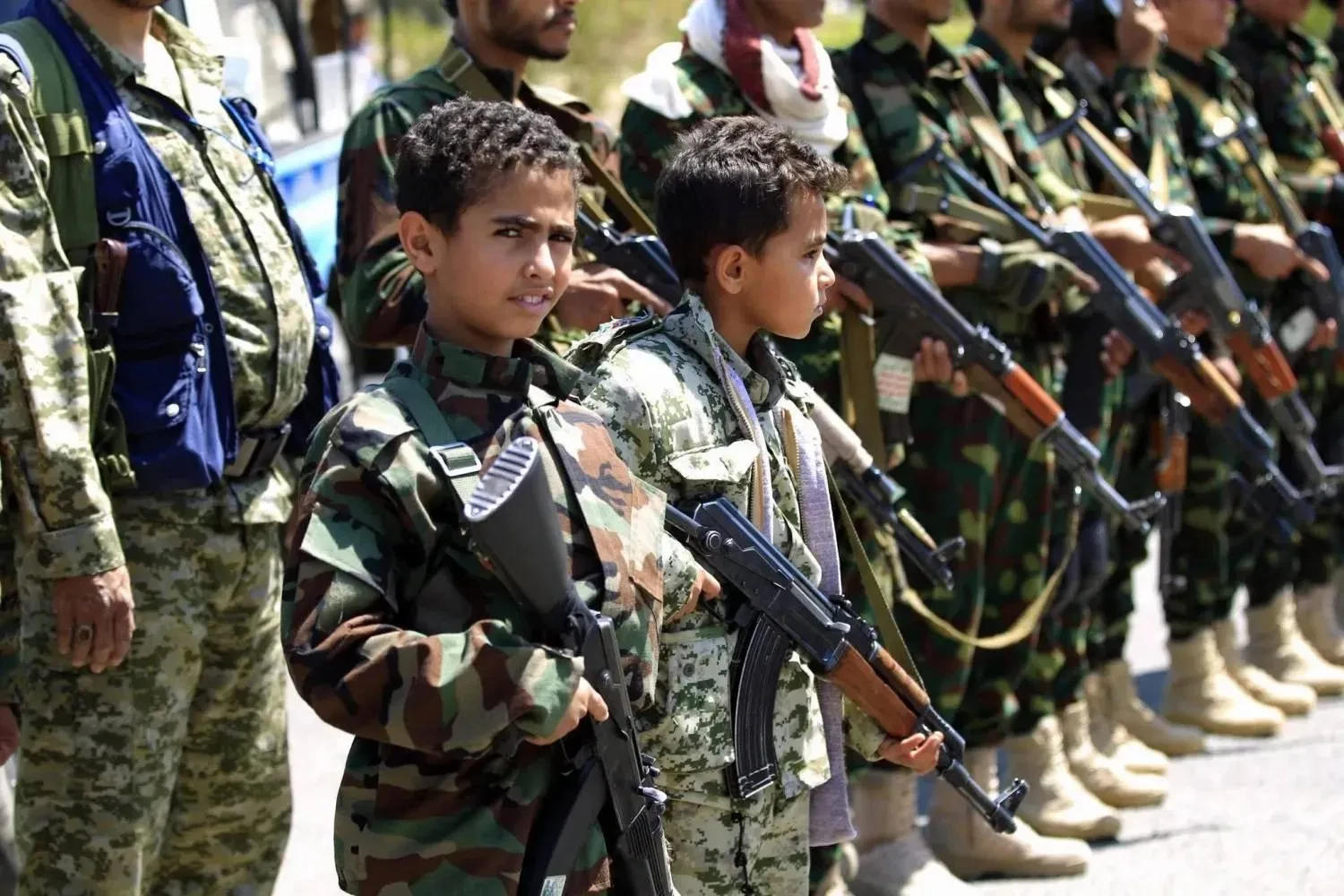
The Houthis are threatening dozens of private schools in Yemen's capital, Sanaa, with fines and closure for refusing to pull students and teachers out of classrooms for rallies promoting the militia's military escalation in Taiz and other battlefronts and glorifying its leader, Abdul-Malik al-Houthi.
School sources told Asharq Al-Awsat that the Houthis had ordered private schools in Sanaa and its outskirts to hold at least three student marches and rallies a week, both on school grounds and in nearby streets, cutting into classroom hours and turning schools into platforms for political propaganda and military mobilization.
Since seizing control of Sanaa, the Houthis have revised school curricula and introduced sectarian and mobilization activities, drawing warnings from human rights groups and the United Nations over the ideological indoctrination and military recruitment of children.
School administrators in the Safiya, Sabeen, Azal, Wehda and Tahrir districts have resisted the orders under pressure from parents threatening to withdraw their children over disrupted lessons and activities unrelated to education.
The education ministry in the Houthis' unrecognized government responded by threatening a range of penalties.
The threats come as the militia steps up mobilization activities in public schools under its control, coinciding with a military escalation in several provinces in recent weeks and amid accusations that it is seeking to recruit more fighters from among students.
The Houthis have turned annual school license renewals into a pressure tactic to force administrators to comply, sparking widespread anger among educators and communities who see the measures as a blatant violation of children's right to education and a direct threat to their future.
Education professionals told Asharq Al-Awsat they were increasingly alarmed by mobilization events imposed on schools, with students forced to participate daily.
One parent in Sanaa, speaking on condition of anonymity, expressed concern after the school administration told families their children were required to attend mobilization rallies.
"We can barely afford tuition and transportation, and now they want to turn our children into tools for their activities," the parent said. "We fear this could eventually go beyond marches and lead to our children being sent to the frontlines."
A teacher in the Azal district said the rallies were eating into school schedules and taking time away from core subjects.
Teachers who refuse to mobilize students or make them chant Houthi slogans face threats of disciplinary action and penalties, the teacher said.
Private schools in Sanaa have seen enrollment rise during years of war as families fled deteriorating public education and teacher strikes. But those schools now face Houthi financial levies and ideological scrutiny.
A private school principal in Tahrir, central Sanaa, condemned the use of license renewals to pressure administrators into implementing mobilization programs.
Schools are caught between Houthi threats of closure and parents threatening to withdraw their children over disrupted lessons, putting the education of hundreds of students at risk, he said.
The mounting pressure threatens to deepen an unprecedented collapse in education across Houthi-controlled areas, where tens of thousands of teachers have gone unpaid for years and face worsening living conditions.
The Houthis have refused to pay salaries to about 170,000 teachers and education employees in areas under their control since 2016, despite collecting billions of Yemeni rials in taxes and annual fees imposed on educational institutions.
This article was first published on Asharq al-Awsat.
Houthis threaten to shut Sanaa schools to enforce military mobilization