- Save the Children’s Alexandra Saieh calls conditions in Gaza a ‘man-made catastrophe’ as winter rains flood worn-out tents and Israeli restrictions prevent families from securing safer shelter
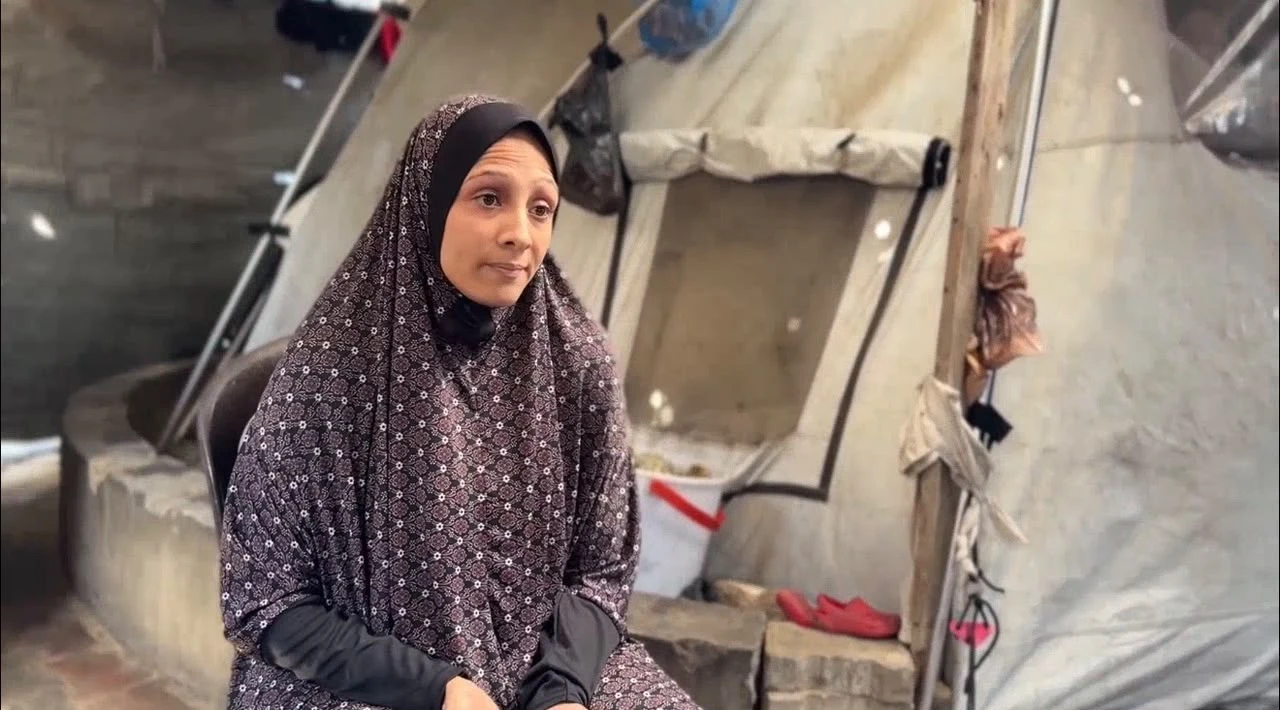
LONDON: Salma woke in the dark to water seeping into her family’s tent from above and pooling beneath them. She had layered tarpaulins over the tent in Al-Mawasi, in southern Gaza’s Khan Younis, hoping to keep out the rain. But it made no difference.
“No matter what kind of tent you have, the water always finds its way in,” Salma, whose name has been changed at her request, told Arab News.
“No one cares about Gaza. Maybe what’s happening now might entertain people outside who are bored and want to read a sad story,” she said.
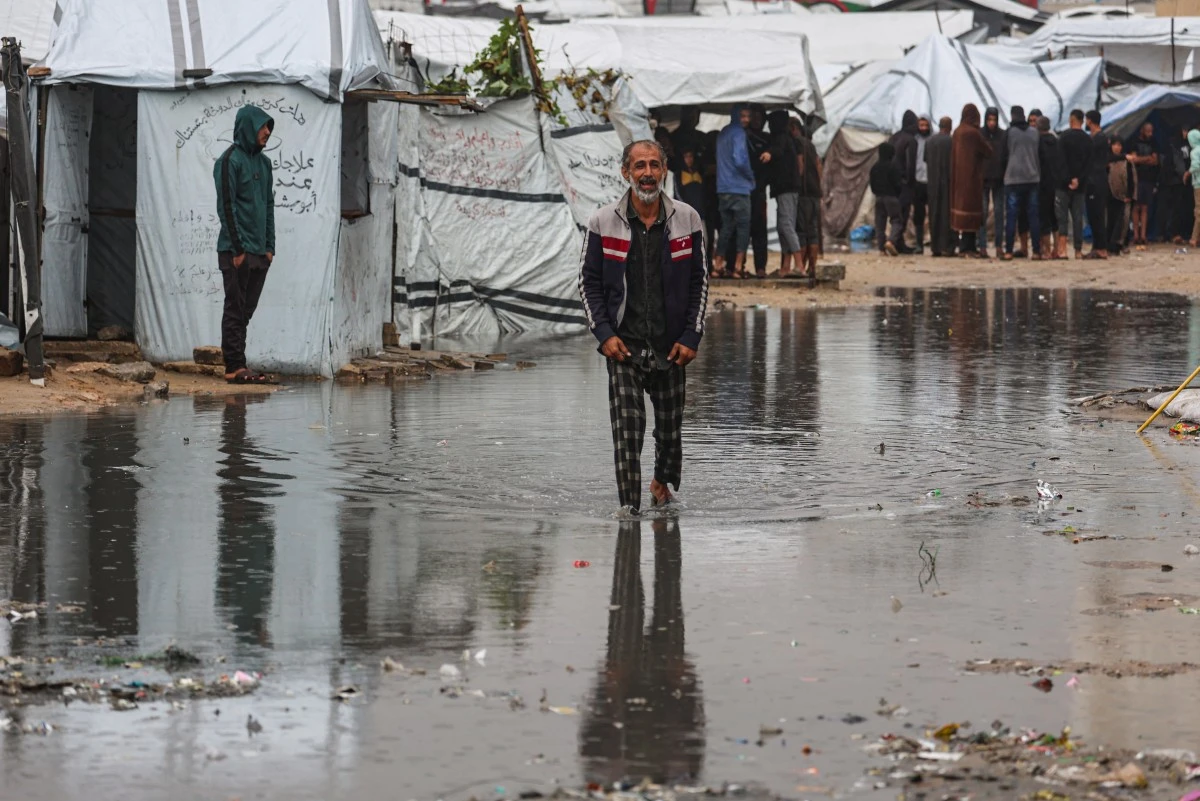
Her family was among tens of thousands caught in Gaza’s first winter storm, which flooded about 70,000 tents in a single day over the weekend, according to Save the Children.
Civil Defense received more than 1,500 distress calls as families fled waterlogged camps overnight, the aid group said on Sunday.
For people whose shelters have worn thin through repeated displacement, the downpour brought a scramble to save bedding, clothing and the few belongings they had left. It also marked the beginning of another winter with little protection from the cold.
More than half a million children in Gaza face their fourth winter in tents or makeshift shelters, Save the Children said. With temperatures falling as low as 5 C, the group warned that restrictions on shelter supplies were exposing families to potentially deadly conditions.
“What’s happening and what we’re seeing on the screens is a man-made catastrophe,” Alexandra Saieh, head of global strategic influencing and policy at Save the Children International, told Arab News.
“Not only have not enough tents been allowed through by the Israeli authorities, but they have also prevented, through their restrictions on various items, any sort of recovery and reconstruction from taking place,” she said.
A recent assessment by the Palestine Shelter Cluster, which coordinates the humanitarian shelter response, found that about 1.2 million people — roughly 58 percent of Gaza’s population, including more than 560,000 children — were living in conditions classified as “critical or catastrophic.”
Many shelters have deteriorated through prolonged exposure to the weather and repeated dismantling and rebuilding. For those inside, even the sound of approaching rain has become a source of dread.
Basel El-Maqosui, an artist in Gaza City, said rain falling on his family’s tent no longer brought the pleasure it once did before the war began in October 2023.
“The steady patter of the first raindrops on the roof brings no joy; instead, it fills our hearts with anxiety,” he said, sharing with Arab News videos of the storm’s impact on the tent.
“We scramble to find a container, a dry piece of cloth, or a corner the damp has not yet reached, while smiling bitterly and telling ourselves: ‘If this is only a rehearsal, what will the final performance be like?’”
Others shared similar scenes on social media. Om Hamdy Alyazji posted Instagram footage of the camp in which she lives and the inside of her tent, describing conditions as “truly tragic” and appealing for mobile homes to replace tents.
“People have endured so much after losing their homes, and we’re among them,” she wrote.
Even families sheltering in what remains of their homes struggle to keep the weather out.
Maysa Yousef, an artist and mother in central Gaza, said the outward appearance of her house concealed extensive damage.
“The front looks fine — there’s nothing wrong with it. But the house has been hit from behind and completely burned, and the walls are separating from one another,” she told Arab News, pointing to a risk of collapse.
She had been cleaning up rainwater since 6 a.m., she said. Her art workshops would have to stop until the space dried in the sun, while exposed materials in her studio risked being ruined.
The windows, now without glass, needed constant repairs, and tarpaulins deteriorated with each season. Replacing them had become increasingly expensive. Yousef said the price had risen from 25 shekels ($8) to 120, with periods when none were available.
“Of course, we have no choice but to buy them because of the cold and rain,” she said.
With no building materials available, she said, people searched the rubble for anything they could use to patch their homes, including concrete columns to support walls close to collapse.
Aid groups say restrictions on supplies have left families unable to make even basic improvements.
Save the Children said Israeli authorities continued to block prefabricated shelters and restrict tents, tarpaulins, blankets, fuel and materials needed to repair damaged buildings. The ceasefire announced more than a year ago had provided for the entry of caravans as a more durable alternative to tents, the group said.
“This is not simply the result of bad weather,” said Ahmad Alhendawi, its regional director for the Middle East, North Africa and Eastern Europe.
“Tents, shelter kits and fuel are waiting at Gaza’s borders while children sleep in floodwater because the Israeli authorities are blocking their entry,” he said. “This is a choice, and children are paying the price.”
Euro-Med Human Rights Monitor said about 2 million people needed shelter assistance after Israel destroyed or damaged most homes in the enclave. In a Nov. 5 statement, it accused Israel of blocking shelter and repair supplies and preventing displaced Palestinians from returning to areas under its control.
The restrictions, it said, were leaving families to face another winter in worn-out tents or damaged buildings at risk of collapse.
Israel said it restricts items entering Gaza that could be used for military purposes, the BBC reported on Sunday.
Hamas also blamed Israel for blocking shelters and construction materials, according to a Saturday report by Reuters.
On Sunday, The Jerusalem Post reported that Israeli security officials rejected criticism of the country’s winter preparations, saying 91,000 new tents, waterproof tarpaulins and 9,000 truckloads of clothing and blankets had been delivered to Gaza.
However, the officials said Israel would not allow mobile homes or equipment to rebuild damaged buildings into the territory until Hamas disarmed and Gaza was demilitarized.
Meanwhile, flooding threatens more than families’ shelters and belongings.
The UN Children’s Fund, UNICEF, warned that rising water at the Sheikh Radwan pond in Gaza City could cause rainwater mixed with sewage to overflow into surrounding neighborhoods.
Its damaged pumping system was struggling to cope, the agency said on X, calling for unrestricted entry of equipment and supplies to restore it.
Across Gaza, more than 464,000 people live in displacement sites at high risk of flooding, according to Save the Children. Those include Al-Mawasi and sites in Deir Al-Balah, Gaza City, northern Gaza and Rafah.
The group said 11 children were reported to have died from hypothermia last year.
“These were completely preventable deaths,” Alhendawi said. “As the occupying power, Israel has a legal obligation to ensure civilians receive the supplies they need to survive.”
Attempts to keep warm bring dangers of their own. Nearly half the families surveyed in the Shelter Cluster assessment said they burned materials such as plastic, tires, garbage or cardboard to cook. Some 84 percent reported having no effective way to heat their shelters.
Save the Children warned that toxic fumes, fires and burns posed particular risks to children in crowded, poorly ventilated spaces.
Funding shortages are compounding the shelter crisis, the group warned. It said 60 percent of the $283 million needed for winter preparations remained unfunded. More than 1 million people needed winter clothing, it said, but available supplies covered just 1 percent of that need.
For Yousef, the season now bears little resemblance to the winters she once loved.
“Every year, I would look forward to the cozy warmth, barbecues and hot drinks,” she said. “Now winter means suffering. I haven’t known warmth since Oct. 7, 2023.”