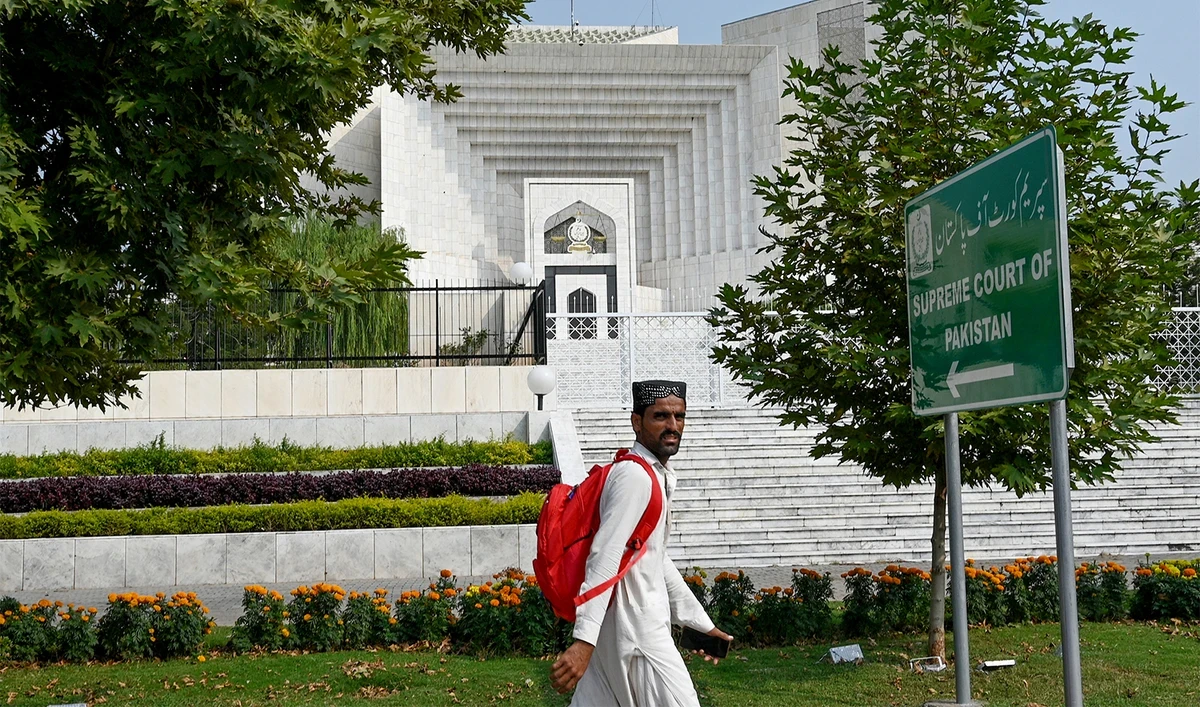
- The mechanism would allow proceedings to be conducted without revealing identities of judges, witnesses
- Pakistan has seen a surge in militancy in KP in recent years, particularly along areas bordering Afghanistan
ISLAMABAD: Pakistan is considering the establishment of “faceless” courts and allocating more than $250 million in funding to strengthen security in the country’s northwestern Khyber Pakhtunkhwa (KP) province, authorities said on Sunday, seeking to tackle militant violence in the region.
The proposed mechanism would allow criminal proceedings to be conducted without revealing identities of judges, witnesses and others involved in sensitive cases. The move comes amid continued security challenges in Khyber Pakhtunkhwa, where militant groups have carried out frequent attacks against security forces, police and civilians.
Pakistan has seen a surge in militancy in KP in recent years, particularly along areas bordering Afghanistan, where authorities say armed groups have exploited difficult terrain and cross-border networks to carry out attacks. Last month, Pakistan’s government sidelined the provincial government and took the region under its control, citing these issues.
“Under the ‘Strong Khyber Pakhtunkhwa’ initiative, a target has been set to allocate Rs70 billion ($253 million) for security, comprising Rs59.8 billion (about $216 million) for the police and Rs10.3 billion ($37 million) for the Counter-Terrorism Department (CTD),” the KP information department said in a statement, citing officials.
“A proposal was presented to establish ‘faceless courts’ for counter-terrorism cases, aimed at ensuring the swift elimination of terrorists and the protection of witnesses.”
The statement came hours after a policeman was killed in a militant attack in KP’s Tank district.
KP has witnessed a sharp rise in attacks by the Tehreek-e-Taliban Pakistan (TTP) and other militant groups, targeting police and security forces’ convoys and check-posts. Islamabad has repeatedly accused the TTP and other groups of using Afghan territory to plan and launch cross-border attacks. Kabul denies the allegation.
Authorities have set targets to enhance police fortification to 75 percent, increase surveillance capacity from 15 percent to 60 percent, and boost night-fighting capabilities from 18 percent to 50 percent, according to the statement.
Approvals included increasing the police’s anti-drone capability from 1 percent to 50 percent, enhancing the armoring of CTD vehicles from 16 percent to 70 percent, increasing the use of jammers from 3 percent to 50 percent; and expanding the CTD’s operational scope to 34 districts.
“’District Nerve Centers’ and a ‘Safe Cities Authority’ will be established across 10 districts of the province,” the statement read. “Additionally, the attrition rate (reduction in police personnel) will be brought down from 15 percent to 5 percent.”
Other measures included the deployment of artificial intelligence (AI) to counter “false and fabricated narratives on social media” as well as the establishment of ‘Smart Front Desks’ at 406 police stations across the province’s major cities.