- Pakistan also completed the ratification process for the Makkah Defense Alliance agreement
- Turkiye says renewed attack on Iran would expand conflict, diplomacy only way
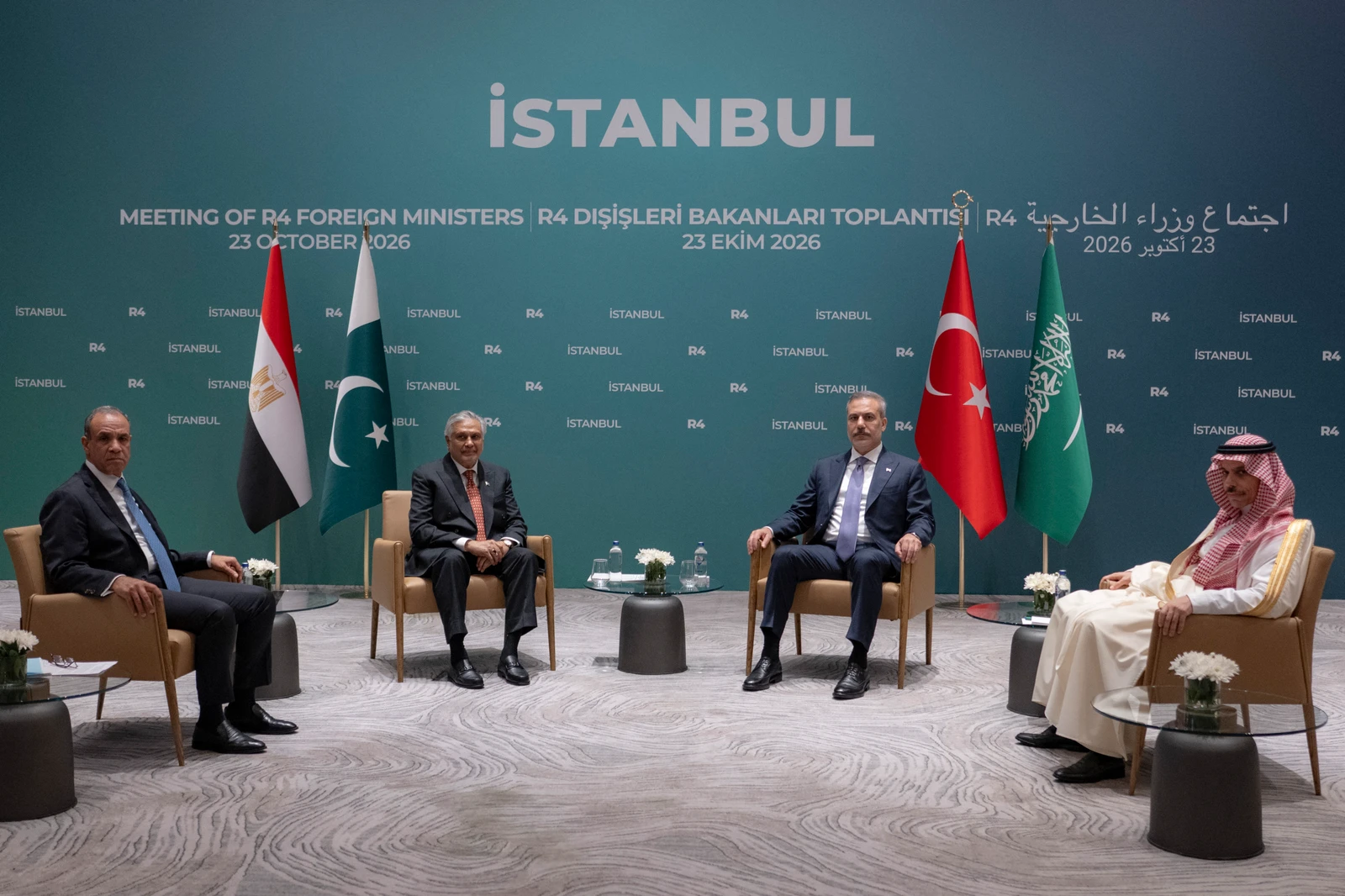
ISTANBUL: A meeting between top European diplomats and counterparts from Turkiye, Saudi Arabia, Pakistan and Egypt took place in Istanbul on Friday.
The participants discussed latest developments in regional and international issues, most notably the situation in Yemen, the US-Iran conflict, the Palestinian issue, the Russia-Ukraine crisis, and the importance of restoring and ensuring freedom of navigation in the Strait of Hormuz and the Bab El-Mandeb strait, in addition to discussing opportunities for cooperation and coordination among the countries of the region.
Pakistan also completed the ratification process for the Makkah Defense Alliance agreement, a joint defense pact with Saudi Arabia and Turkiye, the Pakistani Foreign Ministry confirmed on Friday.
It said the pact establishes a defense alliance aimed at strengthening security through joint deterrence and promoting regional stability, emphasizing that it is not directed against any other country or party.
Foreign ministers from the so-called E3 group — Britain, France and Germany — were set to meet counterparts from the newly created R4 group to discuss the Palestinian issue, developments in Yemen and the Strait of Hormuz, and ways to end the Russia-Ukraine war, the source said.
Turkish Foreign Minister Hakan Fidan hosted the meeting, the first to bring together the two groups, as Turkiye stepped up efforts to strengthen its regional role, including through the Makkah Defense Alliance.
Turkiye has said the pact is not aimed at any specific country and remains open to others, including Egypt.
“Our platform has several advantages, particularly because it is informal and flexible and focuses specifically on the issues we face. It allows us to exchange information and coordinate our positions more effectively,” Fidan told reporters.
“We are not aware of any other platform that brings together countries with such different geographical and political backgrounds. Turkiye, in particular, is well placed to play a constructive role in this process.”
Iran-US escalation
French Foreign Minister Jean-Noel Barrot said a new escalation between Iran and the United States “would create nothing but losers and would undoubtedly have very serious consequences for hydrocarbon prices.”
“And so the first thing this group of eight countries ... will do is call on both sides to exercise the utmost restraint, because we cannot afford another escalation in the region,” he told journalists on the sidelines of the talks in Istanbul.
Italy’s Antonio Tajani said the aim was to work for “de-escalation to guarantee freedom of navigation.”
“I do not believe the problem can be solved from a purely military standpoint,” he said.
“If we want to reopen Hormuz, which is vital for our economies, we must promote dialogue and make Iran understand that this attitude cannot continue.”
Fidan said a renewed attack on Iran would exacerbate tensions and further expand the conflict, adding that diplomacy and dialogue were the only way to end the war. He noted that none of the countries in the meeting approved another military intervention or attack on Iran.
Fidan also underlined support for Saudi Arabia’s security in the face of attacks by Yemen’s Houthis, and stressed the need for permanent freedom of navigation in the Hormuz and Bab al-Mandab Straits.
He stressed that regional security required countries in the region to assume responsibility and that Ankara prioritized cooperation mechanisms based on “regional ownership.”
“Regional frameworks turn into credible platforms for action and cooperation,” he said ahead of the talks.
“Stability cannot simply be imported, and lasting solutions cannot be imposed from outside. Those who live with conflict must play a central role in resolving it,” he added.
The eight countries “decided, after very constructive discussions, to continue the work by meeting at regular intervals,” Barrot said.
The E3 was set up more than 20 years ago to advance diplomatic coordination over Iran’s nuclear program, while the R4 was formed this year and brings together Egypt with the signatories to the Makkah Defense Agreement — a mutual defense pact set up by Turkiye, Saudi Arabia and Pakistan in August.