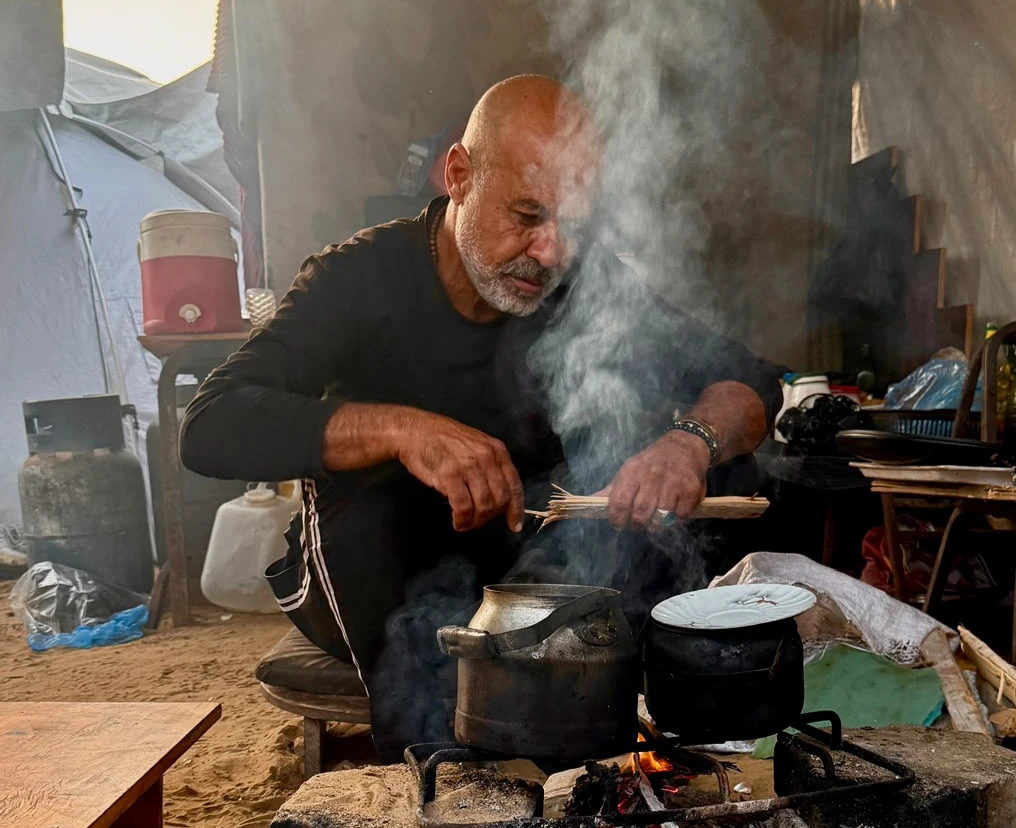
- Displaced 31 times, Palestinian artist Basel El-Maqosui turns each shelter into a studio, preserving memories of home and helping children imagine life beyond war
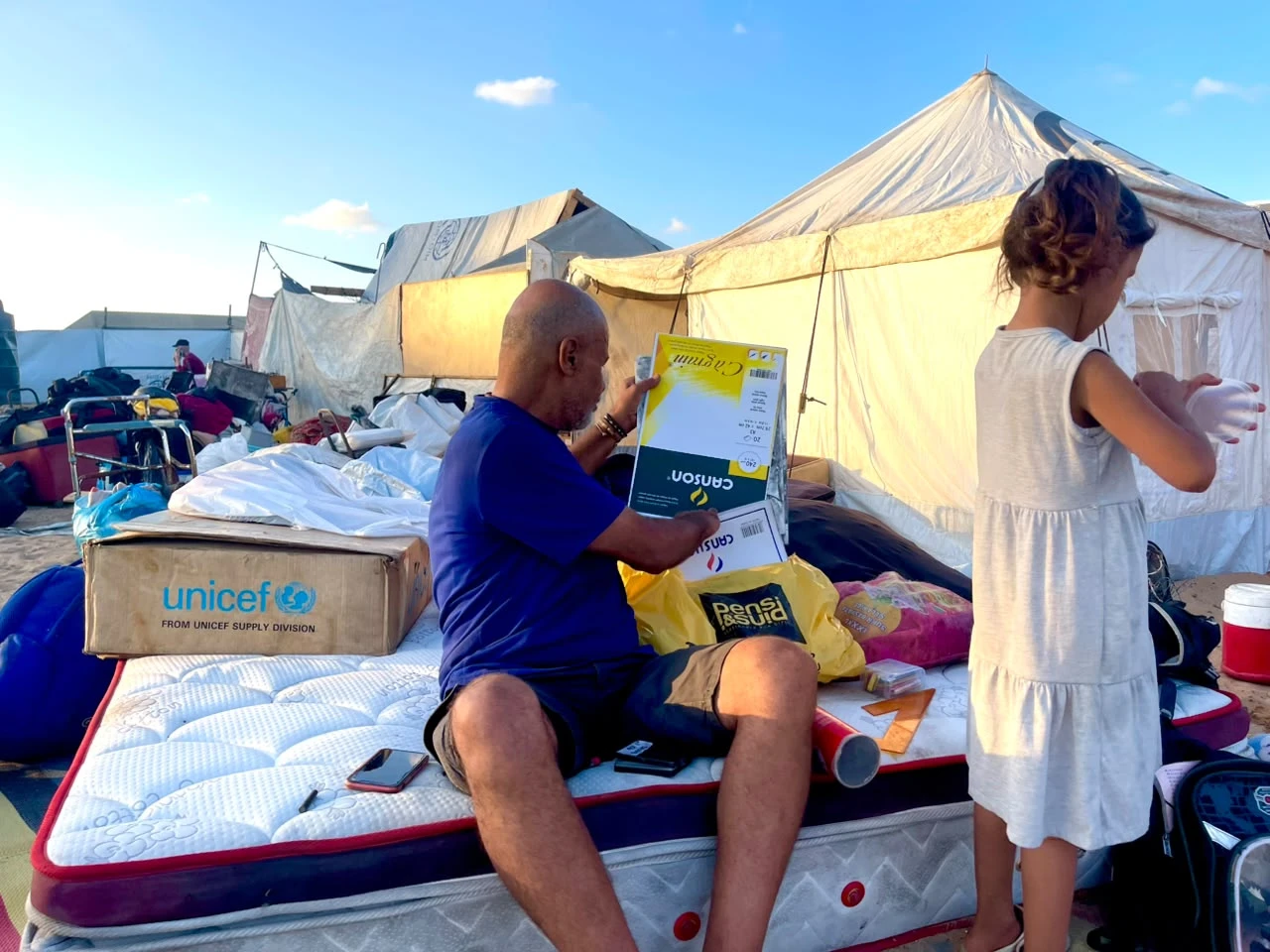
- An estimated 600 households in Gaza were displaced again as storms battered makeshift shelters, according to preliminary Site Management Cluster figures
LONDON: After being displaced 31 times in Gaza, Palestinian artist Basel El-Maqosui has another name for the places where he has sought shelter: artist residencies.
Each time he has been forced to move, he says, he has carried his paints and sketchbooks with him, turning another temporary shelter into a studio.
“When you are driven from your home once, it is called displacement,” El-Maqosui told Arab News. “When it happens 31 times, it becomes a journey through the geography of the soul.”
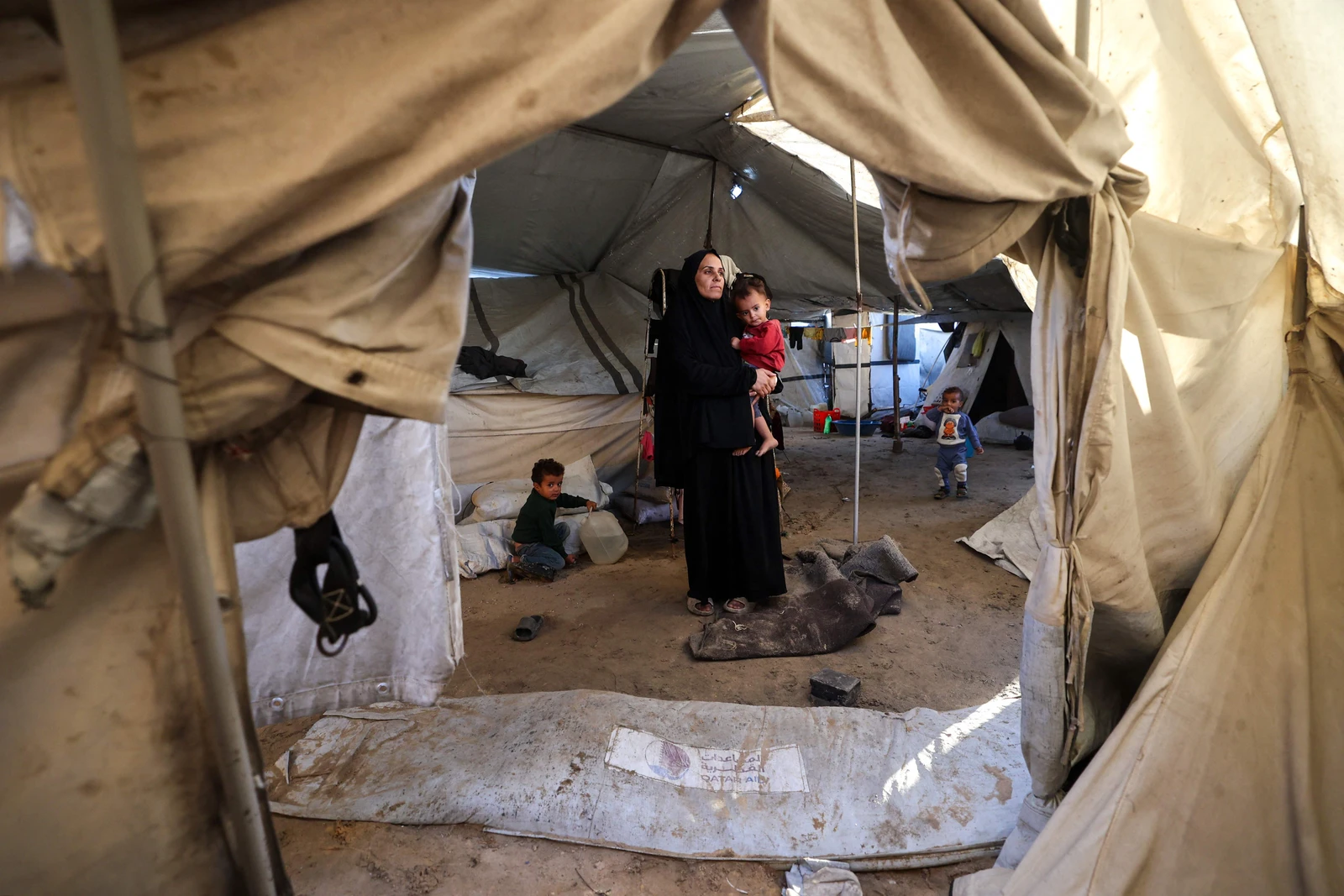
Now, heavy rains threaten the fragile spaces where he and other displaced Palestinians have sought refuge as well as the paintings he guards so carefully.
“I hate winter, especially while we are in these tents,” El-Maqosui said. “We dreaded its arrival, feeling the thin plastic walls and wondering with trembling hearts: How will we face its cold and harshness here?”
When the storm arrived, he said, it was worse than he and his family had imagined. “It did not stop at soaking the bedding or battering us with wind. It left us swimming in mud out in the open.”
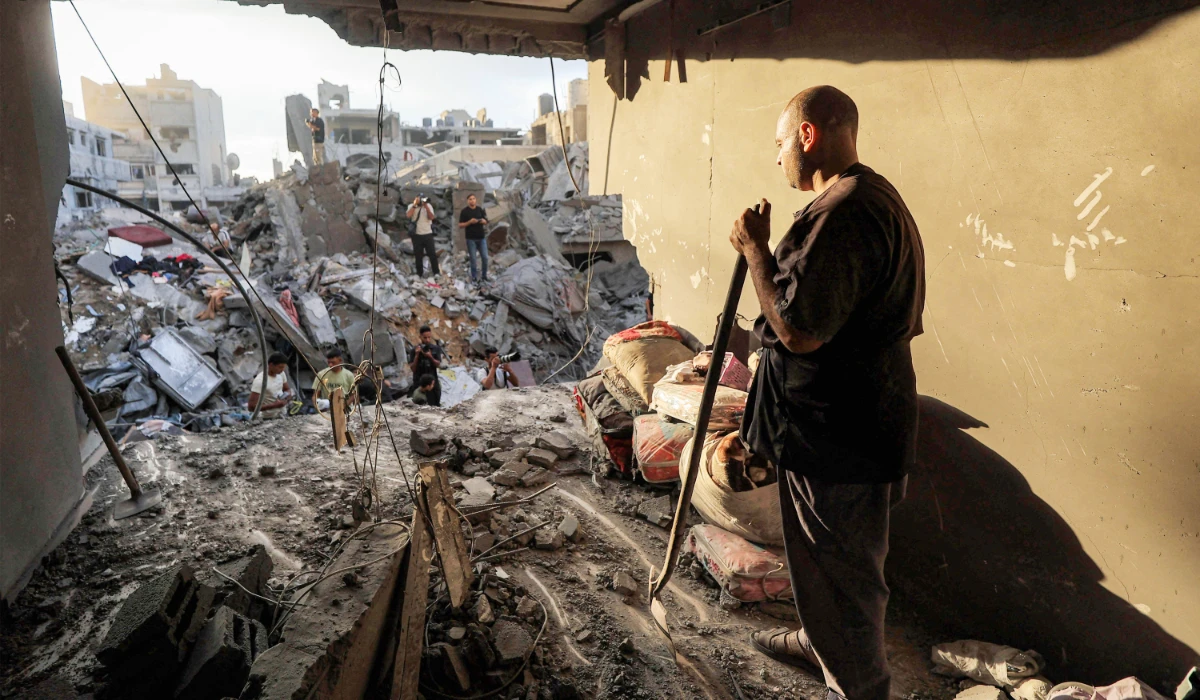
His account reflects the vulnerability of shelters across Gaza. Rain and strong winds that hit Gaza beginning Nov. 6 damaged or destroyed thousands of shelters and killed people seeking safety inside them, according to the UN humanitarian office, OCHA.
By midnight Nov. 7, the Site Management Cluster had recorded about 268 weather-related alerts affecting more than 26,000 households. Preliminary reports indicated that more than 6,000 family shelters had been destroyed and 17,400 damaged, forcing an estimated 600 households to move again.
More than 3,900 households reportedly had no shelter, while more than 20,000 across 222 sites needed tents, tarpaulins, bedding, clothing or repair materials. The figures remain subject to assessment and verification.
The storms compounded an already widespread displacement crisis, where an estimated 1.4 million people, or about 65 percent of Gaza’s population, live in tents or makeshift shelters, according to UN figures.
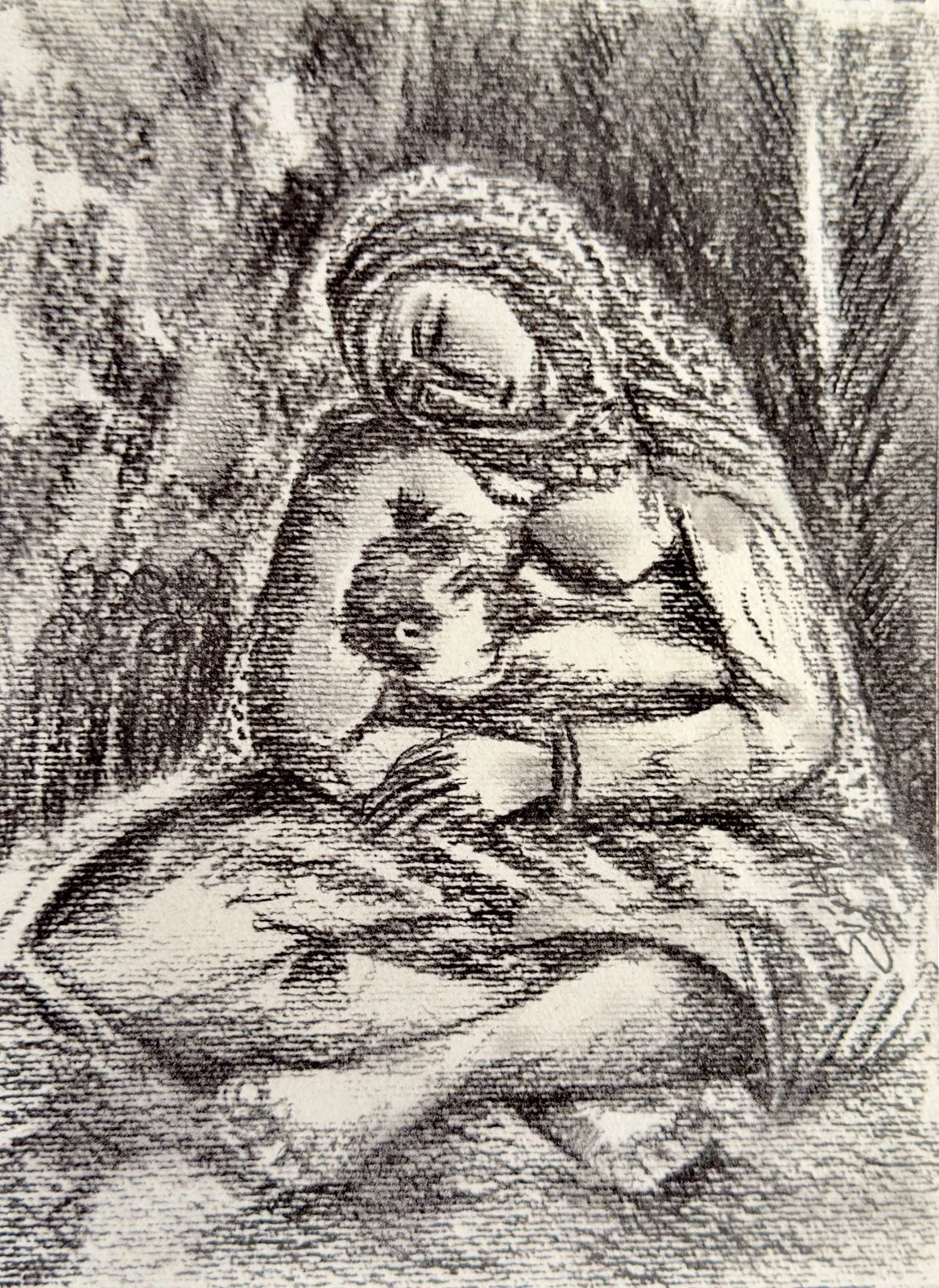
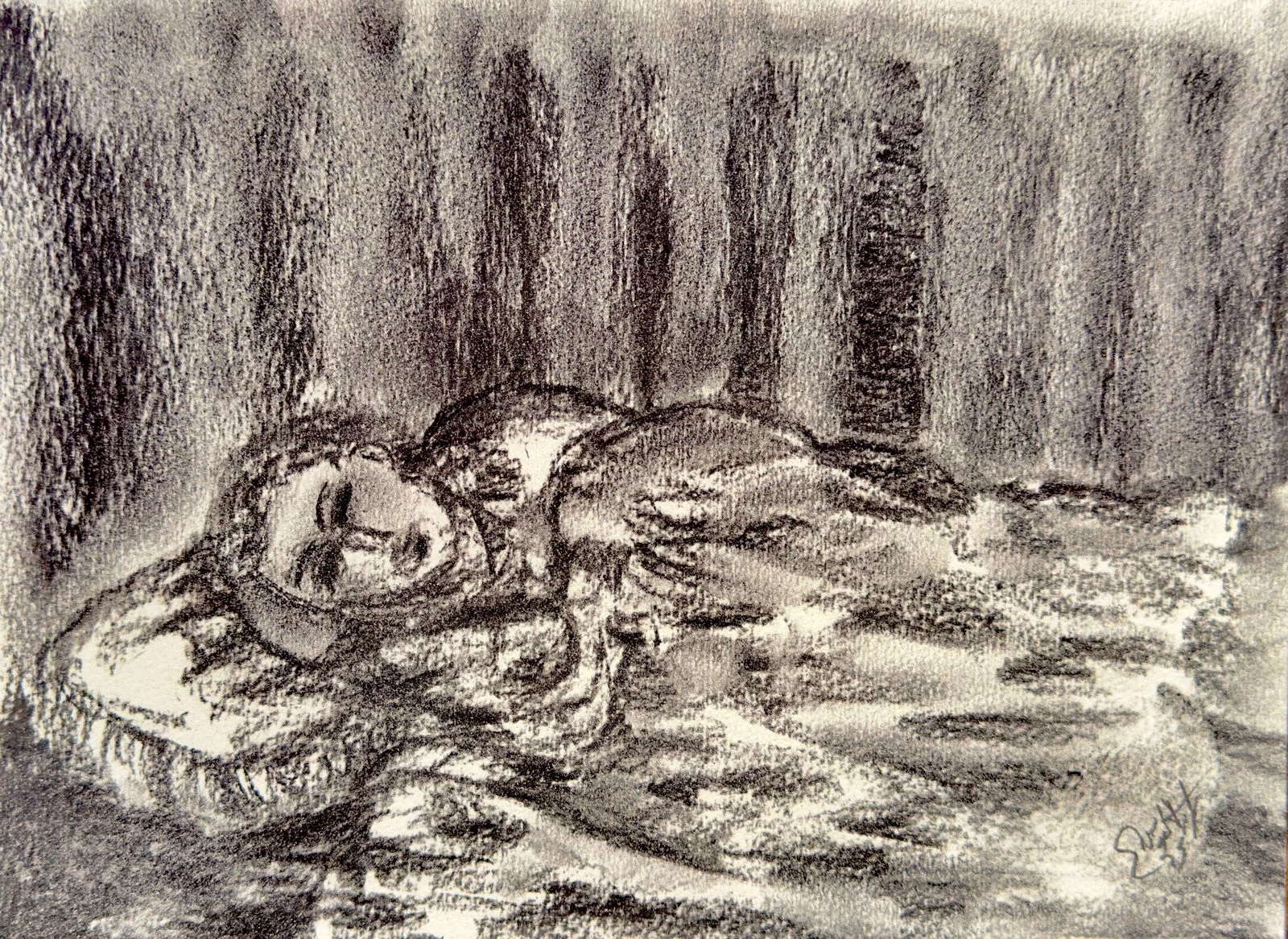
For El-Maqosui, those fragile spaces hold more than the necessities of survival. They shelter paintings he worries about as he would members of his family, works that preserve memories of homes and lives fractured by war.
“Each time my tent collapsed or I had to move, I gathered my paints and sketchbooks and set out to create another exhibition beneath a different sky,” he said. “Every time I fled, I carried my artworks from place to place, worrying about them as I would members of my family.”
Calling those stops artist residencies does not erase the hardship of being forced to flee, but he says it allows him to define each place by what he creates there, rather than only by what he has lost.
“When a tent becomes your whole world, the distinctions between the hand that holds a scalpel, the hand that holds a paintbrush and the hand that tills the soil fall away,” he said. “No one is above suffering. No one is worth less than anyone else.”
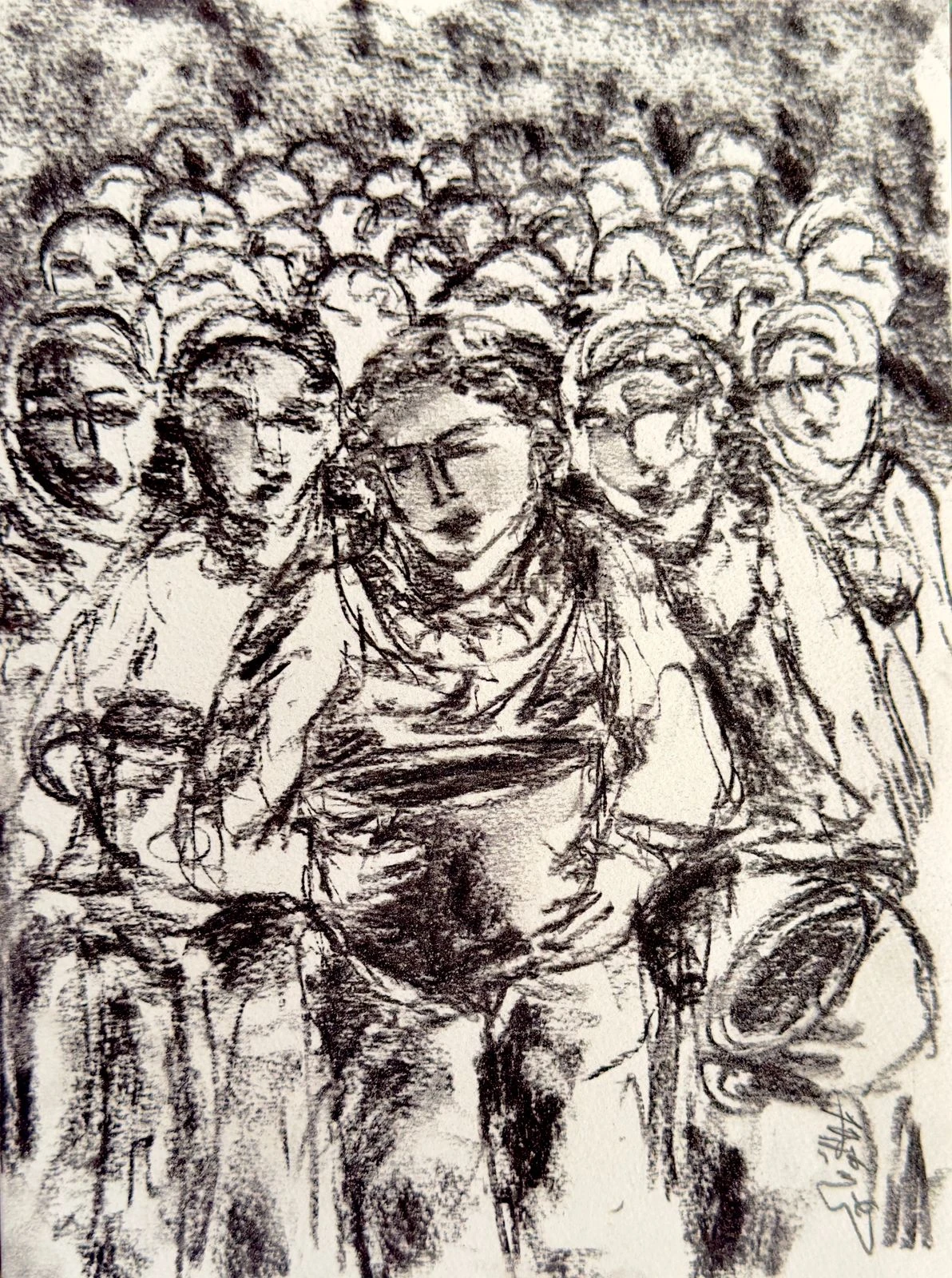
In that shared suffering, painting has become both an act of resistance and a way to preserve individual lives against the anonymity of casualty counts.
“Every charcoal line on a white sheet of paper is a small victory over the blankness of death,” he said. “Every portrait preserves a face marked by suffering but not broken by it.
“Page after page, I try to keep our memories from scattering,” he continued. “I want to leave a visual record of a people who refuse to be reduced to a number or a breaking news alert.”
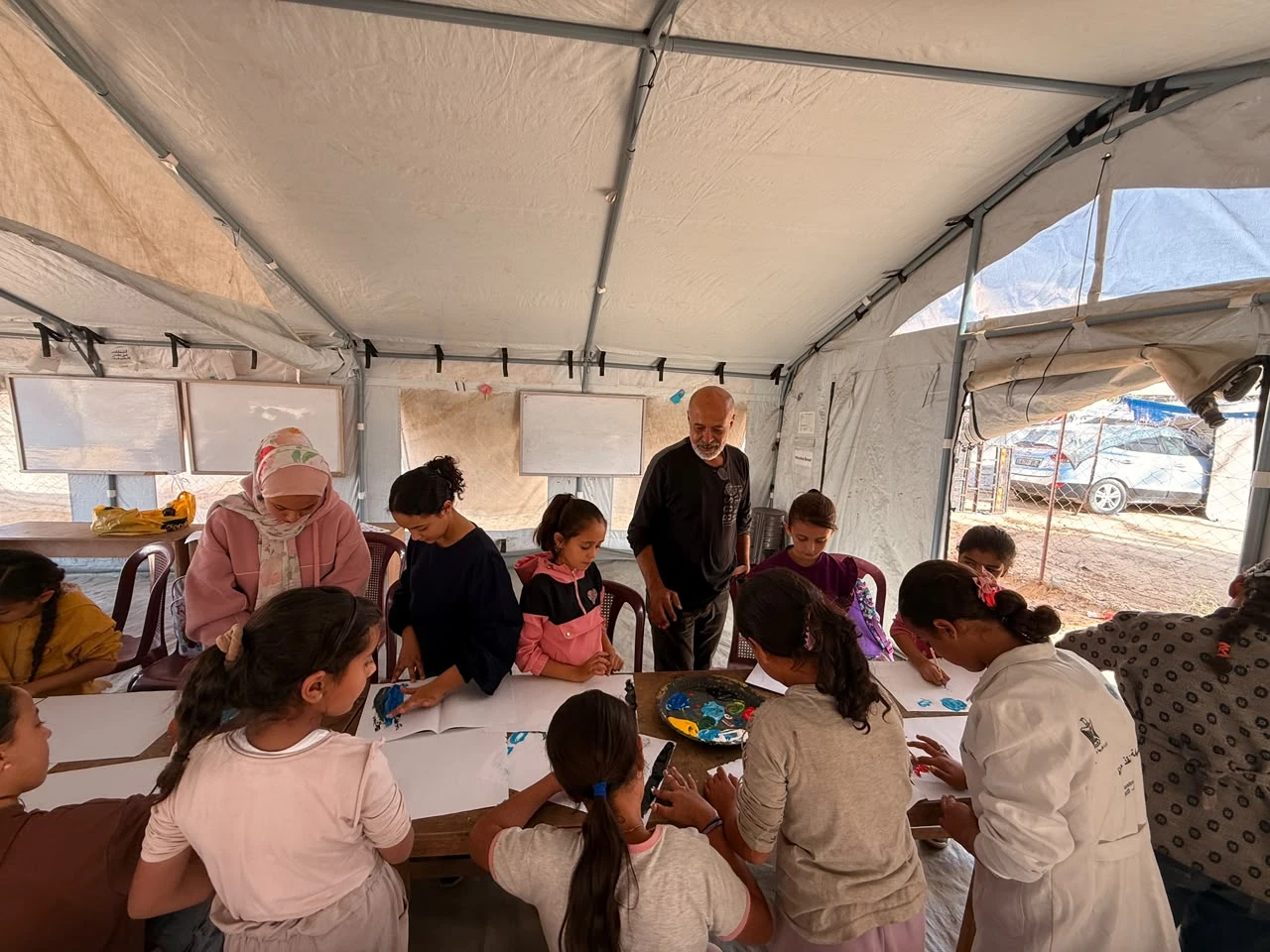
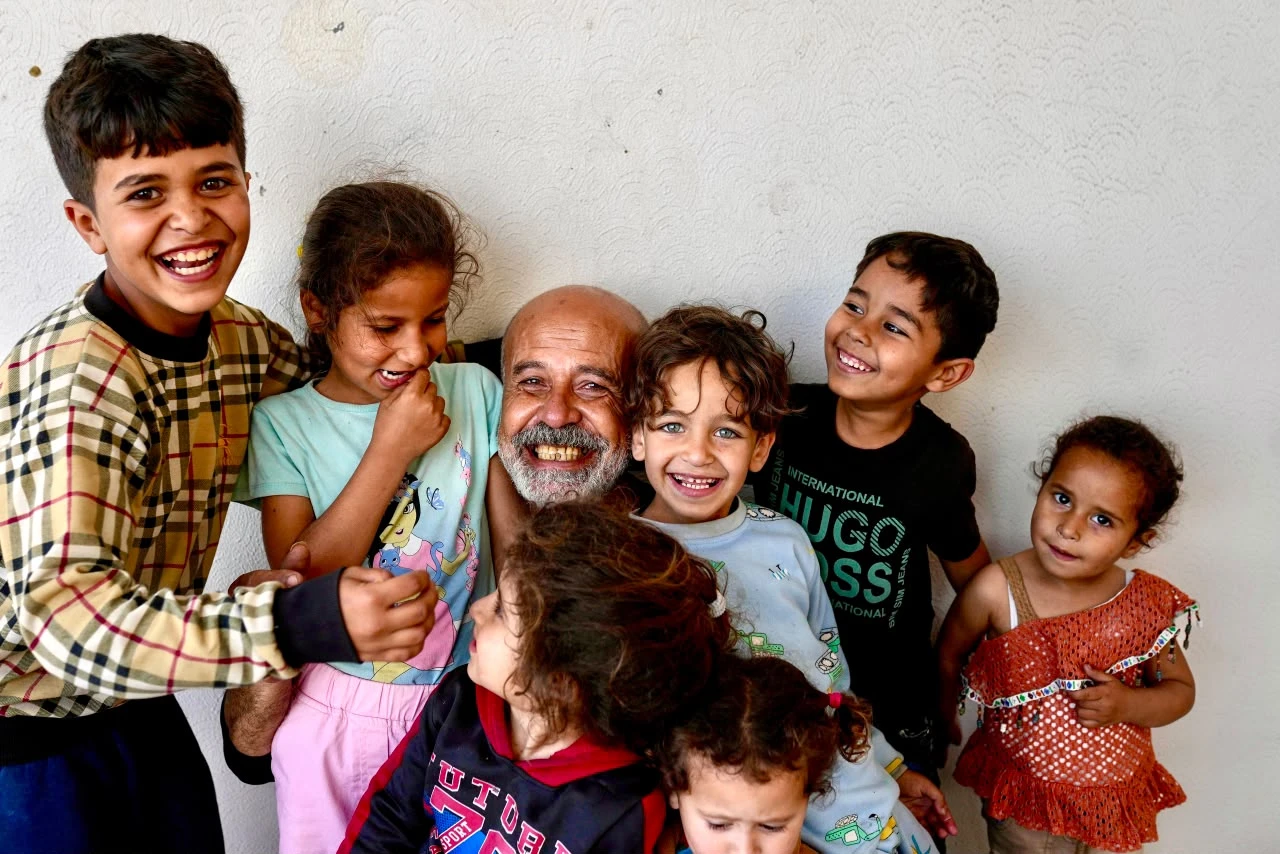
El-Maqosui also runs art workshops for children, turning the tent into a space where they can imagine something other than destruction.
“Pain is unbearable when we face it alone,” he said. “Art workshops with children have become my way of finding fresh air.”
He says he watches their fingers dip into colors as they draw green saplings and houses with intact roofs — images that, for him, suggest the possibility of rebuilding life.
“In those moments, the tent becomes more than temporary shelter,” he said. “It becomes a place where children can rediscover joy and use their imaginations to confront fear.”
For adults, too, small routines and familiar objects offer continuity amid repeated upheaval. El-Maqosui describes “a morning piece of mabrousheh — a Levantine dessert — at the tent’s entrance, three copper bracelets on a wrist and a paintbrush that never rests.”
Such details are reminders of how much displacement strips away and how little of a home can fit into the bags people carry when they flee.
“We pack clothes and necessities, compressing years of our lives into a few bags,” he said. “But we discover, painfully, that a suitcase can hold only so much. It is made for belongings, not for souls.”
A bag cannot carry the smell of morning coffee, the sound of children laughing in familiar rooms or the reassurance of a doorstep, he said. Painting gives him another way to hold on to them.
“Because we cannot carry the life inside our homes, we paint it,” he said.
The windows, bookshelves and garden trees he describes are more than features of a lost home. They preserve the relationships and routines that gave it meaning.
“We are not painting furniture or walls,” he said. “We are painting the life those places held, and we hope that, in doing so, we can give form to what has shattered within us and protect it from being forgotten.”
Across successive shelters, his purpose has remained to preserve not only what was destroyed, but the humanity of those who lived there.
“We paint to tell the world: We were here. We are still alive,” he said. “Art is our most enduring way of saying no to oblivion. Surrounded by death, we make life. Confined to tents, we paint a wider sky.
“Will we survive to exhibit them? Will we see you standing before them? If I am there with you, I will be Basel. If I am not, these paintings will be the work of a martyr, made during his final artist residency.”