- Focus is on family, Fadi Jabri, CEO of Nikken Sekkei Dubai, tells Arab News
- Chatai 2.0 is an expanded version of structure they first presented last year
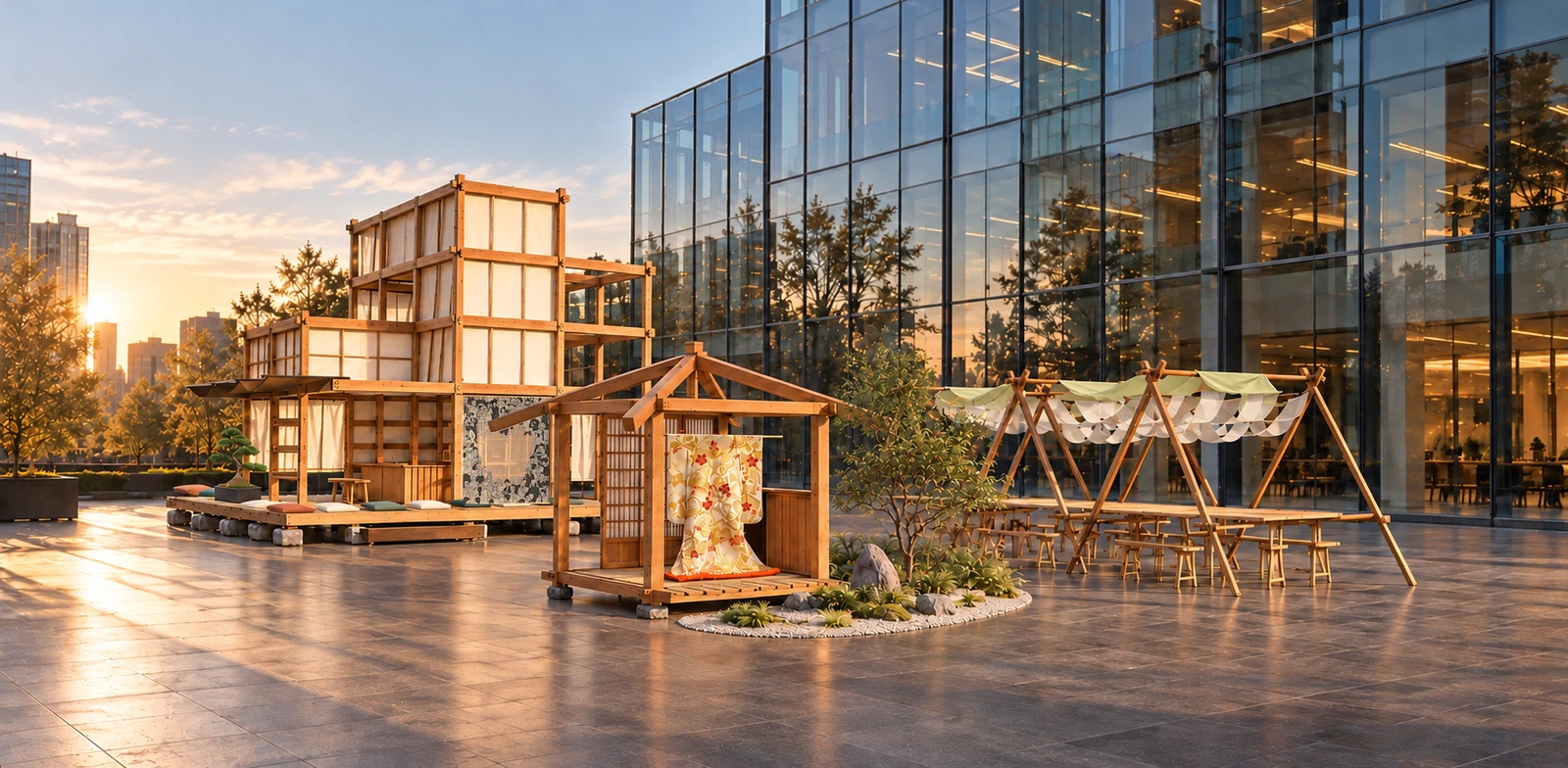
TORONTO: Japanese architecture firm Nikken Sekkei and carpentry studio Sobokuya are returning to Dubai Design Week with Chatai 2.0, an expanded version of the structure they first presented last year.
From the outset, Chatai has been shaped by Sobokuya’s “understanding of timber and craft alongside our architectural perspective,” resulting in “something neither of us would have created in quite the same way alone,” Fadi Jabri, CEO of Nikken Sekkei Dubai, told Arab News recently.
The name Chatai combines chashitsu (Japanese tea room) and yatai (street stall), drawing on two ways of spending time together, he said: “the quiet ritual of tea and the easy conversation around a shared counter.”
“Social experience is the starting point” for this year’s installation, Jabri said.
Designed to be more participatory, Chatai 2.0 is held under the theme of family, which gives its activities “a common purpose,” he added. It now unfolds into three spaces: Chatai and the newly added Machikan and Hanare.
Chatai, the timber pavilion, offers visitors “a place to pause and settle in,” he said. Joined without nails or metal fittings, the pavilion has a new engawa (veranda) and 88 furin (wind chimes) that can be decorated by visitors.
Machikan centers on a communal table that visitors can assemble together using Nikken Wood Lab’s Tsunagi system of timber and steel clamps, which Jabri said allows the table to be easily dismantled, relocated and reassembled, extending its life beyond the event.
The table serves as a gathering point for visitors to participate in activities such as tea ceremony, origami, calligraphy and ikebana (flower arrangement).
Hanare offers a more intimate encounter, wherein attendees can wear a traditional haori jacket and take photographs.
The three spaces invite visitors to “go beyond simply observing Japanese culture and experience it through participation,” eventually leaving “with a personal memory” of it, he added.
Dubai Design Week’s 12th edition runs from Nov. 4 to 8 at Dubai Design District.