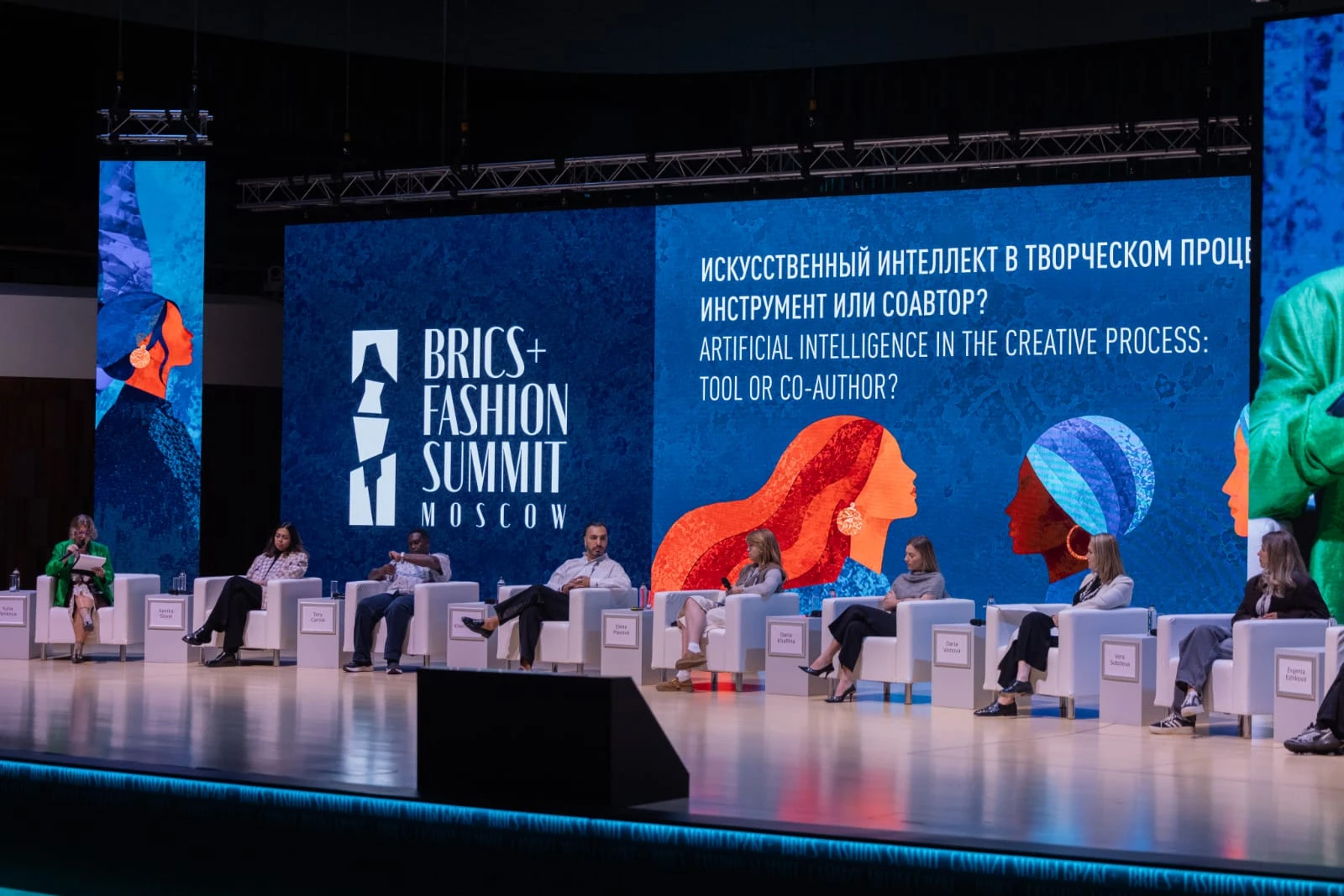
MOSCOW: Panelists at the BRICS+ Fashion Summit in Moscow staged a wide-ranging conversation over artificial intelligence this week.
Under the title “Artificial Intelligence in the Creative Process: Tool or Co-Author?,” designers, cultural advocates and legal specialists from across the BRICS+ region and beyond came together to interrogate how generative AI is reshaping fashion, craft and the laws that govern creative work. What began as a conversation about workflow and inspiration turned to provenance, cultural protection and the gap between technical capability and legal frameworks.
New Delhi-based designer Kanika Goyal set the ethical tone, stressing human responsibility in decisions about AI-assisted work. “At the end of the day, it’s your call,” she said, arguing that the creative person must decide “whether to reject the idea, to accept it, to edit, or to improvise.” If a creator simply accepted “the first choice that AI generates without even questioning it, then definitely the authorship has been passed on.”
She compared AI to existing tools, saying: “If a camera is taking a photo, if Photoshop helps you to edit, if a sewing machine is helping you stitch, you do not give them that authorship for what they have not created.” The difference, she said, is intention: “Authorship lies with you. You are the one who needs to take that decision.”
A representative from the Seychelles framed AI as both lifeline and risk: “AI is definitely helping our young generation designers to design and communicate to a wider audience,” said Tery Carolo, CEO of Seychelles Fashion Week, while emphasizing that the community must document its work to preserve Creole heritage. “So, the process is very important for us,” he added, describing initiatives that required designers to show research, color choices and iterative steps when AI was part of a workflow.
He illustrated the approach with an example; a family painting decades old was digitized and printed on contemporary swimwear — “the original painting is being transformed onto the fabric” — a project that combined manual craft, Photoshop and selective AI use while keeping provenance visible.
Legal and IP concerns came up multiple times through the session.
Daria Voinova, CEO of IPEX, a prominent Russian digital marketplace and platform dedicated to managing and trading intellectual property, warned that models trained on massive datasets could reproduce identifiable artisanal styles, raising questions about who owned the output and whether it could be registered as intellectual property.
The panelists did not reach legal consensus, but they did agree on some practical prescriptions; document prompts and steps, establish provenance records, and build industry norms to avoid costly disputes. As Voinova put it in discussing practical safeguards, precision matters; more specific prompts and clearer documentation produces results that are closer to what creators intend.
Another recurring worry was cultural dilution. Several participants cautioned that broad, uncurated training data risked flattening local aesthetics and erasing cultural specifities. That, they argued, would be particularly damaging to crafts rooted in place specific knowledge and ritual.
If the opening panel delivered a clear message it was this; AI is neither a savior nor an inevitable usurper. It is a contested technology that requires new norms, education and protective infrastructures. And until legal and ethical frameworks catch up, the final act of authorship remains human.
Experts debate AI at BRICS+ Fashion Summit in Moscow