- Israeli strike on Nasser Hospital in southern Gaza killed six Palestinians, damaged surgical wards on Thursday
- Foreign ministers urge US to press Israel to lift Gaza aid restrictions as winter threatens displaced Palestinians
ISLAMABAD: Pakistan and 16 other countries on Saturday condemned continued Israeli attacks on Palestinian civilians, warning that they were undermining the Gaza ceasefire, and urged the United States and President Donald Trump's Board of Peace to press Israel to fulfill its commitments under the peace agreement.
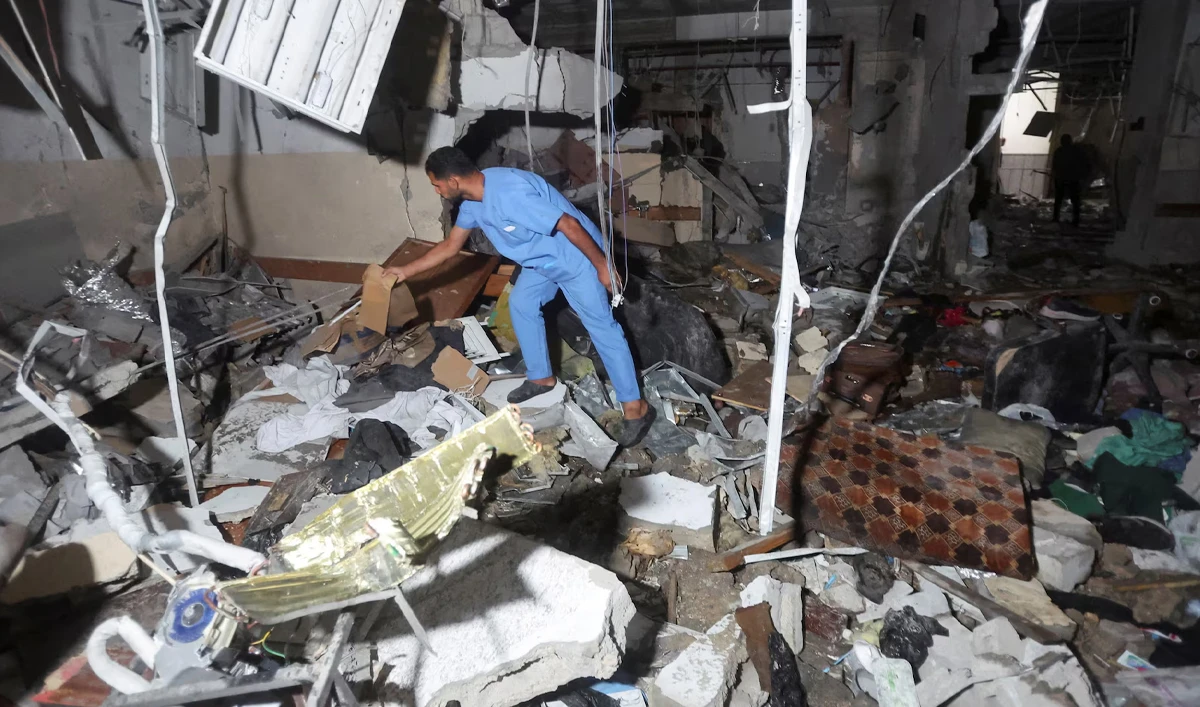
The joint statement followed an Israeli airstrike on the Nasser Medical Complex in Khan Younis, southern Gaza, on Thursday that killed at least six Palestinians, including a surgeon and a 13-year-old boy, and wounded several others, according to medical officials. The attack damaged a building housing surgical wards, forcing the hospital's surgery department out of service.
"The Foreign Ministers of Pakistan, Algeria, Djibouti, Egypt, Indonesia, Jordan, Kuwait, Lebanon, Libya, Mauritania, Oman, Qatar, Saudi Arabia, Somalia, Sudan, Turkiye and the United Arab Emirates condemn in the strongest terms the Israeli airstrike on the Nasser Medical Complex in Khan Younis, which caused casualties among patients and medical personnel, in violation of international humanitarian law, which affords special protection to medical facilities and healthcare workers," the ministers said in a joint statement circulated by Pakistan's foreign ministry.
They also condemned Israeli strikes on tents and other sites sheltering displaced Palestinians, saying the attacks put the ceasefire in jeopardy and were inconsistent with Trump's Comprehensive Plan for Gaza.
Israel's military said it had targeted a senior Hamas commander and accused the Palestinian militant group of using the hospital complex to plan attacks. Hamas denied using the facility for military operations.
The US-backed Board of Peace, established to oversee implementation of Trump's Gaza plan, called for the agreement to be implemented immediately following the attack but stopped short of directly condemning Israel.
The foreign ministers also expressed concern over Israeli restrictions on the entry of humanitarian aid, warning that inadequate shelter and deteriorating essential services were putting civilian lives at risk as winter approached.
They warned that children and infants were particularly vulnerable to exposure to freezing temperatures amid worsening conditions for displaced Palestinians.
The October 2025 ceasefire agreement, backed by Washington and subsequently endorsed by the UN Security Council, envisaged increased humanitarian assistance, the release of hostages, Israeli military withdrawals, the disarmament of Hamas and transitional arrangements for Gaza's governance and reconstruction.
However, implementation of key provisions has stalled amid disagreements between Israel and Hamas over the next stages of the agreement.
"Urgent humanitarian assistance must proceed independently of progress on subsequent phases," the foreign ministers said.
"The Ministers call on the United States and the Board of Peace, within their respective roles, to intensify their efforts to ensure Israel's full implementation of these commitments and the lifting of all restrictions on the entry of humanitarian aid, thereby preserving the credibility of the agreements and consolidating the ceasefire."
The statement called on Israel to fulfill its obligations under the Sharm El-Sheikh Agreement, Trump's Comprehensive Plan and UN Security Council Resolution 2803, which endorsed the peace framework in 2025.
"Israel must implement them without further delay or additional conditions, including political and security conditions, that impede humanitarian access," the ministers said.
They reaffirmed their commitment to working with regional and international partners to consolidate the ceasefire, implement the remaining phases of the peace plan and expand humanitarian assistance to Gaza.