- Petrol prices fall nearly 16 percent, but 29 of 51 essential items become costlier
- Transport fares remain high despite cheaper fuel, with passengers demanding relief
ISLAMABAD: A sharp fall in fuel prices in Pakistan over the past month has yet to translate into meaningful relief for consumers, who say transport fares remain high and the cost of many household essentials continues to rise despite cheaper petrol and diesel.
Petrol prices have dropped by nearly 16 percent and diesel by more than 9 percent since mid-October, but official data shows that more than half of the essential commodities monitored by the government became more expensive over roughly the same period.
Traders say the limited impact reflects a combination of supply shortages, taxation and other business costs, while the influence of cheaper fuel varies across products.
“I just bought a few things, but I haven’t seen any difference in prices,” said Mrs. Israr, a doctor who identified herself only by that name, while shopping at Islamabad’s Aabpara Market. “When I go grocery shopping, I never find any difference, whether prices are decreasing or not.”
“Whenever there is an increase in prices, everything goes up suddenly, but it never comes down,” she said, calling for stronger measures to ensure consumers benefited from price reductions.
Government-notified petrol prices fell by Rs62.66 ($0.23) per liter, from Rs392.66 ($1.42) on Oct. 14 to Rs330 ($1.19) on Nov. 14. High-speed diesel prices declined by Rs36.82 ($0.13) per liter, from Rs396.82 ($1.43) to Rs360 ($1.30) over the same period.
However, the Pakistan Bureau of Statistics’ weekly Sensitive Price Indicator, which tracks 51 essential food and household items, rose marginally by 0.13 percent between the weeks ending Oct. 15 and Nov. 12.
Of those 51 items, 29 recorded price increases, 10 became cheaper and 12 remained unchanged.
The figures illustrate the uneven impact of lower fuel costs on household spending. While cheaper petroleum can reduce transportation and distribution expenses, food prices are also influenced by seasonal availability, production costs, supply disruptions and market conditions.
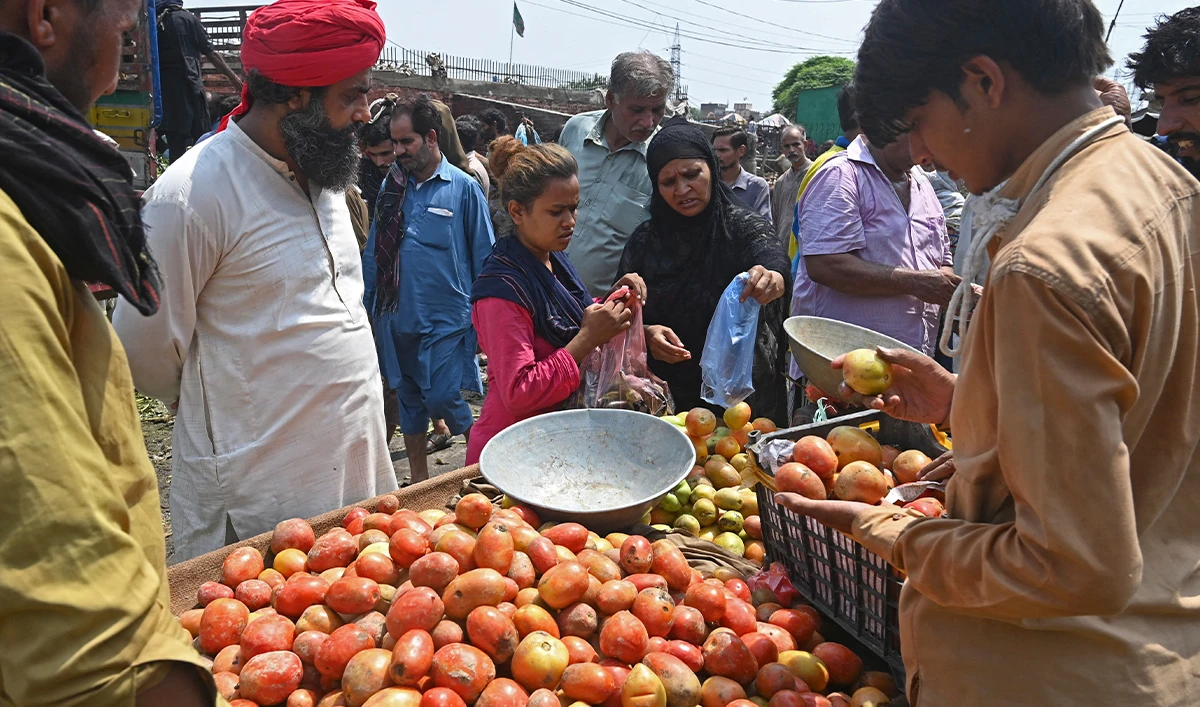
Tomatoes recorded one of the sharpest increases, rising nearly 82 percent from Rs119.43 ($0.43) to Rs217.18 ($0.79) per kilogram. The price of an 11.67-kilogram liquefied petroleum gas cylinder increased by 26.4 percent, while chicken became 9.6 percent more expensive and potatoes rose by around 6.5 percent.
Egg prices also increased by 3.6 percent.
Muhammad Kashif Chaudhry, president of Markazi Tanzeem-e-Tajiran Pakistan, a central body of traders, said the fuel price cuts were welcome but insufficient on their own to bring down the cost of essential goods.
“I must say that prices are reduced by small amounts on a daily basis, which is why their effects are not reflected in the market properly. Secondly, until a substantial reduction is made, there will be no substantial reduction in the prices of other items either.”
Chaudhry said taxation, food supplies and weaknesses in distribution networks were also affecting prices.
He cited flour, which he said was selling for between Rs7,600 ($27.48) and Rs8,000 ($28.92) per 40 kilograms, as an example of the pressure on household budgets.
He urged the government to improve wheat supplies, reduce taxes and address electricity, gas and other production costs, arguing that cheaper petroleum alone could not reverse broader price pressures.
Ahmad Jawad, chief organizer of the Pakistan Business Forum, similarly said the reductions had yet to produce tangible relief for businesses and consumers.
“The federal and provincial governments should ensure their price mechanism is working so that the impact of declining prices becomes visible. Whether it is daily commodities or transport fares, that relief is still not visible, and prices are not decreasing in the way that was expected.”
The gap between falling fuel prices and what consumers actually pay is particularly evident in public transport, where passengers say operators have not reduced fares despite cheaper fuel.
Numan Ahmed, a passenger at Islamabad’s Karachi Company bus station, said he was being charged Rs450 ($1.63) for a journey to Haripur, up from Rs420 ($1.52) previously.
“When prices increase, fares go up immediately, but when petrol decreases, they don’t reduce them at all,” he said.
Unlike fresh produce, whose prices can fluctuate sharply with supply and seasonal conditions, transport fares are more directly affected by fuel costs, although wages, maintenance and other operating expenses also influence what operators charge.
Responding to concerns about transport fares, Pakistan’s Energy Minister Ali Pervez Malik said he would take up the matter with provincial leaders and relevant chief ministers.
“If petrol prices and diesel prices have come down, the actual fares that a commuter is paying at the bus stands also need to be administered,” he told Arab News, adding that he would convey passengers’ concerns to the relevant authorities.