DHAHRAN: King Fahd University of Petroleum and Minerals (KFUPM) has been ranked first among the region’s Top 100 universities, according to QS World University Rankings 2015.
According to the report, the American University of Beirut (Lebanon), King Saud University (Riyadh) and King Abdul Aziz University (Jeddah) followed respectively.
Despite its name, KFUPM offers courses in a wide array of subjects, covering traditional disciplines as well as fields of engineering, science and business.
In the QS World University Rankings for 2015, the university is ranked among the world’s Top 200 institutions for computer science, mathematics, statistics and operational research, chemical engineering, civil and structural engineering, electrical, electronic and mechanical engineering.
It also ranks in the global Top 400 for chemistry.
The rankings compare the Top 800 universities globally across four broad areas of interest for prospective students, including research, teaching, employability and international outlook.
Four key areas are assessed using six indicators, each of which is given a different percentage weighting.
Four of the indicators are based on hard data, including student-to-faculty ratio (20 percent), citations per faculty (20 percent), international faculty ratio (5 percent), and international student ratio (5 percent).
The remaining two indicators are based on major global surveys, one of which is the reputation of academics (40 percent) and another regarding the reputation of employers (10 percent).
“With one of the fastest-growing higher education systems in the Middle East, Saudi Arabia offers a number of world-class institutions,” said the report.
“Eight Saudi universities were ranked in the QS World University Rankings 2014/15, and the nation claims 12 of the Top 100 universities in the Arab region, in the QS University Rankings: Arab Region 2015.”
The report pointed out that facilities at the leading universities in Saudi Arabia are second-to-none, thanks to the nation’s ongoing and significant investment in higher education.
Saudi Arabia’s rapid development over the last 50 years has had a strong impact on trade, business, tourism, education, technology, transport, architecture and culture, particularly within the key cities, said the report.


Best in region: Saudi universities stay ahead
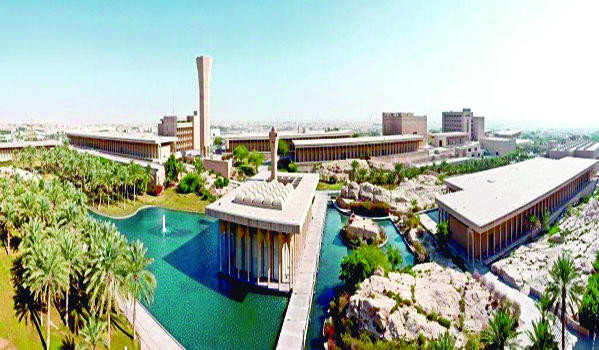
Best in region: Saudi universities stay ahead

Arab, Islamic youth explore Saudi heritage, holy sites, progress
- Participants in Holy Sites Journey program tour Makkah, Madinah, and Jeddah, witnessing world-class pilgrim services
JEDDAH: The 11th Holy Sites Journey Program recently concluded in Jeddah, with more than 114 youth from 33 Arab and Islamic countries participating.
The 10-day program was organized by the Ministry of Sport, in cooperation with the Organization of Islamic Cooperation and the League of Arab States.
Participants traveled across Makkah, Madinah, and Jeddah, exploring sacred sites, performing Umrah, and witnessing the Kingdom’s exemplary Hajj organizational practices.
They also visited historical landmarks, experienced modern sports facilities, and observed urban development projects, gaining insights into Saudi Arabia’s rich heritage, spirituality, and progress.
At a closing event in Jeddah on Thursday, Ahmed Al-Ghamlas, assistant deputy minister of sports for youth affairs, praised the participants and emphasized the Kingdom’s commitment to hosting programs that empower the next generation.
He also encouraged those taking part to serve, on returning to their home countries, as ambassadors conveying the Kingdom’s advancements in services for pilgrims.
Al-Ghamlas added: “The program aimed to strengthen cultural and youth communication between Arab and Islamic countries, highlight the Kingdom's leading role in serving Islam and Muslims, and empower youth by building their capabilities.”
Ambassador Tarig Ali Bakheet, assistant secretary-general for humanitarian, cultural, and social affairs at the Organization of Islamic Cooperation, praised Saudi Arabia's efforts in organizing the program for young people from Arab and Muslim countries, noting it as a step to promote cultural dialogue among youth from Islamic nations.
Participants expressed their appreciation and gratitude for the opportunity to be part of the journey, witness the Kingdom’s transformative projects and world-class facilities, and pledged to share the knowledge, experiences, and insights they gained with peers in their home countries.
Bilal Jabiro, head of the Syrian Ministry of Youth delegation, told Arab News: “It was a great journey, and I enjoyed every minute of it. We sincerely thank Saudi Arabia for giving us this opportunity to strengthen our ties with youth from other Islamic nations and to see firsthand the great services and facilities the Kingdom offers to visitors and pilgrims.”
Youssef Issa Al-Sharifi, a member of the Supreme Council for Algerian Youth, praised the program’s objectives, saying: “Participation is an opportunity for every Arab Muslim.”
Meanwhile, Hussain Saeed from Oman told Arab News that he was happy to see the expansion of the Two Holy Mosques, adding: “It was a very informative and educational journey.”
Syrian influencer Azam Al-Khaldi said the program combined worship, knowledge, and history.
“It was an amazing journey, and I had the pleasure of showing my followers every step of the 10-day program,” he added.


