SINGAPORE: The aviation market is holding up well despite a faltering global economy, with customers finding funds for purchases and taking deliveries of planes, Boeing and Airbus said at the Singapore Airshow.
A cloud had settled over the biennial event in the city-state as the ripples from China’s economic slowdown and unsettled global financial markets stoked concerns of potential cancelation or deferment of plane orders, especially from fastest-growing Southeast Asia.
But planemakers, whose production lines are loaded for rapid growth in deliveries after a recent order boom, defied the industry’s growing number of skeptics, saying an unprecedented eight-year expansion in aerospace remains on track, underpinned by a tailwind from low oil prices.
“Our market has been growing. It’s been very resilient, and our customers are making a lot of money,” said Randy Tinseth, vice president of marketing for Boeing Commercial Airplanes.
The Boeing executive said low oil prices had helped airlines post record profits. The planemaker had not got any requests for deferrals of deliveries from airlines, it said.
Airbus sales chief John Leahy also said the planemaker had not been asked for deliveries to be deferred.
Their views were echoed by aircraft parts makers.
Pratt & Whitney’s new chief Robert Leduc, in an interview with Reuters, played down concerns over aircraft demand, saying the engine maker had seen no deferrals or cancelations.
The airshow also saw new orders for some planemakers, especially the smaller ones.
On Tuesday, Mitsubishi Aircraft Corp, a unit of Mitsubishi Heavy Industries Ltd, struck a deal to supply 20 regional jets to US leasing firm Aerolease, its first agreement with a lessor.
And ATR, a joint venture between Airbus and Italy’s Finmeccanica, signed a $130 million deal to supply five ATR 72-600 aircraft to Singapore-based lessor Avation PLC .
“I was concerned that there may be some serious slowdown, and I didn’t see it happen,” the turboprop planemaker’s Chief Executive Patrick de Castelbajac told a media briefing.
“It’s good to see that the customers are turning up, they are taking deliveries, they are finding the financing,” Castelbajac said.
NOTE OF CAUTION
But no large orders were announced on Tuesday, the first day of the airshow, and some analysts said they were unlikely.
Bertrand Grabowski, DVB Bank’s global head of aviation, said he sees little appetite for large new orders because low oil prices were a powerful incentive for airlines not to rush to order.
Airlines generally tend to order fuel-efficient modern jets to cut costs when oil prices are high. However, the strong balance sheets of airlines, boosted by cheap oil, could also help them to place new orders.
Some also sounded a note of caution on the industry. Akbar Al-Baker, the CEO of Qatar Airways, said premium traffic in the industry was dropping.
At the airshow, it was not just passenger planes that grabbed the attention. Spy planes — including converted passenger planes and business jets — are on some nations’ shopping lists in a region where complex territorial disputes between China and several Southeast Asian nations are fueling security concerns.
Swedish arms firm Saab formally launched a militarised Bombardier business jet, dubbed GlobalEye, after selling the early warning and control system to the UAE in November.
And Boeing is promoting its P-8 converted 737 passenger jet for maritime surveillance at the air show, Asia’s largest.


![]()
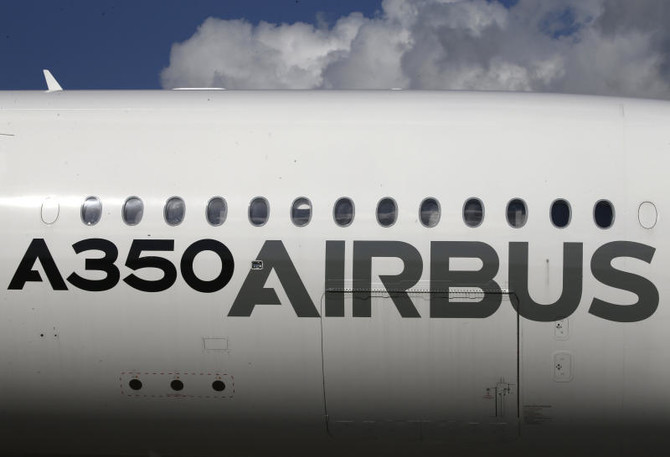
Planemakers flag strong aircraft demand despite economic headwinds
Planemakers flag strong aircraft demand despite economic headwinds
Latest updates


© 2026 SAUDI RESEARCH & PUBLISHING COMPANY, All Rights Reserved And subject to Terms of Use Agreement.