DUBAI: Saudi Arabia supplied less crude oil to the market in September than a month earlier, an industry source said on Thursday, at a time when some OPEC members are calling on the Kingdom to cut back output to lift prices.
Brent rose above $85 a barrel on the news, though it was still trading not far from its lowest in four years.
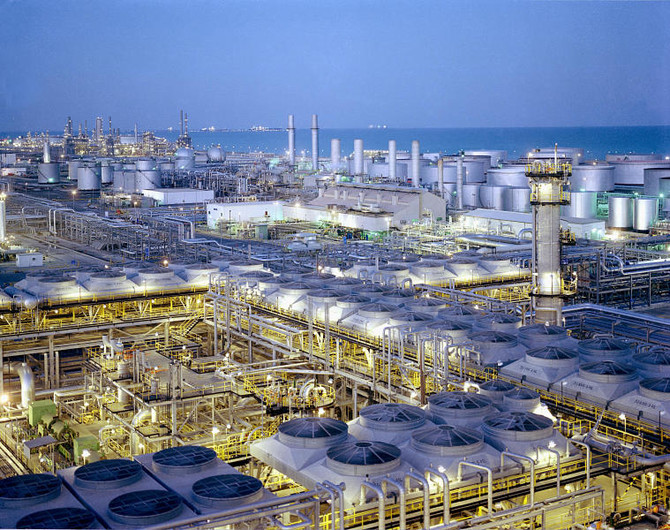
Crude supplies from Saudi Arabia fell by some 328,000 barrels per day, to 9.36 million bpd in September, from 9.688 million bpd in August, the source said.
Supply to the market — both domestically and for exports — may differ from production depending on the movement of barrels in and out of storage.
The source did not give a reason for the drop in crude supply in September. But the kingdom typically burns less crude for power generation when the weather starts to cool, which may free up more oil for export in the coming months, analysts say.
Saudi oil use for power generation fell to 769,000 bpd in August, from 899,000 in July, according to official figures released earlier this week.
The fall in September’s crude supplies might have also been a way to compensate for the extra barrels taken out of storage in August when Saudi’s supplies were higher than its output. September output was 9.70 million bpd, up from 9.597 million bpd in August.
“I don’t interpret this as a move to tighten up the market. That wouldn’t make sense ahead of the OPEC meeting,” said Bjarne Schieldrop, chief commodity analyst at SEB in Oslo.
“Saudi Arabia does not want to make any substantial cuts on its own.”
Few OPEC members would want the most influential member of the group to cut production to support oil prices, a failed policy that Riyadh has taken in the 1980s but is unwilling to go down the same road again now.
OPEC’s Gulf producers can tolerate lower prices. Saudi Arabia has been quietly signaling that it is comfortable with prices below $90 and has been slashing its crude prices to Asian customers to compete for market share.
Sources have indicated that Riyadh was unwilling to shoulder any output cut unilaterally and that any cut has to be a collective one by all OPEC members.
Saudi Arabia is likely to keep its oil production steady throughout the rest of the year as world oil consumption is expected to rise and domestic demand for crude to ease during the winter, an industry source said last month.
Saudi crude exports fell in August to 6.663 million bpd for the fourth month in a row to their lowest levels in three years, as Saudi Arabia fights for market share amid weak demand and ample supplies from rival producers.
September exports figures were not available yet on the website of the Joint Organizations Data Initiative (JODI).
Industry observers see Saudi crude output at around 9.5 million to 9.6 million bpd in the coming months when seasonal demand picks up.
˝Saudi exports will probably stay around 6.9 million to 7.1 million bpd until December, they say.
Saudi crude exports have been sliding in the past few months as shale oil squeezes its oil out of US markets and as demand in Asia, particularly in China, has been slower than expected.
OPEC meets to review policy on Nov. 27. So far Gulf members of the Organization of the Petroleum Exporting Countries have indicated their reluctance to cut output to lift prices.
Libya’s OPEC governor told Reuters on Wednesday that OPEC should cut its oil output by at least 500,000 bpd. But Libya is the only one of four African OPEC members calling for a supply cut.
Iran, in a shift of tack, has said it also can live with lower oil prices, reducing the likelihood of any collective cut in OPEC output to support prices.


Saudi Arabia supplies less oil in September despite output rise
Saudi Arabia supplies less oil in September despite output rise

Operational challenges bring Riyadh Airport to a near standstill
- Airlines issue statements, while sources tell Arab News rain is to blame
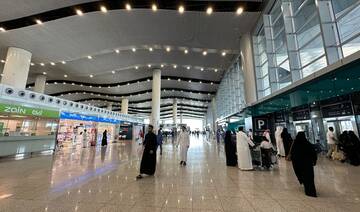
RIYADH: Thousands of passengers travelling to and from King Khalid International Airport in Riyadh were left stranded as major airlines struggled to offer alternative flights following a slew of cancellations and delays.
Saudia and flyadeal were among the aviation firms who faced difficulties, with the two airlines putting out statements blaming temporary operational challenges for the issues.
A statement from the airport on its official X account urged travelers to contact airlines directly before heading to the aviation hub to verify the updated status and timing of their flights.
The statement said: “King Khalid International Airport would like to inform you that, due to the concurrence of a number of operational factors over the past two days —including several flights diverting from other airports to King Khalid International Airport, in addition to scheduled maintenance works within the fuel supply system — this has resulted in an impact on the schedules of some flights, including the delay or cancellation of a number of flights operated by certain airlines.”
The airport added that operational teams are working “around the clock in close coordination with our airline partners and relevant stakeholders to address developments and restore operational regularity as soon as possible”, while taking all necessary measures to minimize any impact on the passenger experience.
Airport sources told Arab News that the issue has to do with the heavy rain Riyadh experienced earlier on Friday. Water apparently got into the fuel tankers supposed to refuel jets before they fly, and then several airlines struggled to re-schedule passengers.
It its own statement on X, Saudia said: “Affected guests are being contacted through various communication chanels, with all ticket changes processed at no additional cost.”
Arab News reached out to Saudia for further information.
Also in a post on X, flyadeal said any of it passengers impacted by the disruption “will be notified directly by emails and SMS with rebooking and support options.”