- Investment agencies from Sharjah, Oman, and Kuwait are promoting regional connectivity and economic reforms to attract UK investors.
- Gulf economies emphasize their resilience and the potential for foreign direct investment, particularly from the UK.
LONDON: Investment agencies from Sharjah, Oman and Kuwait are seeking to attract more UK business by promoting regional connectivity, economic reforms and opportunities in technology, logistics and advanced manufacturing.
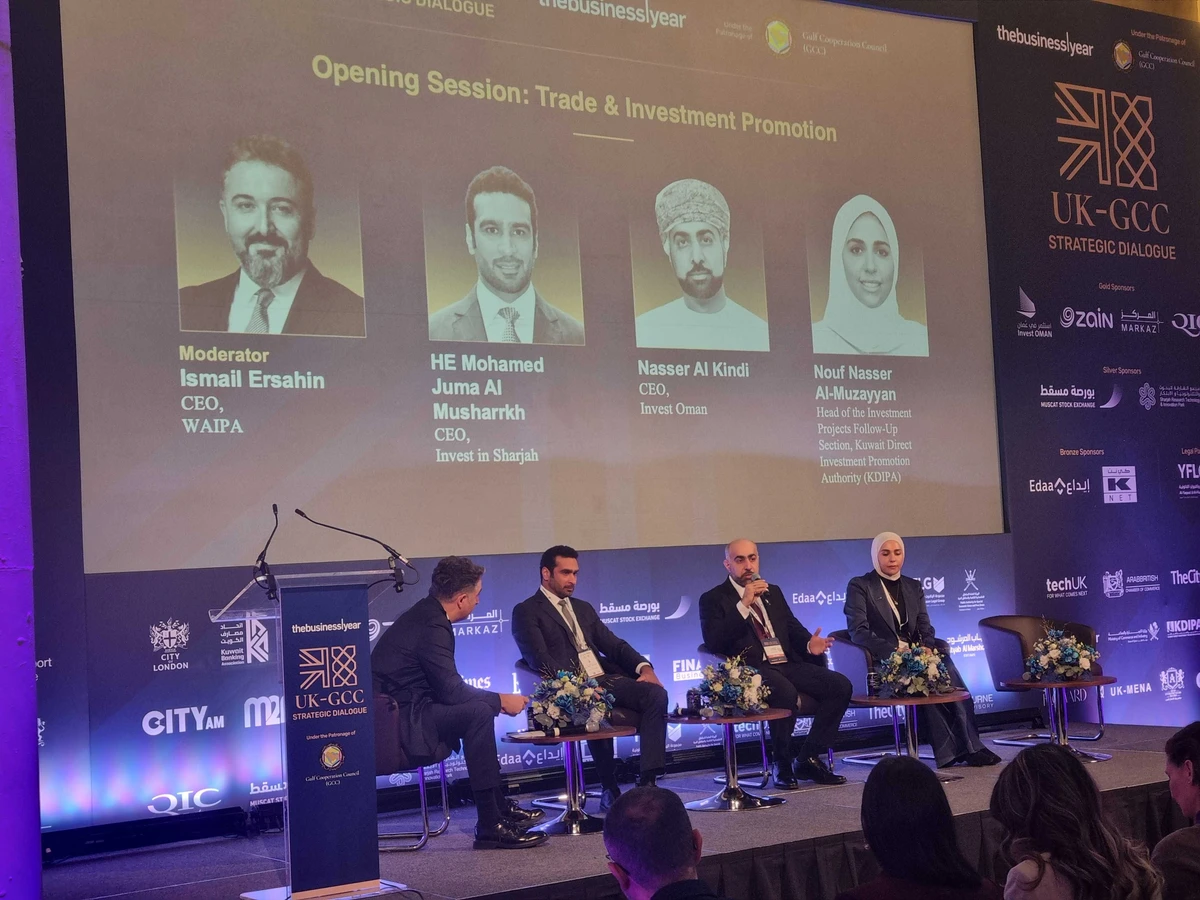
Speaking at the UK-GCC Strategic Dialogue at London’s Guildhall, the agencies’ representatives stressed that Gulf economies could not only complement each other while offering international investors access to wider regional and global markets.
They also highlighted the resilience of the region’s economies, despite recent unrest and shocks to the markets, as a key driver of foreign direct investment, especially from an ally such as the UK.
“Investors value resilience as much as opportunity,” said Nouf Nasser Al-Muzayyan, head of the Investment Projects Follow-Up Section at the Kuwait Direct Investment Promotion Authority.
She said Kuwait has become fully focused on business continuity, institutional responsiveness and adapting to investors’ changing needs, while working with international investors and British companies to create an environment in which they could succeed over the long term.
With the ambitions of Kuwait 2035 vision, she said, there was significant potential for investment, adding that her country had been pursuing greater economic openness over the past two to three years, with reforms intended to respond to investors’ needs.
Al-Muzayyan also highlighted international cooperation through organizations including the Gulf Cooperation Council and the World Bank, saying longstanding ties between Kuwait and the UK offered scope for further economic collaboration, especially after the singing of the UK-GCC Free Trade Agreement earlier this year.
“It's a win-win for both,” she said.
Complement, rather than compete
Mohamed Juma Al-Musharrkh, CEO of Invest in Sharjah, said Gulf economies and the individual emirates of the UAE should focus on complementary strengths rather than competing for the same investments.
“I think, how we do it with other GCC nationals and countries, we complement each other rather than compete with each other,” he said.
Sharjah was focusing on manufacturing, as well as logistics, transportation and technology, supported by six free zones catering to different industries, including facilities linked to its port and airport, as well as research and technology, media and healthcare, he added.
Al-Musharrkh said these sectors were particular priorities because of the emirate’s geographical position and infrastructure.
“(We) have ports on both sides, the Arabian Gulf and the Indian Ocean,” he said, highlighting their role in moving goods not only into the UAE but also to other GCC countries.
Nasser Al-Kindi, CEO of Invest Oman, similarly presented the sultanate as a platform for international production and exports rather than simply a destination for selling goods.
Oman connects Asia, Africa, and the Middle East from one hub, he said, pointing to the country’s ports and infrastructure as advantages for investors seeking distribution hubs and access to international markets.
“We are basically encouraging our investors not only to export raw materials, but how we can add more and export the final goods for the rest of the world,” he said.
“Oman is not a place to sell to. Oman is a platform, strategic platform, to produce, to add value, and to export,” he said.