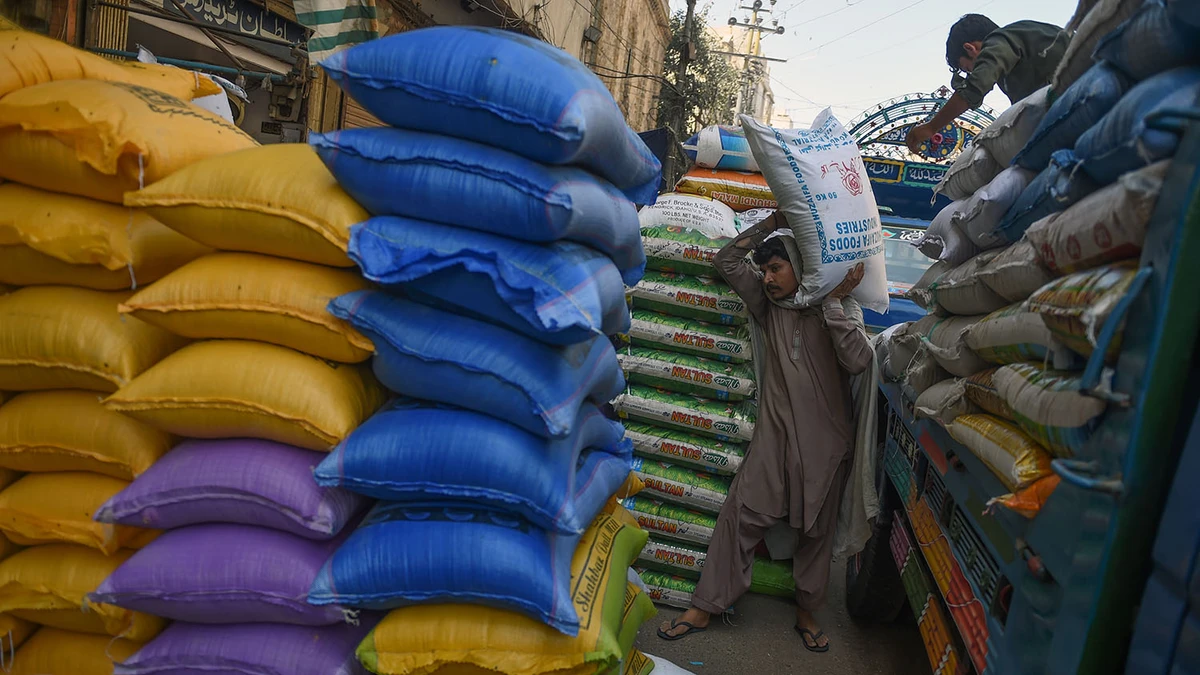
- Rice export earnings jump 56 percent to $652 million in first quarter of FY27, as per data
- Exporters credit government incentives, competitive prices for gains in Southeast Asian market
KARACHI: Pakistan’s food exports rose more than 25 percent to $1.39 billion in the first quarter of the current fiscal year, driven largely by higher rice shipments, including a sharp increase in sales to the Philippines, according to official data and market analysts.
The growth in July-September came as Pakistan sought to expand its agricultural exports beyond traditional markets in the Middle East and Europe. Rice accounted for much of the increase, with exporters and analysts attributing the surge in Philippine orders to competitive prices, government incentives and a shift in demand away from rival suppliers.
“Pakistan’s food exports grew by 25 percent in 1QFY27, mainly due to higher rice exports,” Abdul Azeem, head of research at AL Habib Capital Markets, told Arab News.
According to the Pakistan Bureau of Statistics (PBS), the country’s food exports increased from $1.11 billion in the corresponding quarter last year, with rice export earnings jumping 56 percent to $652.4 million from $418.5 million.
Basmati rice exports rose 86 percent to $276.3 million, while non-Basmati shipments increased 39 percent to $376.1 million.
“On a quarterly basis, the Philippines is the relatively faster growing market, contributing an additional $124 million in 1QFY27,” Shankar Talreja, head of research at Karachi-based brokerage Topline Securities, said.
Pakistan Customs data showed rice exports to the Philippines surged to approximately $118 million in July-September from just $160,000 a year earlier, with shipment volumes climbing to 282,725 tons from 130 tons.
The bulk of the exports comprised non-Basmati rice, with shipments totaling 266,491 tons worth $112 million, followed by 16,126 tons of broken rice valued at $5.78 million.
The increase marked a significant expansion into a market traditionally supplied by Vietnam and other major Asian rice exporters.
“The biggest reason for this increase in rice exports is DLTL,” Muhammad Raza, chairman of the Rice Exporters Association of Pakistan (REAP), told Arab News, referring to the government’s Drawback of Local Taxes and Levies incentive scheme.
The government introduced the scheme in January and extended it through September to help exporters offset domestic costs and improve their competitiveness in international markets.
“In non-Basmati, the Philippines was the biggest market in the Far East,” Raza said, adding that Pakistani exporters had worked to penetrate the market and secured substantial orders during the quarter.
He said higher Vietnamese rice prices and political disagreements between Vietnam and the Philippines had prompted buyers to seek alternative suppliers. Pakistani exporters also benefited from competition with India, whose older rice crop some Filipino buyers considered less attractive, according to Raza.
“Because of this, they diverted to Pakistan,” he said.
The surge in Philippine demand contributed to broader growth in Pakistan’s food exports, with meat shipments rising 21 percent to $148 million, seafood exports increasing 15 percent to $103 million and oilseeds, nuts and kernels climbing 241 percent to $125 million.
Pakistan’s commerce ministry spokesperson Naveed Ul Haq Kallu did not respond to requests for comment.