- A consortium of Egypt's Elsewedy Electric and China's Sinohydro has signed a $2.2 billion contract to expand Saudi Arabia's Rabigh 2 independent power plant.
- The expansion will increase capacity by 2.3 gigawatts, with commercial operations expected to start in May 2029.
RIYADH: A consortium comprising Egypt’s Elsewedy Electric Power Systems Projects, a subsidiary of Elsewedy Electric, and China’s Sinohydro has signed a $2.2 billion contract to expand Saudi Arabia’s Rabigh 2 independent power plant.
The expansion will add 2.3 gigawatts of capacity, with commercial operations scheduled to begin in May 2029, Asharq Bloomberg reported.
Elsewedy Electric said in a statement on Wednesday that the contract was awarded by Al-Mourjan Two Electricity Co. and covers the engineering, procurement, and construction of the natural gas-fired plant, which uses combined-cycle technology, as Saudi Arabia expands its power generation capacity.
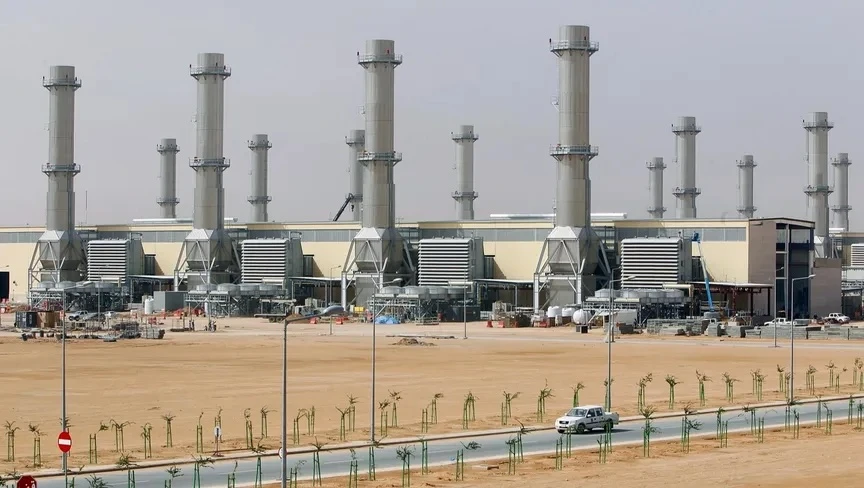
The consortium will handle design, engineering and procurement, as well as supply, installation, construction, commissioning and performance testing, along with associated civil works and the connection of the plant to the national electricity grid.
The project includes six gas turbines and two steam turbines manufactured by Siemens, in addition to six heat recovery steam generators, a cooling tower, and control systems as well as supporting mechanical and electrical equipment.
Project completion exceeds 39%
Overall progress on the project has exceeded 39 percent, following the start of on-site work under a limited notice to proceed issued earlier, according to the statement.
The plant is expected to add new generation capacity to Saudi Arabia’s electricity grid, helping meet rising energy demand from industrial, commercial, and residential sectors.
Saudi Arabia expands power projects
Saudi Arabia is working to increase electricity generation capacity and diversify its energy mix as part of plans to phase out liquid fuels used in power generation and expand reliance on natural gas and renewable energy.
The Kingdom’s licensed electricity generation capacity reached about 92.5 GW in 2024, while electricity supplied to the grid totaled around 402.6 terawatt-hours, according to the latest annual data from the General Authority for Statistics.
Electricity consumption stood at approximately 340.4 terawatt-hours that year, up 4.1 percent year on year.
Saudi Arabia aims to generate about 50 percent of its electricity from renewable sources by 2030, with natural gas supplying the remainder, as part of its transition toward a more efficient energy mix.
The Rabigh 2 expansion is part of the Kingdom’s combined-cycle gas power projects, which aim to improve electricity generation efficiency alongside the development of solar and wind energy projects.
Elsewedy Electric’s operations
Founded in 1938 and listed on the Egyptian Exchange, Elsewedy Electric operates in the energy, infrastructure, and digital solutions sectors. Its activities include manufacturing cables and electrical products, as well as delivering engineering and construction projects.
The company reported revenue of $5.7 billion in 2025. It employs around 22,000 people and operates 34 production facilities with a presence in 60 countries, according to its corporate data.
China’s Sinohydro, established in the early 1950s, is a subsidiary of PowerChina. It specializes in engineering, procurement, and construction, with projects spanning power generation, transmission, civil works, and infrastructure development.