- The development follows attacks by Yemen’s Houthis on Saudi civilian and oil infrastructure, killing over a dozen people
- Pakistan and Oman agree to fill gaps in bilateral trade, economic activities and investment opportunities at the meeting
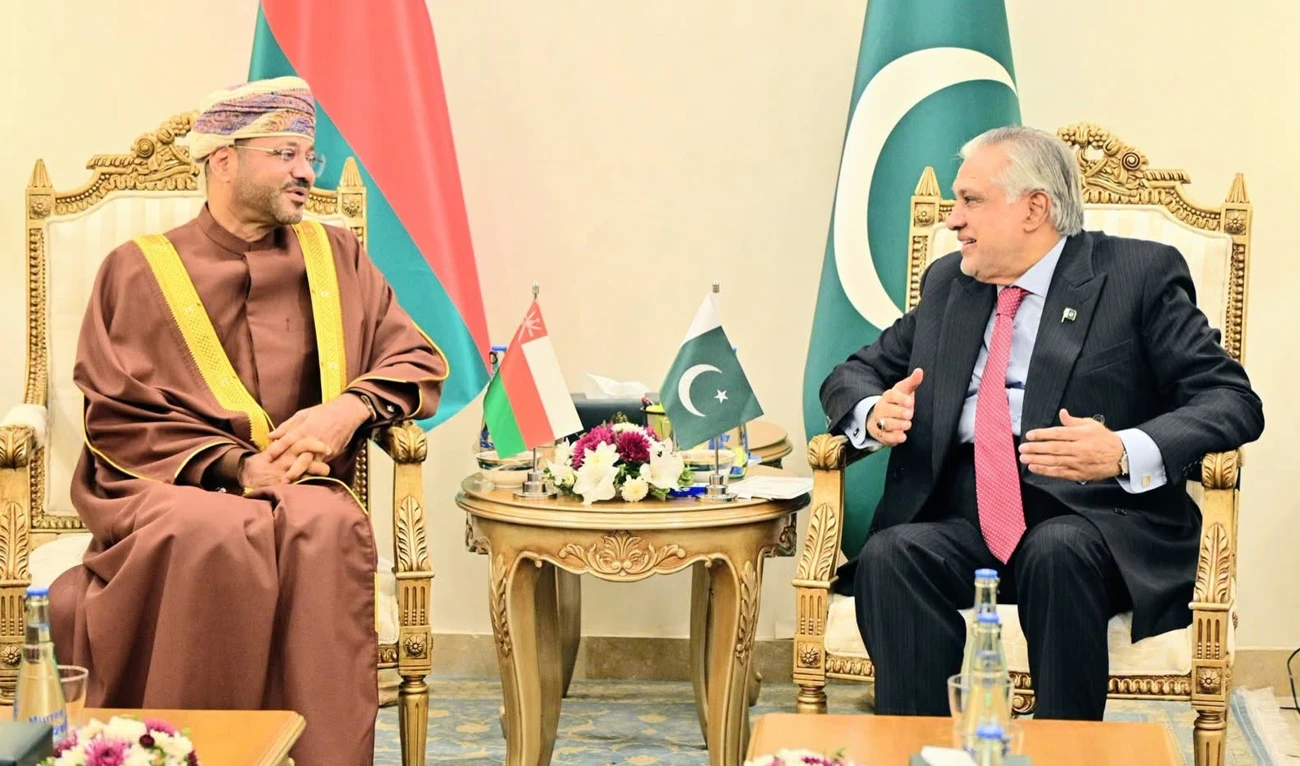
ISLAMABAD: Pakistan and Oman foreign ministers on Wednesday discussed Houthi attacks on Saudi Arabia and concerted efforts to promote regional peace and stability, amid heightened tensions in the Middle East.
The discussions were held during Omani Foreign Minister Sayyid Badr bin Hamad Albusaidi’s visit to Islamabad, amid heightened regional tensions in the Middle East where United States-Iran conflict and Houthi attacks on Saudi Arabia have raised concerns about further instability.
Pakistan and Oman have consistently emphasized dialogue, diplomacy and coordinated efforts to resolve regional disputes, with both countries maintaining an interest in preventing further escalation and promoting peace and security across the region.
Speaking at a joint ministerial meeting with his Omani counterpart, Pakistan Foreign Minister Ishaq Dar said they had discussed in detail the US-Iran conflict, Houthis attacks on Saudi Arabia, closure of Hormuz, Bab Al-Mandab, and the situation in Gaza.
“We have discussed about the Bab Al-Mandab and the new development between Houthis and Saudi Arabia,” Dar said. “I think we think alike, and I think we should make our best efforts to get these issues resolved because that will actually take us forward.”
Tehran has maintained its stranglehold on the strategic Strait of Hormuz, which supplied roughly a fifth of global oil and gas cargoes before the US launched its war on Iran in late Feb. The Houthis advanced along Yemen’s Red Sea coast around the strategic Bab Al-Mandab Strait, raising fears about commercial shipping and energy supplies already strained by disruptions through Hormuz.
Repeated attacks by Yemen’s Iran-aligned Houthis on Saudi civilian and oil infrastructure have also killed over a dozen people and injured scores of others in recent weeks.
Dar said the ongoing regional conflict has led to sufferings that were “very, very visible.”
“In Pakistan, the energy supply chain has been disrupted. The prices have skyrocketed. Common man obviously cannot afford. It’s not only in this part of the world, it’s in the entire world,” he said.
“So, I think what we need to do is to bring back the sanity, the peace and tranquility in this region. And I think both of us can play a very vital role.”
Albusaidi acknowledged Pakistan’s constructive role in supporting dialogue and diplomacy in the region at a time when tensions could easily escalate.
“Efforts that encourage engagement and understanding deserve recognition, true recognition,” he said. “We appreciate Pakistan’s role that has helped create space for dialogue.”
The Omani foreign minister arrived in Islamabad on Tuesday to attend the 8th Pakistan-Oman Joint Ministerial Commission (JMC).
“This JMC is taking place after seven years, and we agreed in our restricted meetings that we both will try that such long gaps should not be there, because there is a great scope of enhancement of trade, bilateral trade, economic activities, investment opportunities, but obviously the interaction and regular interaction is must,” he said.
Albusaidi noted that economic cooperation between the two countries deserved particular attention.
“Both Oman and Pakistan are pursuing important economic transformations, and there are opportunities in trade, in logistics, in port connectivity, in energy and food security, in technology, and really the list is endless in the way we can collaborate on tourism, for example, and on tourism and involvement of our people-to-people connections,” he said.
“The potential exists, and our task really is to remove any obstacles that make to create the right conditions that allow businesses and investors to take advantage of this potential... I would encourage greater interaction between our private sectors and strong institutional partnerships, increased academic and technological cooperation, and more regular exchanges between our peoples.”