- Finance minister highlights the urgent need to address Pakistan’s rapid population growth and its implications
- Briefs Saudi Fund for Development CEO on Pakistan’s macroeconomic position, renewed capital market access
KARACHI: Pakistan’s finance minister has called for sweeping reforms to the global financial system to address mounting trade, investment and climate challenges, urging stronger international cooperation during the International Monetary Fund-World Bank annual meetings in Bangkok.
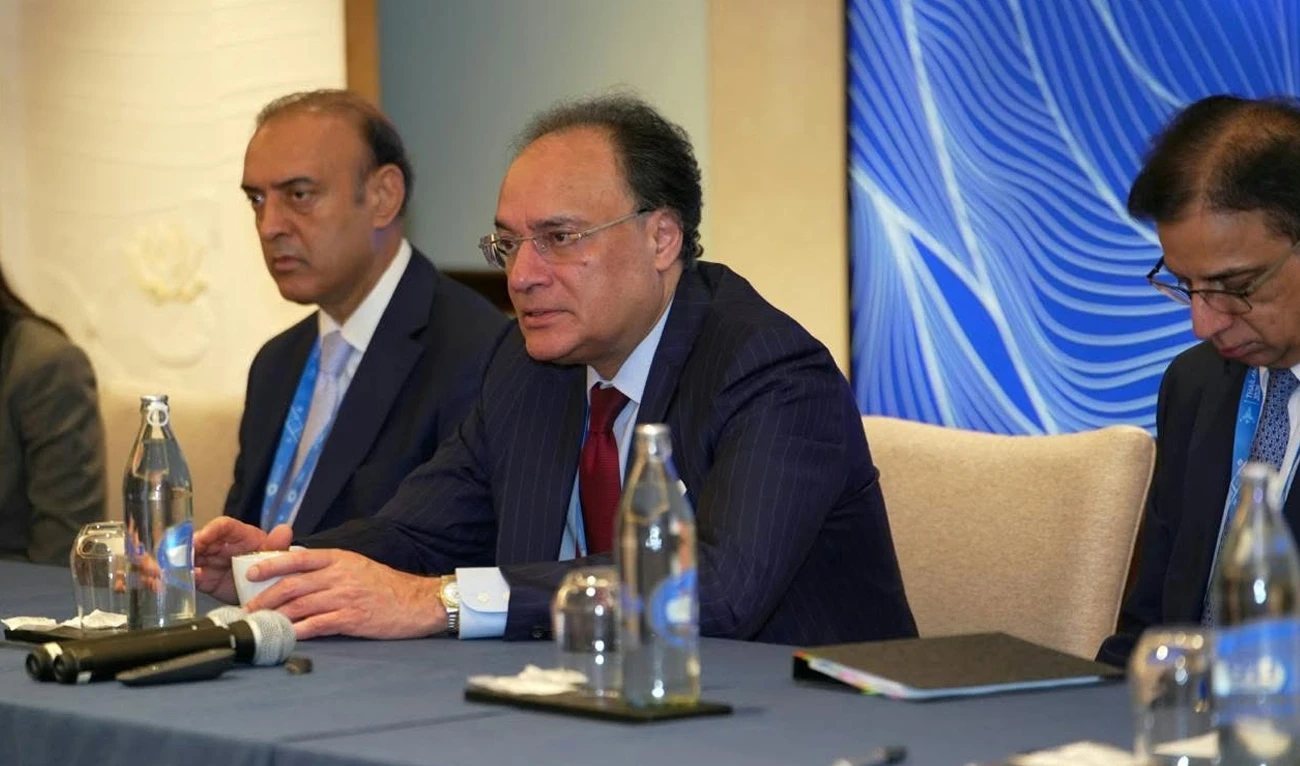
Finance Minister Muhammad Aurangzeb made the appeal at a meeting of the Group of 24 (G-24) finance ministers and central bank governors in Bangkok, where he is currently visiting to attend the annual meetings of the IMF and World Bank from Oct. 12-18.
The call comes amid growing pressure on developing economies from economic uncertainty, shifting global trade policies, rising climate risks and limited access to affordable financing. Developing countries have repeatedly urged international institutions to reform their lending frameworks, expand climate finance and ensure more equitable representation in global economic decision-making.
For Pakistan, which remains vulnerable to climate-related disasters and external economic shocks, greater access to concessional financing, debt sustainability and a fairer global trading system are critical to supporting economic stability and long-term growth.
“The Finance Minister highlighted the challenges facing developing economies, including fragmentation disrupting trade and investment, climate shocks eroding development gains, restrictive financial conditions and widening financing gaps,” the Pakistani finance ministry said on Tuesday night.
“He stressed that reform of the international financial architecture must keep pace with these challenges and ensure timely support for countries undertaking reforms while facing external shocks.”
The G-24, a grouping of developing economies from Africa, Asia, Latin America and the Caribbean, coordinates their positions on international monetary and development finance issues, particularly in discussions with the IMF and World Bank.
Speaking as First Vice-Chair of the G-24 group, Aurangzeb outlined three G-24 priorities: keeping development as the central objective of the international financial system, making the Bretton Woods institutions more representative and responsive, and building a development-oriented international financial architecture.
At a World Bank roundtable on “Transforming Demographic Transition into Human Capital Gains and Job Creation,” the minister highlighted the urgent need to address Pakistan’s rapid population growth and its implications for health, education and employment.
Referring to experiences from Indonesia, Bangladesh and Iran, he emphasized women’s education, workforce participation and engagement with religious leaders on birth spacing. He stressed that realizing the demographic dividend requires a skilled workforce and private-sector job creation.
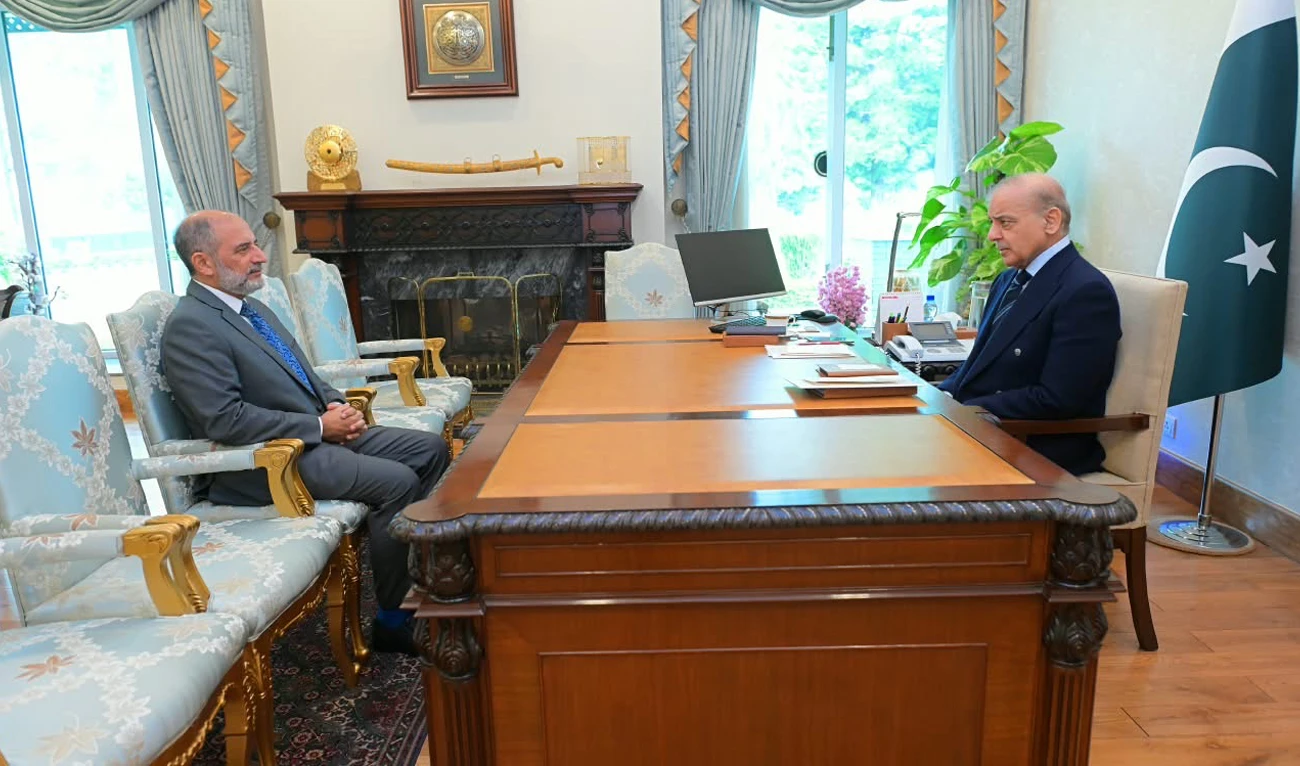
In a meeting with Sultan Abdulrahman Al-Marshad, Chief Executive Officer of the Saudi Fund for Development (SFD), the finance minister offered condolences over the deaths in recent Houthi attacks against in Saudi Arabia. He thanked the Kingdom for its longstanding support to Pakistan.
“He briefed the SFD CEO on Pakistan’s improving macroeconomic position and renewed access to international capital markets,” the finance ministry said. “Discussions covered trade and investment, private-sector engagement, follow-up on the bilateral investment protection agreement and [Pakistan] refinery upgrades.”
In a separate meeting with Imad Fakhoury, Regional Vice President of the International Finance Corporation (IFC) for the Middle East and Central Asia, Aurangzeb discussed strengthening IFC support for private-sector growth and job creation and translating macroeconomic stability into sustainable growth.
“He noted IFC’s expanding portfolio, including small-business financing, entrepreneurship, capital markets, and green and digital bonds,” Aurangzeb’s ministry said. “He reaffirmed Pakistan’s commitment to Reko Diq and appreciated IFC’s leadership in financing the project. Discussions also covered mining infrastructure and value addition, affordable housing and developer financing, agricultural development, storage and cold chains, and electronic warehouse receipt financing.”
Reko Diq, located in Pakistan’s southwestern Balochistan province, is one of the world’s largest undeveloped copper and gold deposits. The project is jointly owned by the government of Pakistan and Canada’s Barrick Gold, and is considered central to Islamabad’s plan to revive foreign investment, stabilize its mineral sector and spur long-term exports after years of economic turbulence.
Both sides also discussed private-sector participation in livestock, pharmaceutical exports through stronger regulatory standards and investment, and infrastructure opportunities, including public-private partnerships in water services, advanced electricity metering and financing mechanisms for provincial projects.