TRIPOLI: The United Nations has condemned the storming of one of its facilities in Libya’s capital Tripoli where migrants were present, denouncing “deeply aggressive acts”.
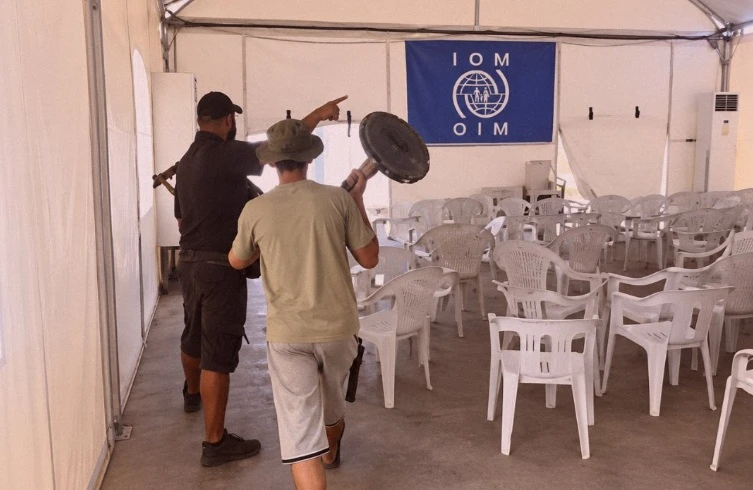
The UN has not identified the specific agency, but videos circulating on social media since Monday showed people forcing their way into the premises of the International Organization for Migration (IOM) in Tripoli, ransacking furniture and driving out the occupants.
“The United Nations in Libya strongly condemns the repeated incidents that occurred this morning on the premises of the service center managed by one of the UN agencies in Tripoli,” the IOM said in a statement late Monday.
The UN said it acknowledged authorities had taken action to respond to the incident.
It said authorities had taken steps to “investigate the circumstances of the deeply aggressive acts against staff and the people accessing humanitarian services of the center”.
But it said that “such incidents must not be repeated”.
The Tripoli-based Libyan foreign ministry called on “citizens to refrain from any acts targeting the premises, property, vehicles or personnel of international organizations”.
“Freedom of expression and peaceful protest do not, under any circumstances, justify intrusion, vandalism, threats, or endangering the safety of persons,” the ministry said.
Such acts “constitute a serious violation that entails legal accountability,” it added, saying it referred reports and complaints on the incident to the public prosecutor’s office to “hold accountable” those behind it.
The issue of migrants and allegations of plans to settle them permanently in Libya has stirred heated debate in the North African country in recent months.
Protesters have regularly gathered outside the headquarters of UN agencies, including the IOM and the UN High Commissioner for Refugees (UNHCR), blocking the entrances.
They say they want these offices to be closed down permanently and their staff expelled.
The UN reiterated a call “to rely on reliable and verified information when disseminating it in the public sphere, and it reaffirms its commitment to constructive cooperation and working closely with the Libyan authorities and local communities”.
Since the fall of Muammar Qaddafi in 2011, Libya has been wracked by instability and divided between two rival governments.
Smugglers and traffickers have long exploited the volatility to develop clandestine networks for migrants hoping to reach Europe by sea.
UN condemns storming of Libya migrant aid centre