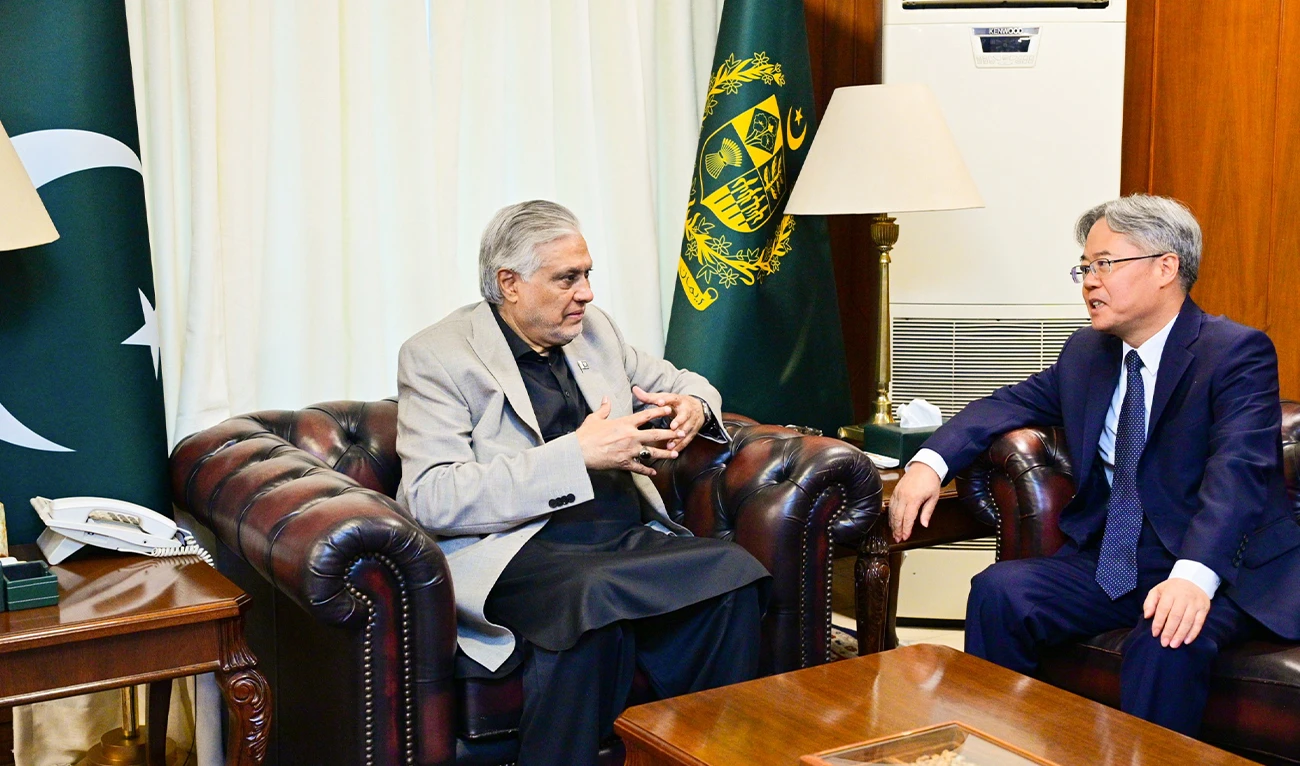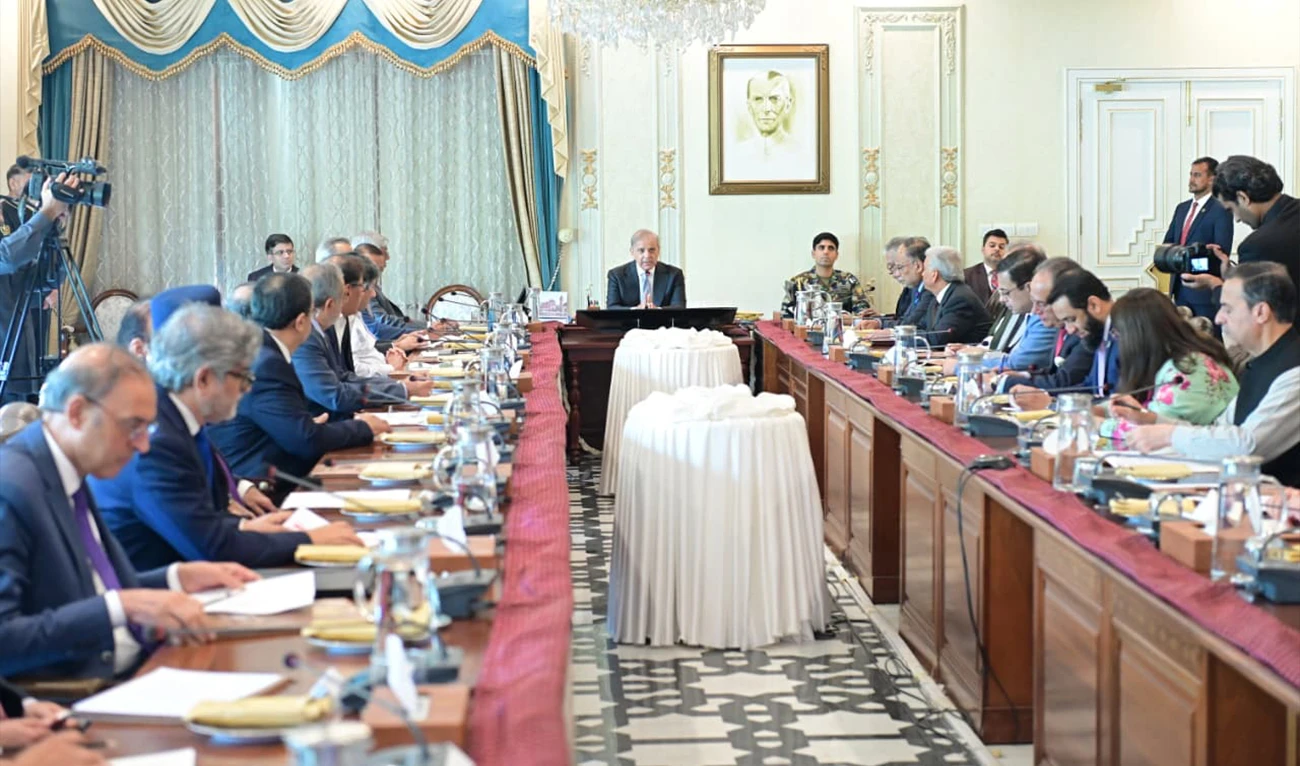
- The delegation of industrialists and traders was briefed on initiatives to improve the economy and promote business
- PM Shehbaz Sharif directed immediate measures for lasting solutions to the problems faced by business community
KARACHI: Prime Minister Shehbaz Sharif on Tuesday met a group of industrialists and businesspersons and urged them to help shape policies for achieving export-led economic growth, Sharif's office said.
The development comes as Pakistan seeks to boost exports and attract foreign investment as it treads a long path to economic recovery under a $7 billion International Monetary Fund (IMF) bailout.
Welcoming the delegation, the prime minister said that the purpose of the meeting was to consult them on promoting export-led economic growth in the country, according to Sharif's office.
"The government is taking effective steps for the promotion of business activities and the ease of doing business," the prime minister was quoted as saying.
"Reducing the cost of energy is among the top priorities of the government and steps are also underway in this regard."
The delegation comprised Mian Mansha, Arif Habib, Saqib Shirazi, Atif Bajwa, Muhammad Ali Tabba, Samad Dawood, Ashraf Mukati, Shahid Surti, Asif Pir, Aamir Ibrahim, Javed Bilwani, Siddique Bhatti, Fawad Anwar, Khurram Mukhtar and Yousuf Hussain.
Sharif expressed his determination to make the recently established Trade Facilitation Board a strong and effective institution for the promotion of trade.
"Suggestions from the business community will be welcomed to make the board’s performance and scope more effective," he said.
The delegation was briefed on the government's initiatives to improve the economy and promote business, trade and industrial activity.
The prime minister directed immediate measures for lasting solutions to the problems faced by the business community as well as a review to extend exemption for exporters from super tax.
Separately on Tuesday, Pakistan’s top commerce body urged the government to take immediate measures to shield the country’s trade and economy from the impact of global oil price volatility, warning that rising energy costs could undermine export competitiveness amid growing geopolitical uncertainty.
The statement came amid renewed United States-Iran hostilities in the Middle East in their six-month conflict, which has disrupted energy supplies through the Strait of Hormuz. The situation has been aggravated by a wave of Houthi attacks on oil facilities and utilities in Saudi Arabia’s southern region.
In energy markets, Brent crude, the international standard, added 1.5 percent to $98.48 a barrel — its highest level in about six weeks. Benchmark US crude surged 2.5 percent to $93.79 a barrel, about 40 percent than it was in late February just before the US and Israel launched their attacks on Iran. Elevated oil prices have raised costs for consumers and businesses alike.
Atif Ikram Sheikh, president of the Federation of Pakistan Chambers of Commerce & Industry (FPCCI), expressed grave concerns over the mounting pressure of volatile global oil markets on Pakistan’s macroeconomic stability, warning that successive global oil shocks, compounded by high domestic levies, were crippling the country’s export competitiveness and threatening widespread industrial closures.
“With the prices of high-speed diesel (HSD) and furnace oil significantly inflating inland logistics, supply chains, cost of electricity generation, and manufacturing overheads, the country’s flagship export sectors are rapidly losing their footing against regional competitors,” he said in a statement.
“To successfully hedge the economy and industrial sector against these external shocks, FPCCI has proposed a multi-pronged approach. Foremost, the trade body demands an immediate suspension of the Petroleum Development Levy (PDL) for export-oriented manufacturing. This targeted safety net is essential to provide a critical financial buffer and preserve the country’s foreign exchange earnings.”