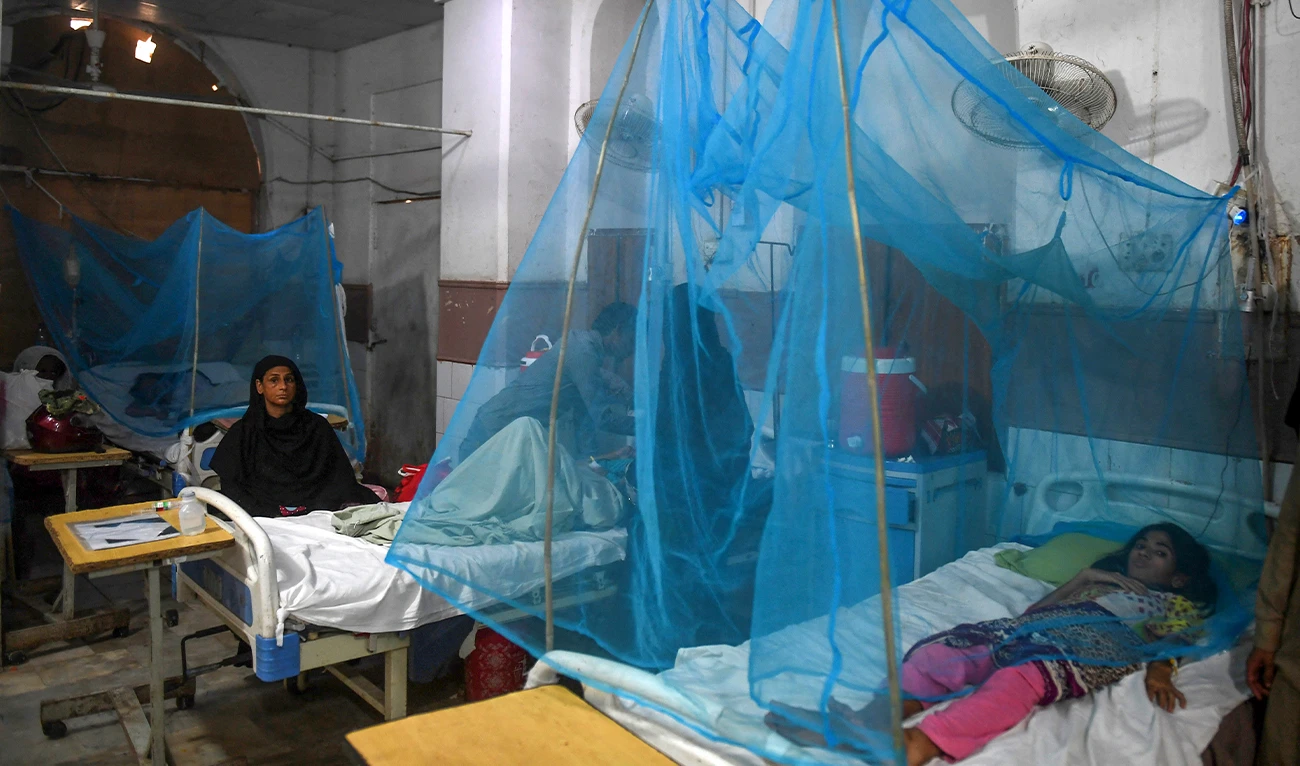
- Karachi East records highest estimated incidences, emerges as priority area for public health action
- Pakistan regularly experiences dengue outbreaks during the monsoon and post-monsoon months
ISLAMABAD: Sindh emerged as dengue hotspot as nationwide cases across Pakistan surged from approximately 100,000 in 2012 to an estimated 3.2 million in 2022, a recent study by Aga Khan University (AKU) and partners has found.
Dengue is a mosquito-borne viral infection transmitted primarily by the Aedes aegypti mosquito, which breeds in stagnant water and typically proliferates during and after Pakistan’s summer monsoon rains. The disease can cause high fever, severe headaches, and muscle and joint pain, while severe cases can lead to bleeding, shock and death.
Pakistan regularly experiences dengue outbreaks during monsoon and post-monsoon months, prompting authorities to conduct inspections, eliminate stagnant water, spray high-risk areas and take action against premises where mosquito breeding sites are found.
“The unique feature of this study is its innovative use of routinely collected clinical laboratory data from three nationwide diagnostic laboratory networks to estimate the incidence of dengue fever in Pakistan,” Professor Erum Khan, chair of Pathology & Laboratory Medicine at AKU was quoted as saying.
“Sindh is the highest-burden hotspot for dengue transmission, with 45.63 cases per 1,000 population, corresponding to an estimated 2.63 million cases, mainly affecting adults aged 15-49 years.”
At the district level in Sindh, Karachi East reported the highest estimated incidences, highlighting priority areas for targeted public health action.
The findings underscore the urgent need to strengthen surveillance, target high-risk districts, improve environmental control measures and invest in sustainable multimodal prevention strategies.
This includes vector control, vaccines, Wolbachia mosquitoes and greater awareness and training of health care professionals in best practices of dengue fever management.
“Dengue is no longer just a seasonal threat,” said Dr. Zarmeen Nasim, lead author and an AKU Health Data Science Center researcher.
“Although cases continue to surge during the post-monsoon months, essential estimates along with seasonal data shows signs of sustained year-round disease transmission, with progressively larger outbreaks over time.”