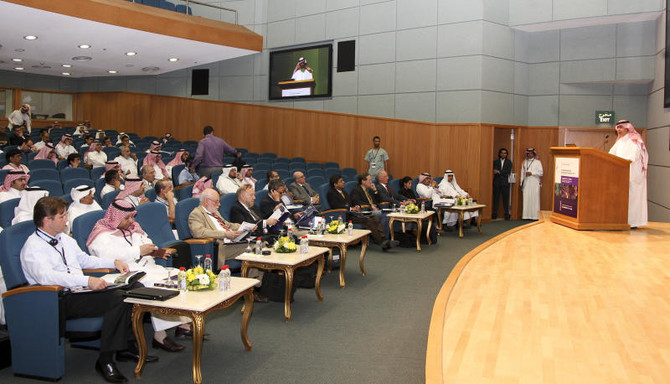
Turki Al-Saud, vice president of King Abdulaziz City for Science & Technology for research, inaugurated the Saudi International Biotechnology Conference at the KACST headquarters on Wednesday.
Around 500 local delegates attended the function, in addition to international speakers from the United States and Japan. Essam Alyamani, chairman of the scientific committee, made the introductory remarks at the inaugural ceremony.
Al-Saud said the amount spent on research was 25 percent of the total strategic technology projects adopted by the national plan for research projects. He also pointed out that KACST was currently involved in several local and international bodies to develop biotechnology in the Kingdom. He enumerated the facilities available in the Kingdom to develop biotechnology.
The opening speech of the first scientific session chaired by Alyamani was delivered by Adah Almutairi, a Saudi academic, who is currently the associate professor of chemistry at the University of California, San Diego. She spoke on the art of falling apart — exploiting nanomaterial disassembly for health sciences.
Almutairi leads the Laboratory for Bioresponsive Materials, a highly interdisciplinary research group that combines materials chemistry with nanotechnology, and the Center of Excellence in Nanomedicine — a cross-campus collaborative venture that develops tools for the future of biology and medicine. She came to UC San Diego from UC Berkeley, where she worked with professor Jean Fréchet to develop several nanoprobes for in vivo imaging.
Speaking to Arab News, Alyamani said Global biotechnology research and development spending had more than doubled in the last 10 years. “There is no doubt that biotechnology is a key pin in the future development and prosperity of any country.”
Alyamani said the conference would review current biomedical nanotechnology strategies and thrusts internationally and within the Kingdom, with the sessions covering a wide range of essential scientific fields including regenerative medical technologies, imaging and diagnosis, and delivery of therapies.
The conference will focus on drug delivery technologies for pharmaceuticals and nanotechnology tools for biomedicine, chemical system engineering and nanobiotechnology and new materials.
He pointed out that research into health biotechnology is vital due to the presence of certain rare diseases in the Kingdom, particularly in the field of genetics and in the field of diagnosing and treating communicable and noncommunicable diseases.
Health is an important factor in the social and economic development of any nation, he said. While Saudi Arabia has a young population at the moment, the older generation is living longer, and there are diseases that are on the increase, such as diabetes, that threaten the future well-being of the nation’s population. These concerns have placed health at the center of economic development discourse in the Kingdom, and high on the priority list for research and development.
Biomedical and health science research contributes significantly to improving people’s health, minimizing the burden of disease, containing health care costs, and more importantly, improving the quality of life of people living in the Kingdom.
“Overall, the main objectives of this conference are to enhance our understanding of the current use of nanobiotechnology in the field of medicine, and to make breakthroughs in treatment for many prevalent diseases within Saudi Arabia,” Alyamani stressed.
KACST’s research in biotechnology will improve the Kingdom’s health and protect its biodiversity and environment. Biotechnology can help solve many of the problems we face in life, from the development of salt resistant crops in agriculture to the creation of targeted drugs for diseases; it can revolutionize the way we work to overcome obstacles.


![]()
Using nanotechnology in medicine
Using nanotechnology in medicine
Latest updates


Recommended


© 2026 SAUDI RESEARCH & PUBLISHING COMPANY, All Rights Reserved And subject to Terms of Use Agreement.