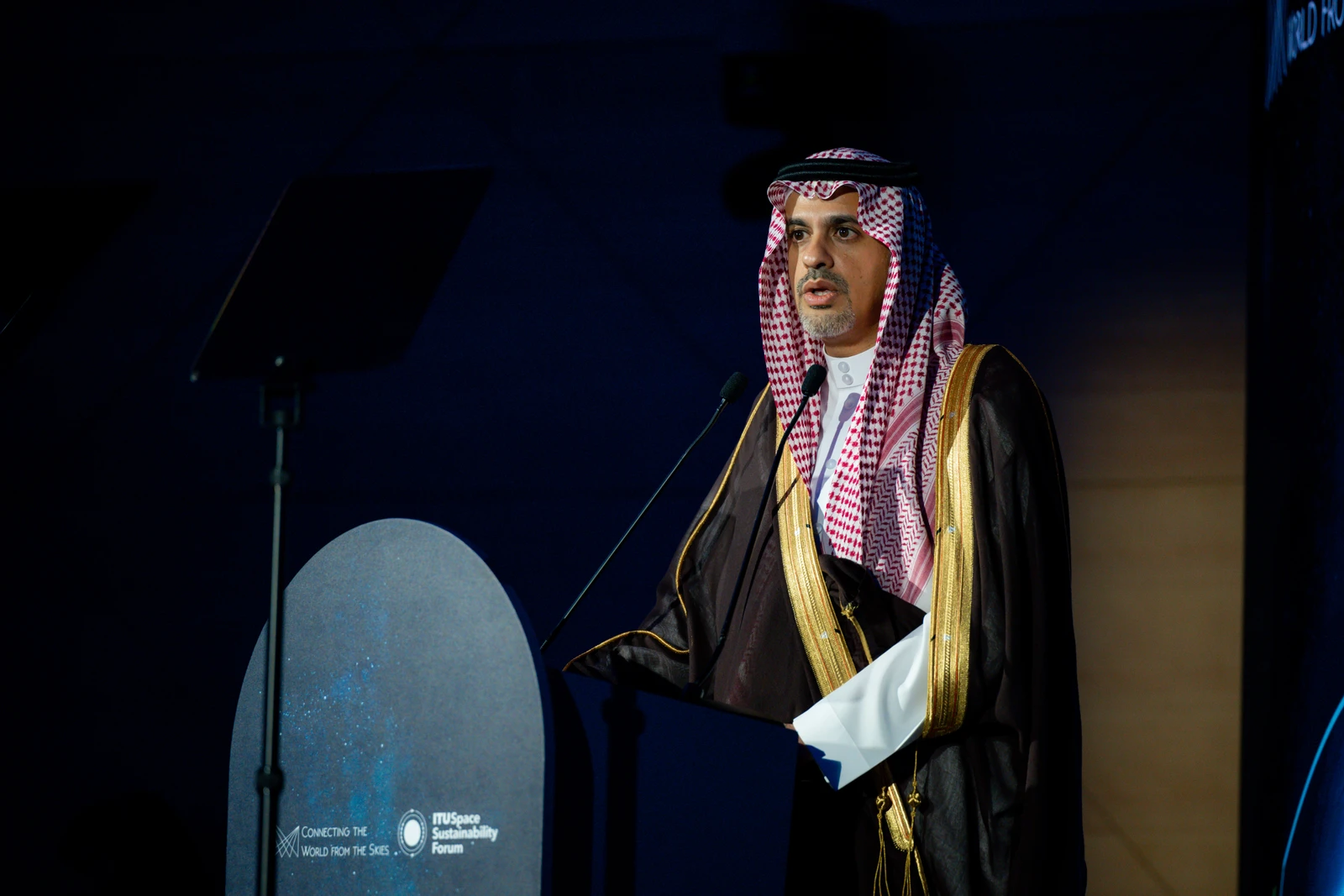
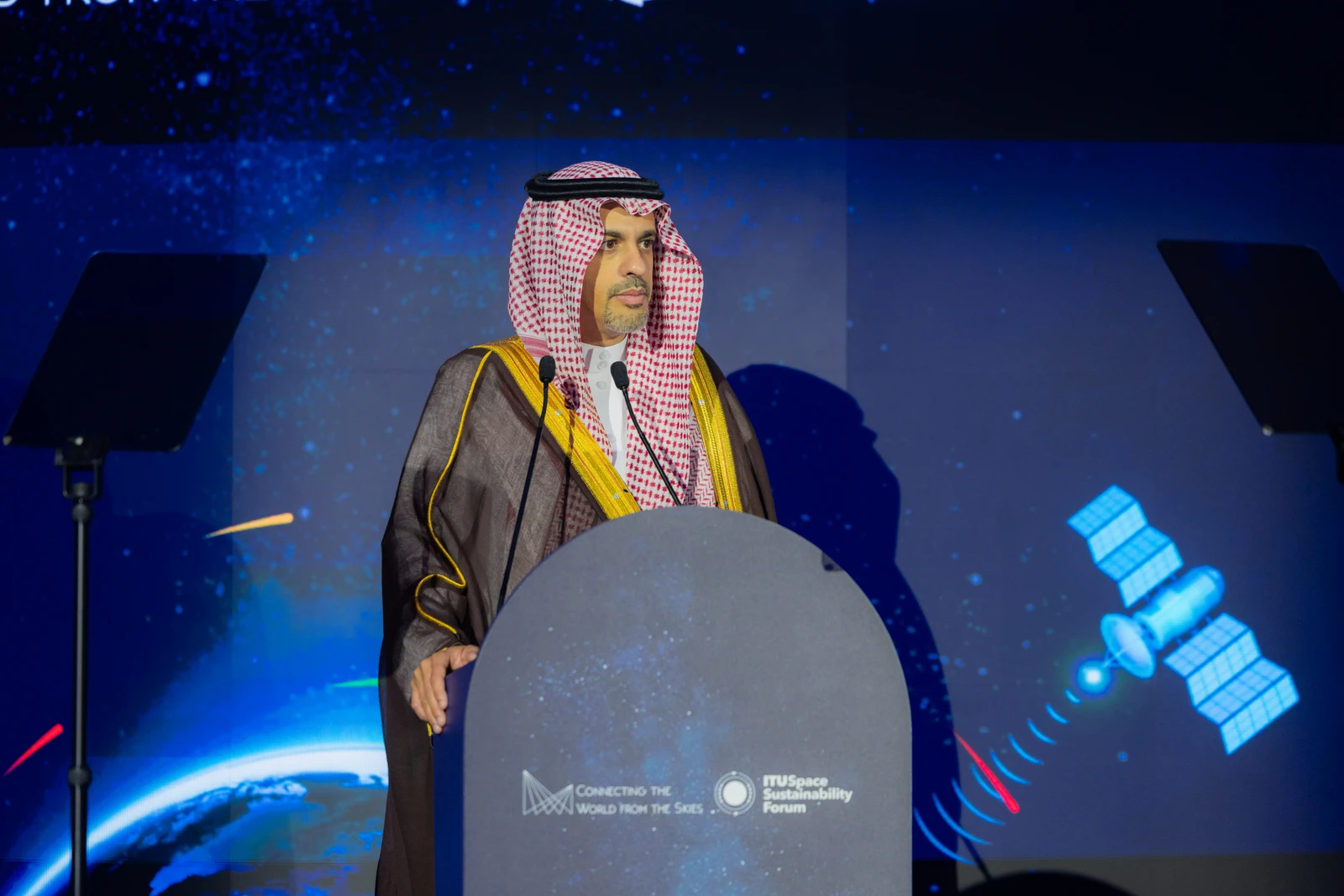
- Haytham AlOhali: The latest estimates tell us that the global space economy will more than double over the next decade, reaching 1.8 trillion dollars by 2035
RIYADH: Saudi Arabia’s Communications, Space and Technology Commission Gov. Haytham AlOhali called for stronger international cooperation to protect orbital resources as he opened the Global Space Connectivity and Sustainability Events 2026 in Riyadh on Monday, highlighting projections that the global space economy will reach $1.8 trillion by 2035.
“We have a major economic opportunity. The latest estimates tell us that the global space economy will more than double over the next decade, reaching 1.8 trillion dollars by 2035,” AlOhali said in his opening remarks.
He stressed that the sector’s rapid growth presented significant economic opportunities but also increased pressure on the resources needed to sustain satellite services.
“The long-term sustainability of (the) space environment calls for stronger international cooperation and coordinated efforts,” he said.
“The growth of non-terrestrial networks brings significant opportunity, but at the same time, it places increased pressure on spectrum and orbital resources,” he added.
AlOhali said satellite network filings at the International Telecommunication Union increased by more than 7 percent in 2025 compared with the previous year, while the number of satellites included in those filings rose by more than 10 percent.
He added that an estimated 10 new satellites and spacecraft are launched every day, increasing congestion in orbit.
“The result is more congestion and more risk of collision,” he said.
“If the orbits we depend on become unusable, we lose the very means of connecting those 2.2 billion people,” he warned.
AlOhali also highlighted growing investment in the space sector, saying global investment in space companies exceeded $60 billion in 2025, marking a record year.
“This growth is driven by space-enabled services across communication, navigation, transportation, climate monitoring, and other verticals,” he said.
“And Saudi Arabia has witnessed a new era for this sector with nearly $180 million in investments,” he added.
The three-day event, hosted by CST in partnership with the ITU, brings together regulators, device manufacturers, space service providers, experts and researchers to discuss connectivity, sustainability and the challenges facing the sector.
“This edition is special. For the first time, the two forums come together under one umbrella: the Connecting the World from the Skies Forum and the Space Sustainability Forum, each in its 30th edition,” AlOhali said.
“Their first two editions drew more than 12,000 participants from more than 140 countries,” he added.
The governor also emphasized the importance of innovation and research in shaping the future of the space economy.
“This is why the Kingdom launched the Space Hackathon with 700 entries from 54 countries, and the finalists will be announced this week,” he said.
He also highlighted Saudi Arabia’s role in the third edition of the International Research Competition on Non-Geostationary Networks, held in partnership with the Institute of Electrical and Electronics Engineers.
The competition attracted 81 research papers from 281 researchers and academics during its first two editions, which AlOhali described as “a clear signal of the world’s rising interest in this sphere.”
AlOhali stressed that economic growth and technological innovation must also translate into greater access to connectivity, noting that 2.2 billion people remain offline.
“Growth, investment, and ideas are not the goal in themselves. The dividends of this economy must reach everyone,” he said.
“Connecting them is not a side objective; it is the test of this economy.”