RIYADH: The shift from scientific potential to economic readiness was central to the Quantum Forum 2026 in Riyadh, where researchers, government officials and technology leaders discussed the global quantum economy and how Saudi Arabia is defining its role in this rapidly evolving field, on Sunday, Aug 30.
The Kingdom’s immediate focus is on developing the researchers, infrastructure, partnerships, policies, and commercial environment necessary to support the practical adoption of quantum technologies as the field matures.
For Saudi Arabia, early engagement is not limited to future access to quantum computers. The broader objective is to cultivate talent, develop relevant applications, and secure a position within the international quantum value chain.
That wider context ran through the Quantum Forum, held at King Salman Science Oasis under the theme “Shaping the Quantum Workforce.”
The event, organised by the Centre for the Fourth Industrial Revolution Saudi Arabia in strategic partnership with King Abdulaziz City for Science and Technology, King Salman Science Oasis and the Institute for Advanced Studies and Cooperation, brought together policymakers, researchers, entrepreneurs and industry representatives.
Throughout the forum, discussions ranged from research and national capability-building to financial services, cybersecurity, healthcare and energy-intensive manufacturing.
One panel examined how quantum and quantum-inspired algorithms could address industrial challenges ranging from production scheduling and supply-chain bottlenecks to energy-process optimisation in refineries, petrochemical plants and heavy industry.
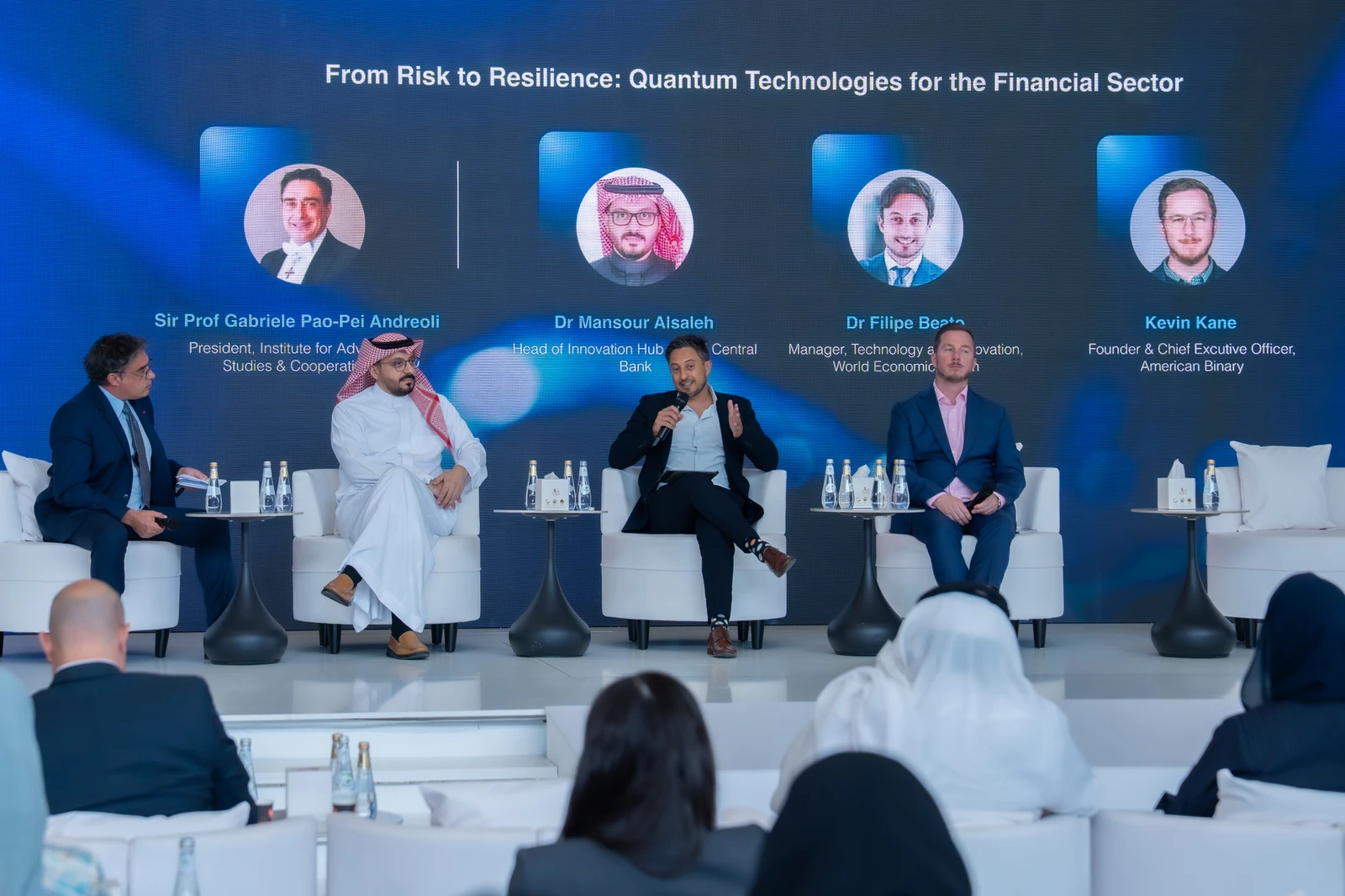
Another panel considered the financial sector, where potential applications include portfolio optimisation, risk modelling and fraud detection, alongside the more immediate challenge of preparing cybersecurity systems for a future in which sufficiently powerful quantum computers could threaten existing encryption methods.
The range of topics discussed reflects a shift in the quantum technology conversation. The focus is shifting from defining quantum computing to identifying where it can deliver practical value and what has to be established to realise that potential.
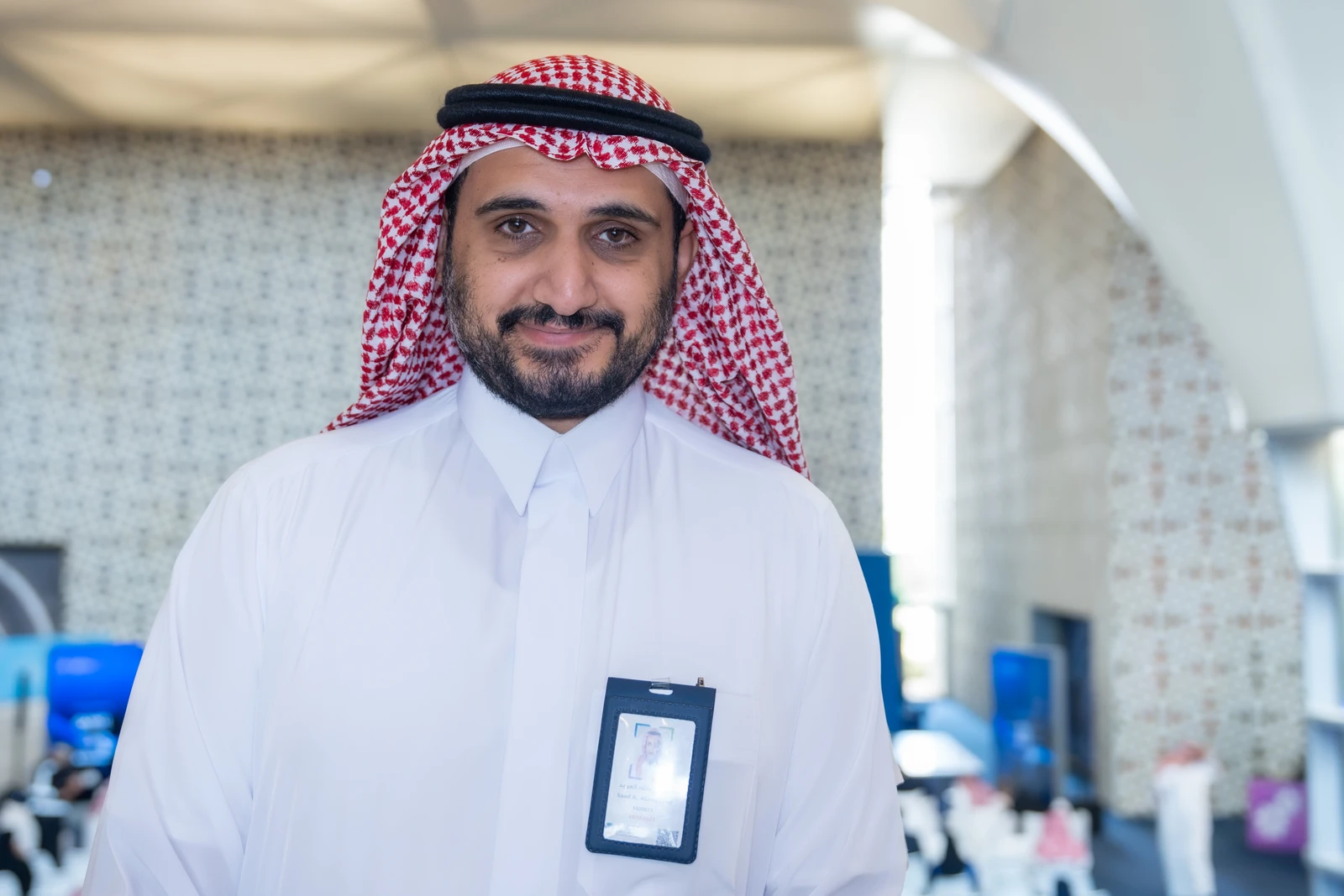
Saad Alowayyed, project lead for the Quantum Economy Project at C4IR Saudi Arabia, told Arab News that the Kingdom’s work has progressed through three stages since 2024.
The first mapped the Saudi quantum landscape and brought stakeholders together. The second moved toward developing a proposed roadmap, while the latest phase examines practical use cases through data-driven analysis and their alignment with Vision 2030.
Alowayyed said the project’s analysis identified healthcare as one of the first sectors expected to be affected by quantum computing, particularly in areas such as drug analysis and genome simulation.
He also identified telecommunications as a promising area, particularly through post-quantum cryptography and quantum key distribution. In oil and gas, applications include exploration and optimisation, while in financial services, they include portfolio management.
Wasiq Bokhari, CEO of Pasqal, similarly identified four sectors where the company sees near-term potential in Saudi Arabia: oil and gas, specialty materials, financial services and communications.
Pasqal is already working with Aramco on oil and gas applications, he said, with potential applications extending into other chemical industries in the Kingdom.
In financial services, Bokhari said Pasqal sees potential applications among major banks, while communications applications could include network development and secure communications.
Identifying potential applications is just one aspect of creating a sustainable quantum ecosystem.
Alowayyed told Arab News that one of the biggest gaps currently facing Saudi Arabia is the absence of a clear common direction.
"There is no clear quantum agenda or quantum strategy. And that's what makes the efforts more non-harmonised... people are working in silos," he adds, "having a north star makes it clear for people to understand where we are coming from, and where we are moving to."
These observations highlight a pivotal stage in the Kingdom’s development. While Saudi Arabia has established research activity, international partnerships, and quantum infrastructure, integrating these elements is now a central priority.
Laila Alqahtani, project fellow at C4IR Saudi Arabia, said that over the next five years, success would mean moving beyond exploratory research toward a more structured ecosystem.
“Over the next five years, success will be defined by Saudi Arabia establishing itself as a recognised regional quantum innovation hub, transitioning from early exploratory research to structured commercialisation and secure infrastructure,” she told Arab News.
Among the milestones she identified were publishing a unified National Quantum Strategy and establishing a national governance body to oversee roadmaps and standards.
She also pointed to the potential establishment of a National Quantum Centre and Quantum Foundry, as well as innovation sandboxes within major national assets such as Aramco and NEOM where startups and researchers could validate industrial use cases.
Other measures, she said, would include preparing government and critical infrastructure for migration to post-quantum cryptography and meeting enrollment targets across national quantum degree and training programs.
For Bokhari, success over the next five years would be visible when Saudi industries begin using quantum computers alongside existing CPU and GPU systems.
He said the goal was to use those technologies together to “solve problems that are difficult or impossible to solve today.”
He said progress could be measured through tangible industrial outcomes: improvements in upstream oil and gas operations, stronger credit and risk portfolio management in financial services, the discovery of new materials through quantum computation and wider deployment of secure communications networks.
This broader approach is essential, since progress in quantum technologies depends on collaboration across multiple disciplines.
A forum discussion on the work of the National Centre for Quantum Technologies moved between computing, post-quantum cryptography, quantum biology, neuroscience, physics, engineering and medicine.
Quantum biology, which is still a developing research field, examines how quantum phenomena may operate within living systems. Its inclusion demonstrated how quantum research can require physicists, biologists, medical researchers, engineers and computer scientists to work across traditional academic boundaries.
The panel noted that talent development must be matched by an ecosystem that employs and supports it. Researchers require access to infrastructure, knowledge, and intellectual property, while startups need investment and a market for practical applications.
Saudi Arabia’s existing quantum development has involved cooperation with international companies and research institutions. At the same time, the national pilot of the WEF blueprint connected Saudi stakeholders to a wider network of quantum expertise.
Filipe Beato, manager of technology and innovation at the World Economic Forum, told the forum that national planning was important for establishing priorities around infrastructure, talent and investment, but warned against countries attempting to develop quantum ecosystems independently.
“We cannot do it alone,” he emphasised.
Beato argued that countries working independently risk creating further fragmentation, particularly in sectors where systems and markets already operate across borders.
“Financial institutions operate globally,” he said, pointing to the cross-border nature of the sector as one reason coordination would be particularly important.
International partnerships enable countries to access capabilities not yet developed domestically and facilitate the exchange of knowledge, research, and expertise across expanding quantum ecosystems.
In May, Aramco and French quantum computing company Pasqal formally inaugurated Saudi Arabia’s first quantum computer at Aramco’s data centre in Dhahran, alongside what the companies described as the Middle East’s first commercial Quantum Computing as a Service platform.
These developments are notable as quantum computing remains an emerging technology worldwide. With commercially valuable applications still taking shape, countries have an opportunity to partner together and build capabilities ahead of sector maturity.
The World Economic Forum’s Quantum Economy Blueprint estimates worldwide public-sector investment in quantum technologies at more than $39 billion, while noting that capabilities remain concentrated in a relatively small number of countries.
Bokhari’s comments underline the commercial side of that partnership. Rather than viewing quantum computers as replacements for existing systems, he framed their future role as complementary to classical CPU and GPU computing, particularly where industries face complex problems that current methods struggle. Saudi Arabia’s experience is becoming increasingly relevant to stakeholders beyond its borders.
The Kingdom was the first country to pilot the WEF Quantum Economy Blueprint nationally, and the World Economic Forum and its Saudi partners have since published lessons from the Saudi pilot, offering guidance for countries considering their own quantum strategies.
For Saudi Arabia, leveraging these partnerships to access technology while also building domestic human capital is a central focus.
Alowayyed noted that supporting the sector requires a workforce beyond a small group of specialist quantum physicists.
He divides talent development into three groups: specialists whose core academic field is quantum; professionals in areas such as computer science, finance and engineering who can be upskilled to work with quantum tools; and the wider public, whose understanding will influence future adoption.
“We need some upskilling,” he said, arguing that professionals do not necessarily need to undertake several additional years of specialist study before contributing to the field.
On a similar note, Pasqal is providing joint research and training opportunities for Saudi scientists and engineers. Its cloud platform also opens the infrastructure to universities, research institutions, and companies beyond Aramco.
This places Saudi Arabia in a distinctive position. The Kingdom is still developing its own young ecosystem while offering an early example of how countries can prepare for an industry whose future form is not yet defined.
A significant gap remains between promising quantum experiments and an economy structured around these technologies. Many use cases are still exploratory, and quantum solutions are likely to complement, rather than immediately replace, classical computing and artificial intelligence.
For Saudi Arabia, taking action now means building ahead of fully defined commercial applications. This includes preparing cybersecurity systems, training specialists, providing researchers with access to hardware, linking universities with industry, and identifying areas where the Kingdom can develop its own capabilities.
The next challenge is to connect these elements: translating research into applications, turning trained talent into employment, converting infrastructure into commercial demand, and aligning individual initiatives toward the unified direction described as the Kingdom’s needed North Star.
Saudi Arabia lays groundwork for quantum-enabled economy