
- Move expands economic value of palm cultivation beyond date harvests
RIYADH: Date palm and date by-products are being reused for crafts and industrial production, creating investment opportunities, reducing waste, and supporting circular-economy goals, the Saudi Press Agency reported on Sunday.
Palm and date residues in the Qassim region are increasingly viewed as resources that can generate artisanal, agricultural, and industrial products — expanding the economic value of palm cultivation beyond date harvests.
The materials include fronds, midribs, leaf bases, palm fiber, and date bunch stalks, as well as date pits, lower-grade dates, and waste produced during sorting, packaging, and processing. Uses vary depending on the material’s properties and how it is treated.
According to the Ministry of Environment, Water and Agriculture, Saudi Arabia’s palm and date sector has recorded significant progress in recent years, with notable growth in production, product diversity, and value-added industries.
Date production exceeded 1.9 million tonnes in 2025, while the Kingdom is home to more than 37 million palm trees, underscoring the sector’s diversity and its capacity to meet the demands of international markets. The figures further reinforce Saudi Arabia’s position as one of the world’s leading producers and exporters of dates.
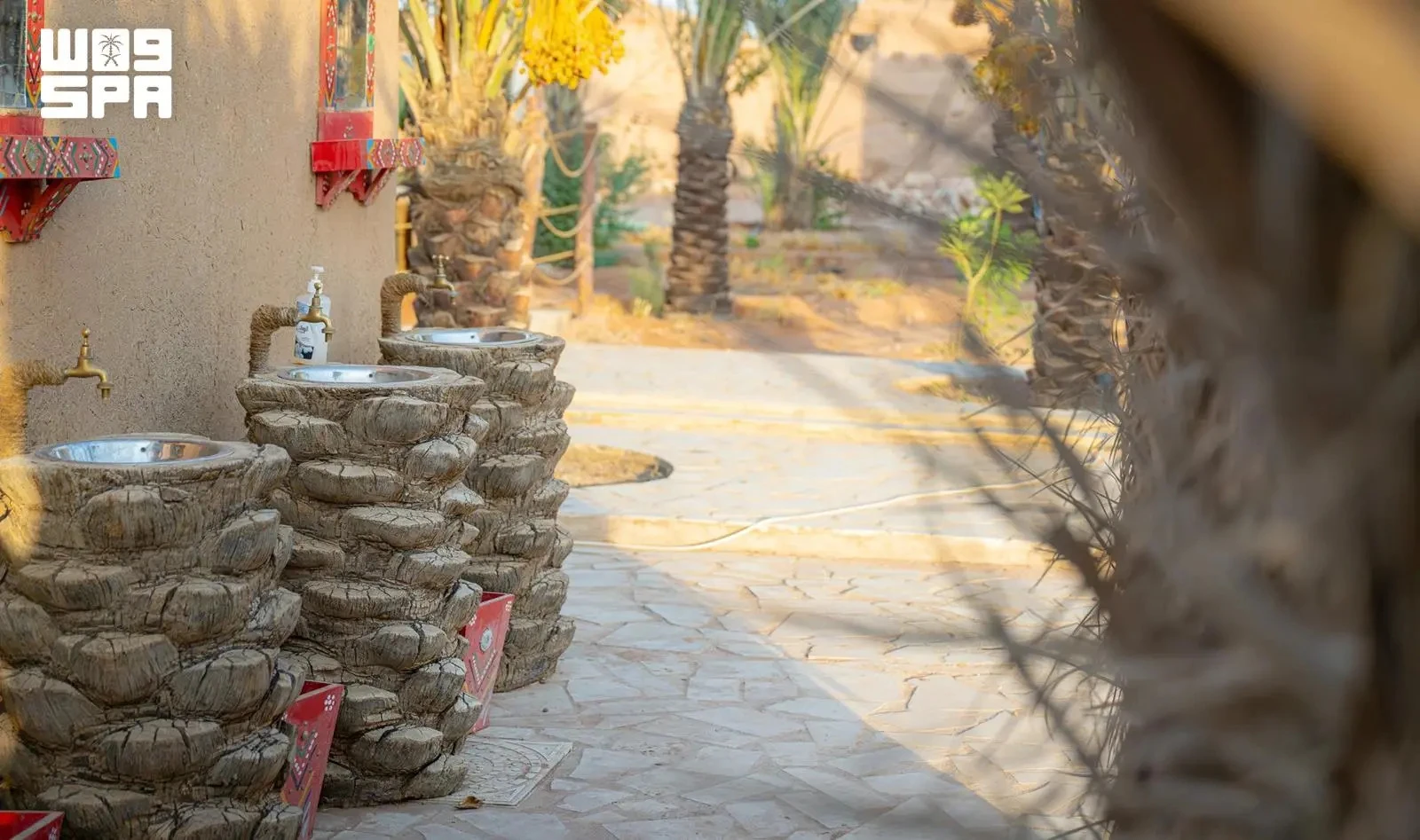
Handicrafts are among the most visible applications. Saleh Al‑Aboudi told the SPA that working with palm materials typically starts with selecting, cleaning, drying, and preparing the raw material before shaping it into the intended product. He noted that different parts of the palm require different handling, as well as patience and precision.
Al‑Aboudi said the value of handmade pieces goes beyond the raw material, reflecting ties between people, the palm tree, and the local environment, and that crafts can become scalable businesses when quality and marketing channels are in place.
Beyond crafts, residues can be processed into boards, fibrous materials, organic fertilizer, and treated animal feed, with potential bioenergy uses. Fibers can also be used to develop composite materials and other higher value-added products. Date palm residues are also being turned into products ranging from engineered wood and furniture to biodegradable plastics, while researchers are exploring wider industrial applications.
In the date industry, pits are a by-product that can be processed for food and industrial uses and for extracting valuable components, subject to approved standards. Dates that do not meet fresh-market requirements but remain suitable for processing can be directed into a range of manufactured products to reduce losses.
Recycling these materials could reduce unsustainable disposal and uncontrolled burning, reintroducing agricultural resources into production cycles and improving resource efficiency.
Potential investment areas include facilities to collect, sort, transport, and process residues into fertilizers, feed, fibrous materials, and wood alternatives, as well as food and industrial products based on dates and pits.
According to the SPA, such value chains could open opportunities for small and medium enterprises in agricultural areas, provided research, technology transfer, and partnerships among farmers, investors, researchers and industry are strengthened.