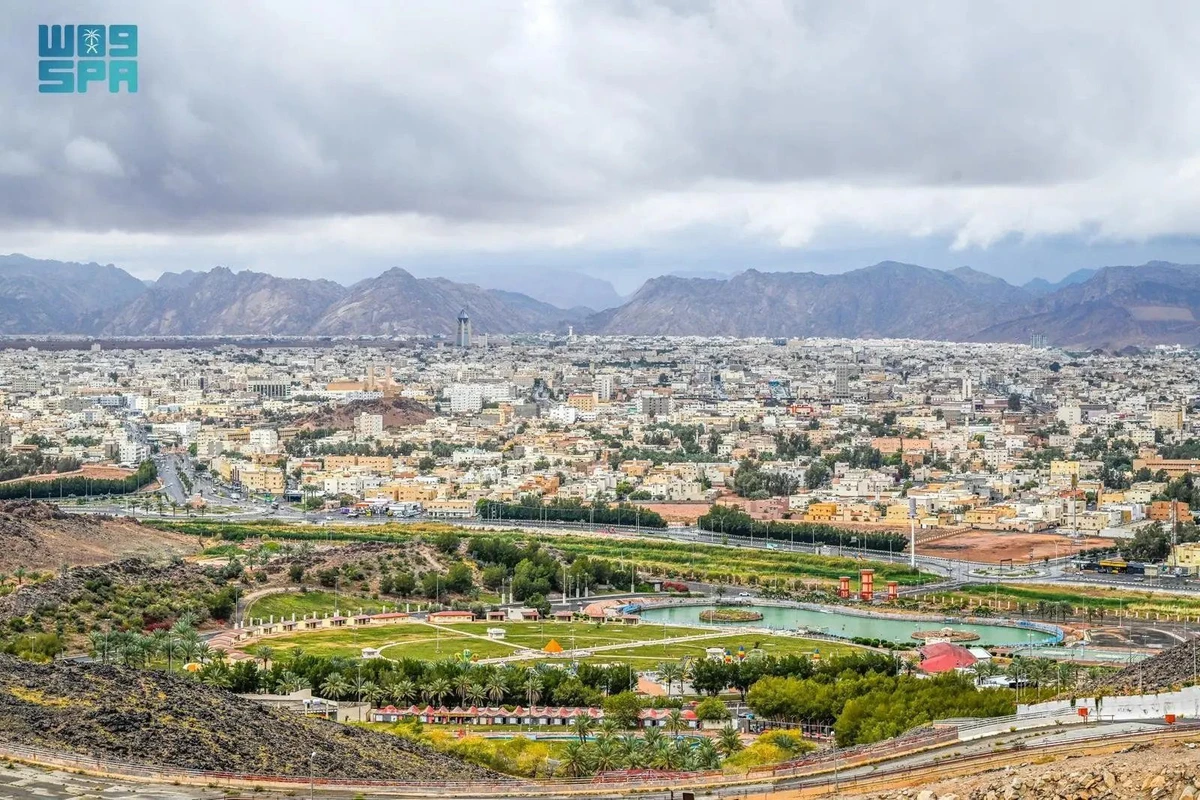
- Rainfall concentrated mainly in central Saudi Arabia, parts of western, eastern regions
RIYADH: Saudi Arabia receives an average of 13.29 mm of rainfall in November, making it the Kingdom’s second-wettest month, according to historic data from the National Center for Meteorology.
The center’s records from 1985 to 2025 show that November rainfall is concentrated mainly in central Saudi Arabia and parts of the western and eastern regions.
Al-Qassim recorded the highest average November rainfall among monitored stations, at 29.3 mm, followed by Qaisumah at 27.2 mm, Jeddah at 27.1 mm, Makkah at 25.1 mm, and Taif at 23.1 mm, based on climate data from 1991 to 2020.
The highest nationwide average rainfall for November was recorded in 2018, when the monthly figure reached 49.84 mm. The years 1996 and 1997 had averages of 42.82 mm and 39.27 mm respectively, according to the NCM’s historical analysis.
Extreme daily rainfall records show that Al-Wajh received 116.4 mm on Nov. 17, 1996, while Taif recorded 103 mm on Nov. 15 that year.
Qaisumah registered the highest cumulative number of days of heavy rainfall among monitored stations over the 1985–2025 period, with 33 days. Al-Qassim followed with 32, while Makkah and Taif each recorded 30.
November is also the Kingdom’s fourth-coolest month, with a normal average temperature of 20.7 C, based on the 1991–2020 climate reference period. The normal average maximum is 27.7 C, while the average minimum is 14.28 C.
Temperature extremes vary considerably across the country. Yanbu has recorded a November daily high of 42 C, followed by Makkah at 41.2 C, while Al-Qurayyat has registered the lowest daily temperature at minus 5.8.
The center’s analysis found that 1998 had the highest nationwide average November maximum temperature, at 30.08 C, while 1988 recorded the lowest nationwide average November minimum, at 12.45 C.
Long-term climate data from the NCM highlights the regional differences in November temperatures, with western and southwestern areas generally warmer than the northern regions and southwestern highlands.