RIYADH: Nokia is turning to the Kingdom as not only a hub but a base for technology with global export potential, as the company expands its presence in Saudi Arabia with the launch of its first R&D center in Riyadh.
Announced during LEAP 2026, the new center will focus on AI-powered network automation and orchestration software, bringing together Nokia’s global expertise with Saudi talent as the company looks to develop technology locally for use both within the Kingdom and on an international scale.
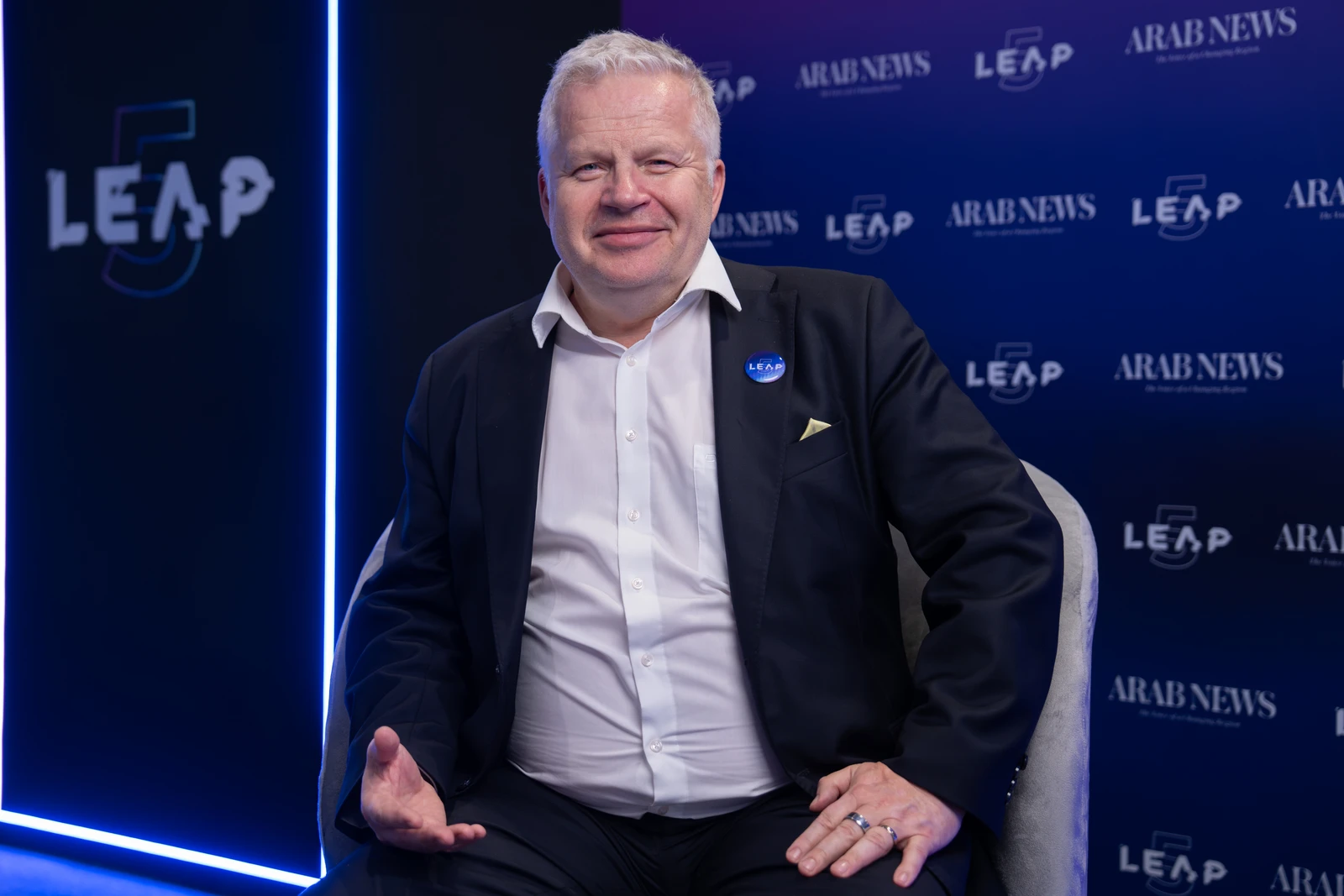
Speaking to Arab News on the sidelines of LEAP, Mikko Lavanti, president of Nokia Middle East and Africa, said the company sees the knowledge and expertise being developed locally as having great potential that can be extended past the Saudi market and into global avenues.
“We believe that the know-how, and knowledge and the experience that’s done here will have a global market, so that will fit into the ‘Made in Saudi,’” Lavanti said.
The new center will specialize in areas including Service Management and Orchestration, Self-Organizing Networks, Autopilot and rApps, with a focus on enabling networks to operate more autonomously while improving performance and energy efficiency.
Nokia’s ambitions in the Kingdom, however, extend beyond serving its domestic customer base, with its focus being on the ambitions of the Kingdom as a great partner in future plans:
“From the very beginning we saw that it is not only about the Kingdom and it’s not only about MENA,” he said.
“With the knowledge, with all the young engineers, we’re working a lot with the universities; we have here an intelligence hub that can benefit Nokia globally.” He went on to add.
The company’s focus on developing Saudi talent is crucial to the center’s agenda, with Nokia set to build engineering and research roles alongside training programs, bootcamps, and certifications focused on AI and automation for the selected Saudi talent.
Lavanti underscored software as a specific sector for Nokia’s focus in the Kingdom as he pointed to the company’s previous work with stc around the 2025 Hajj season as an example.
That experience, he said, showcased to Nokia that software created in the Kingdom could have reach internationally, opening doors of opportunity for Saudi technology to reach export markets.
Lavanti went on to list areas that have potential for continuous work, such as traffic management, automated operations, revenue-generating applications and quantum-safe networks, as Nokia continues to explore how locally made softwares can be Saudi blueprints to further innovation.
“If we get it working here, I think that the market globally will be there,” Lavanti said..
Nokia’s Riyadh R&D center follows an agreement announced earlier this year between Nokia President and CEO Justin Hotard and the Saudi Ministry of Communications and Information Technology.
The company is also looking forward to the Kingdom’s upcoming megaevents, including Expo 2030 Riyadh and the 2034 FIFA World Cup:
“Five years from here, we wanna actually be the preferred partner for the Kingdom in technology, in what we call the connecting intelligence,” Lavanti said.
Nokia is positioning its Saudi operations not only to serve the Kingdom’s growing technological needs, but as an entity that can be relied upon for upcoming demanding and ambitious projects that can set the Kingdom up for further software and technology exportations.
Nokia’s ‘Made in Saudi’ technology grows with new R&D center