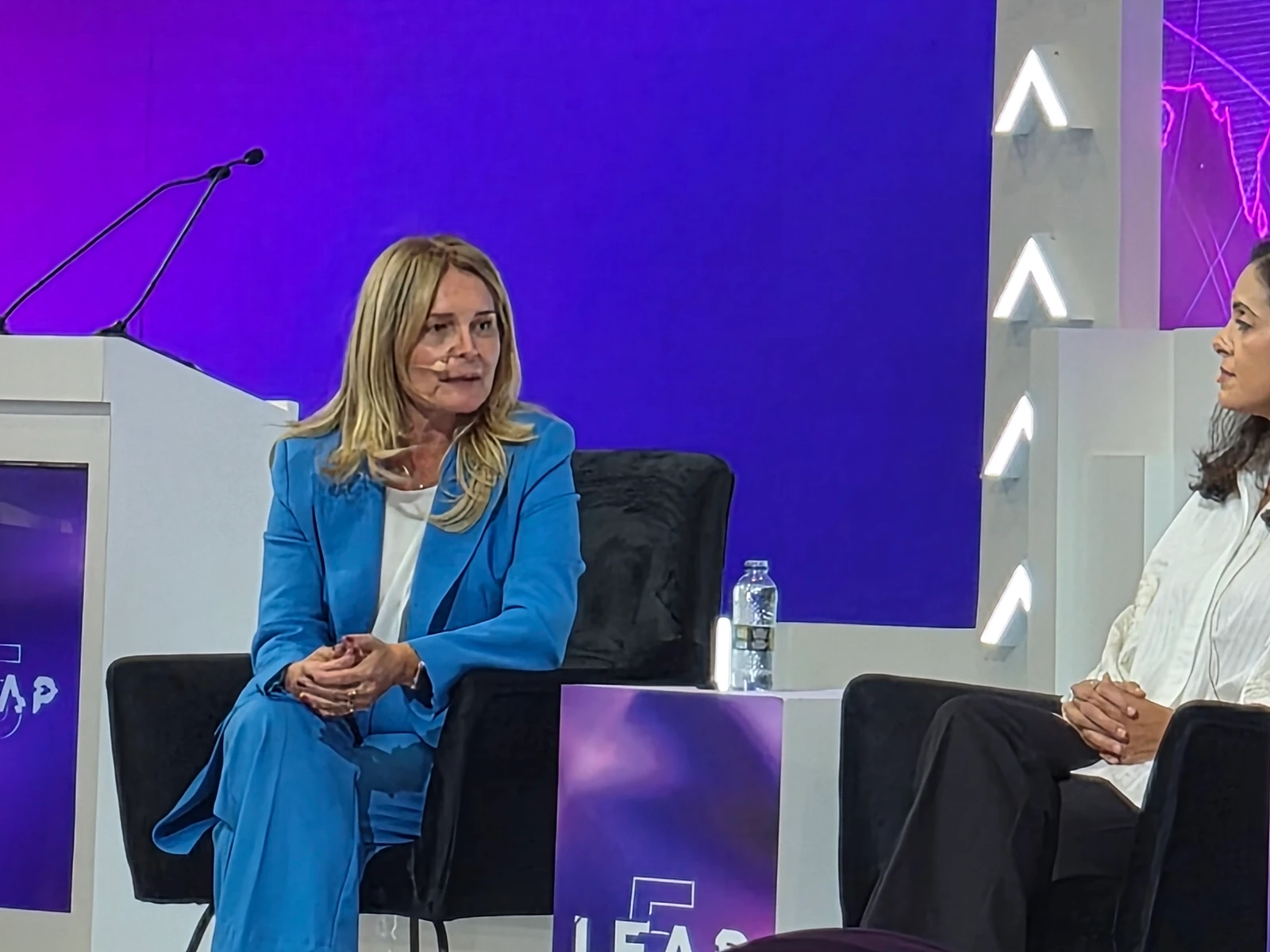
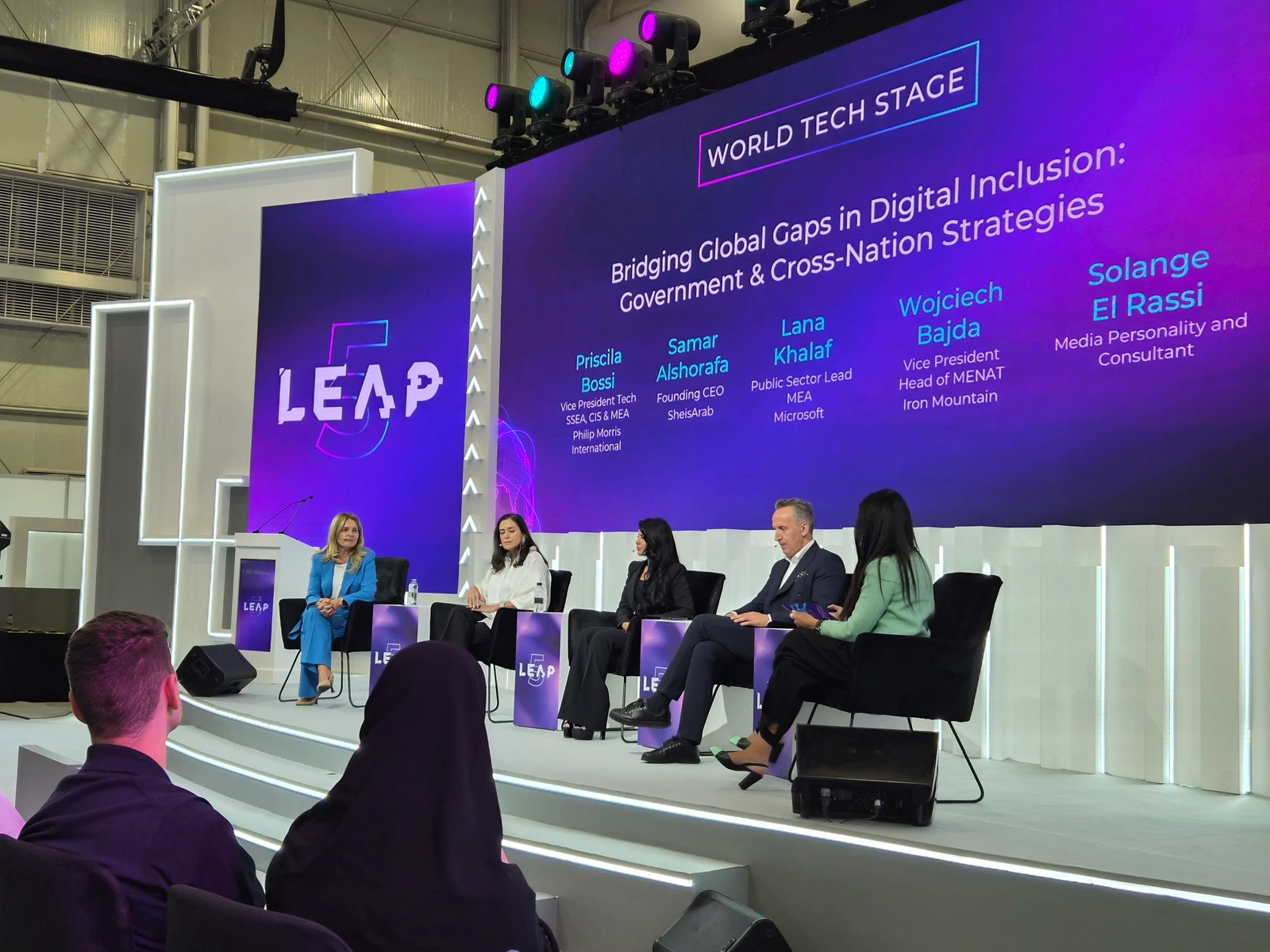
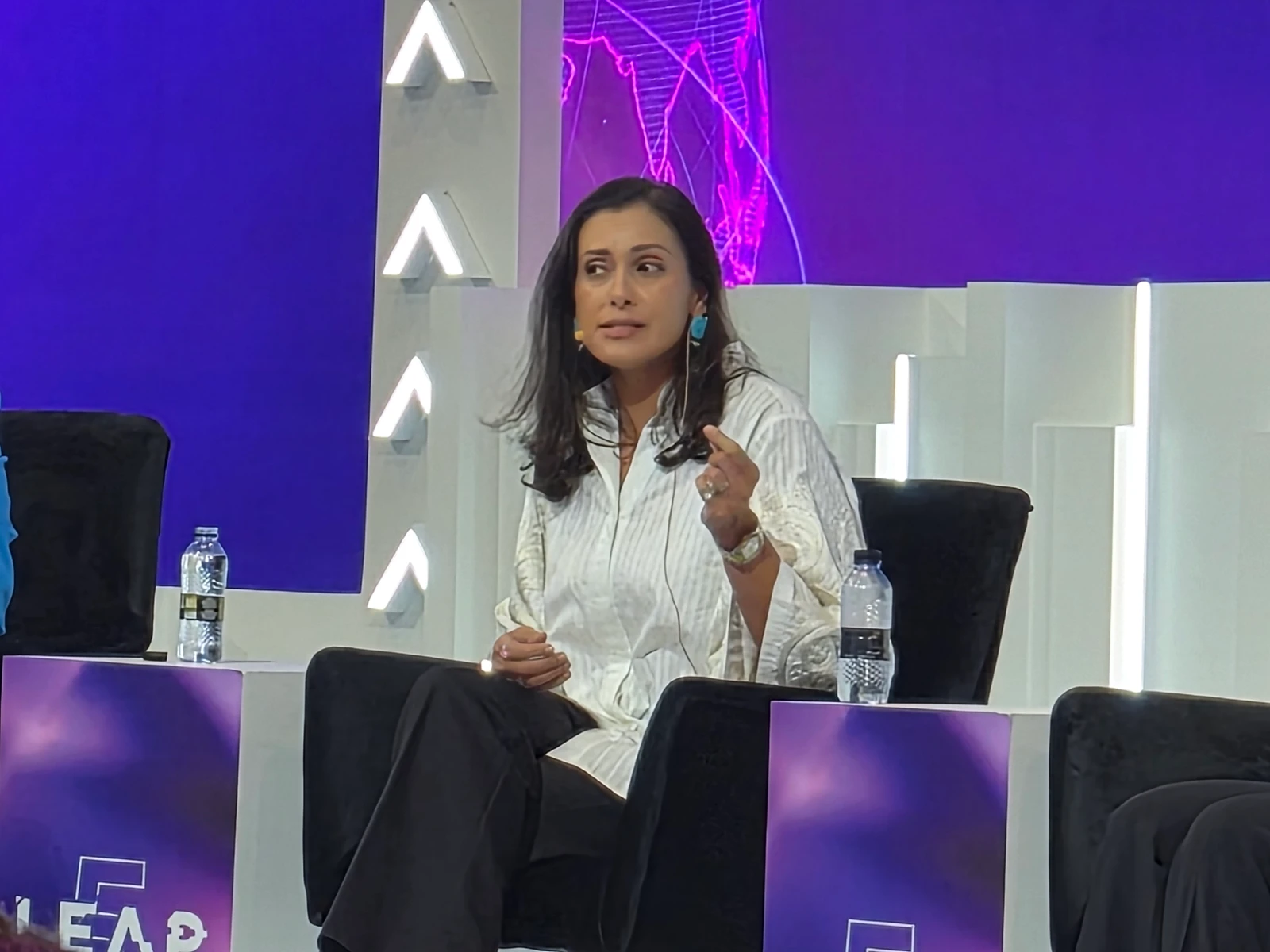
RIYADH: Governments, technology companies and social-sector organizations must work together to ensure that the rapid expansion of artificial intelligence does not leave communities behind, speakers said during a panel discussion at LEAP Saudi Arabia 2026.
The session, titled “Bridging Global Gaps in Digital Inclusion: Government and Cross-Nation Strategies,” brought together technology and industry leaders on the World Tech Stage to discuss accessibility, AI infrastructure, skills development and the need for policies that can work across borders.
The discussion was moderated by media personality Solange El Rassi and featured Samar Al-Shorfa, founding CEO of She is Arab; Priscila Bossi, vice president of technology for SSEA, CIS and MEA at Philip Morris International; Wojciech Bajda, vice president and head of MENAR at Iron Mountain; and Lana Khalaf, public sector lead for MEA at Microsoft.
Al-Shorfa highlighted the importance of public-private partnerships and collaboration with organizations that have direct connections with underserved communities.
“We should focus on leveraging the public-private partnerships and partnerships with the social sector because, again, they are the ones that can reach the most communities,” she said.
She added that digital inclusion strategies must be adapted to local circumstances rather than applying a single model across different countries.
Bajda said countries undergoing rapid digital transformation have an opportunity to avoid the technological challenges created by decades of fragmented development elsewhere.
“This is quite a fascinating advantage because they don’t need to repeat the same mistakes that other countries did,” he said.
“If we look at countries that have been digitizing gradually over the last 20 or 30 years, what happened is they accumulated a huge amount of different platforms, solutions and standards. It’s a bit of technical debt.”
He said countries should adopt technology in ways that reflect their local cultures, regulations and conditions, adding that Saudi Arabia’s investment in infrastructure, partnerships and skills development was helping drive the Kingdom’s digital transformation.
“We should adapt what is important. We should consider the local culture, local regulations and local conditions,” Bajda said.
Bossi said accessibility should be considered from the beginning of the technology development process rather than being added after a product or platform is completed.
“When we define a platform or new technology, it needs to be accessible to everybody,” she said, adding that accessibility should become a core element of design, similar to the growing importance of privacy and cybersecurity.
Looking ahead five years, Bossi said she hoped technology would become more accessible and affordable while helping young people enter new areas of employment.
“I don’t believe that young people and young talents will not be able to access their first job because AI will take the jobs,” she said. “They are going to be empowered by AI and they will have access to different jobs.”
She also called for greater diversity in business and entrepreneurship and for AI to be deployed responsibly.
“We are putting humans in the loop; we are having critical thinking, responsible AI and responsible decisions,” she said.
Al-Shorfa pointed to international examples of successful digital transformation, including Saudi Arabia’s Vision 2030 and the role of unified digital identity systems in expanding access to services.
She also cited India’s digital identity infrastructure as an example of how technology can support financial inclusion and improve access to public and private services.
Khalaf said digital inclusion requires governments to focus on several interconnected areas, including digital identity, cross-border recognition of skills and certifications, AI talent, and policies and regulations.
“People need to understand your identity across borders,” she said, adding that greater cooperation could allow qualifications and digital systems to be more easily recognized internationally.
Khalaf also emphasized the importance of reskilling and upskilling as AI transforms economies.
“Skilling is a major thing, and especially reskilling and upskilling is very, very critical because people need to use technology,” she said.
She said AI offers an opportunity to make digital services more inclusive, including by allowing people to access government services in their own languages and enabling more personalized approaches to education.
“Electricity has really powered the world, but may not have included everyone,” Khalaf said. “We have an opportunity today with AI to really include everybody.”
The panel concluded that the success of digital transformation will depend not only on expanding infrastructure and access to new technologies, but also on ensuring that people have the skills, policies and systems needed to benefit from them.
Bajda added that the quality and accessibility of data will also be critical as AI becomes more widely adopted, saying that AI systems are only as effective as the information on which they are built.
LEAP 2026 panel explores cross-border strategies for digital inclusion