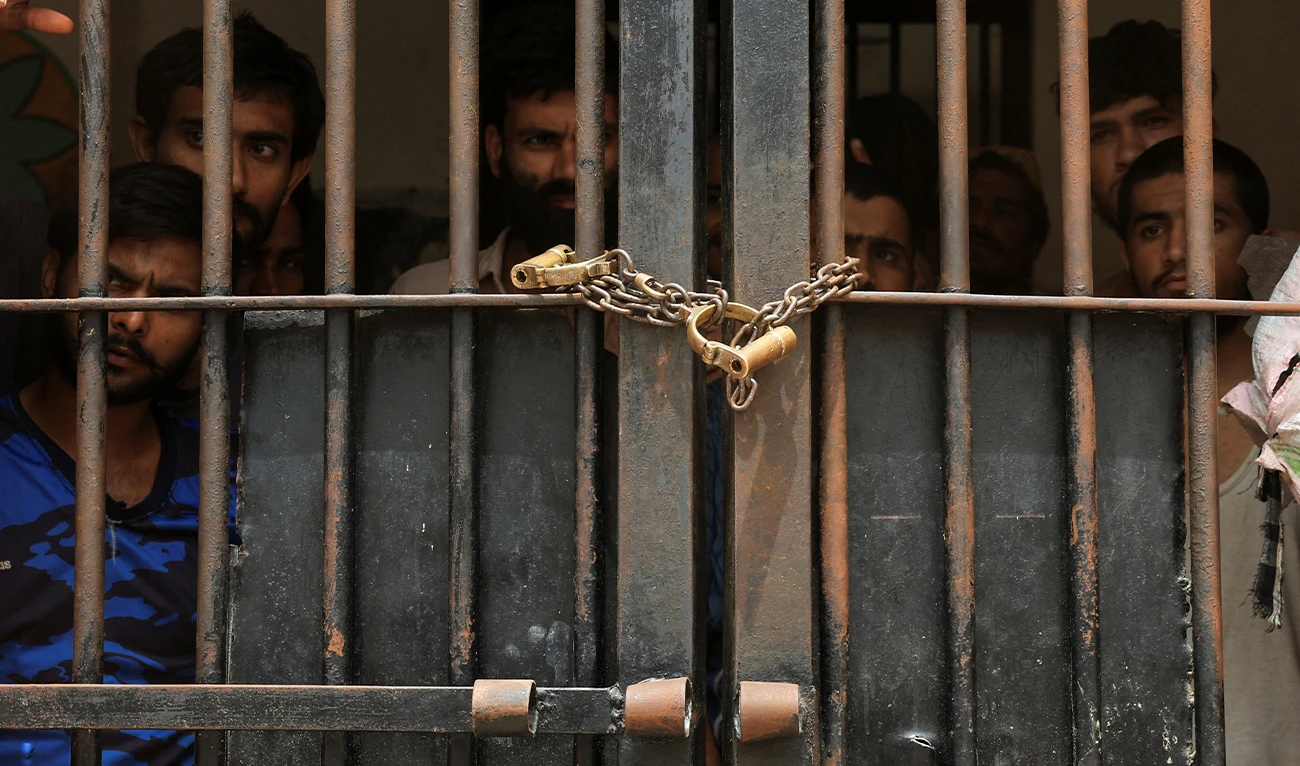
- WB this week said MENAAP was only region in world in which ‘poverty remains above pre-pandemic levels, continues to rise’
- It said Pakistan accounted for ‘nearly half of the region’s extreme poor,’ leading to comparisons with neighboring economies
ISLAMABAD: The World Bank’s decision to place Pakistan in its Middle East, North Africa, Afghanistan and Pakistan (MENAAP) reporting region is an administrative and statistical reclassification that does not affect the country’s income status or geographical identity, a Pakistani official said on Thursday.
In its Economic Outlook this week, the Washington-based lending agency said MENAAP was the only region in the world in which “poverty remains above pre-pandemic levels and continues to rise,” with Pakistan accounting for “nearly half of the region’s extreme poor,” leading to comparisons with neighboring economies.
Khurram Schehzad, an adviser to the Pakistani finance minister, said regional classifications were just analytical tools that should not be confused with geography, economic development or national identity.
He said that comparisons of poverty between Pakistan, India and other countries should consequently rely on country-level data, the same poverty threshold and the same reference year, rather than statistics taken from changing regional groupings.
“The World Bank’s decision to place Pakistan in the Middle East, North Africa, Afghanistan and Pakistan (MENAAP) reporting region is an administrative and statistical reclassification,” he said on X.
“It does not alter Pakistan’s geographical identity as a South Asian country and it does not change Pakistan’s income classification.”
He noted that regional statistics change whenever the composition of a statistical group changes.
“Once Pakistan’s large population is added to MENAAP, indicators relating to poverty, population and per-capita income will naturally look different from those of the traditional Middle East and North Africa region,” he said.
Regional averages are usually population-weighted. A large country therefore pulls the regional figure strongly toward its own values, according to the official.
Schehzad argued that Pakistan’s population was large relative to most MENA economies, so its inclusion would noticeably shift any regional average it joined.
In its report, the World Bank estimated that Pakistan’s gross domestic product (GDP) growth would increase to 3.8 percent in Fiscal Year 2026-27 as services, manufacturing and livestock production remain resilient despite rising import costs.
Higher commodity and transport costs are expected to put pressure on inflation and external balances, but continued strength in domestic activity is expected to outweigh these pressures, it added.
“The central point is simple: a change in the statistical basket can change the regional picture without changing the economic reality on the ground,” Schehzad added.