- New report finds 82,988 inmates awaiting trial, exceeding country’s total authorized prison capacity
- Drug-related imprisonment rises sharply, while number of incarcerated women grows nearly 46 percent since 2024
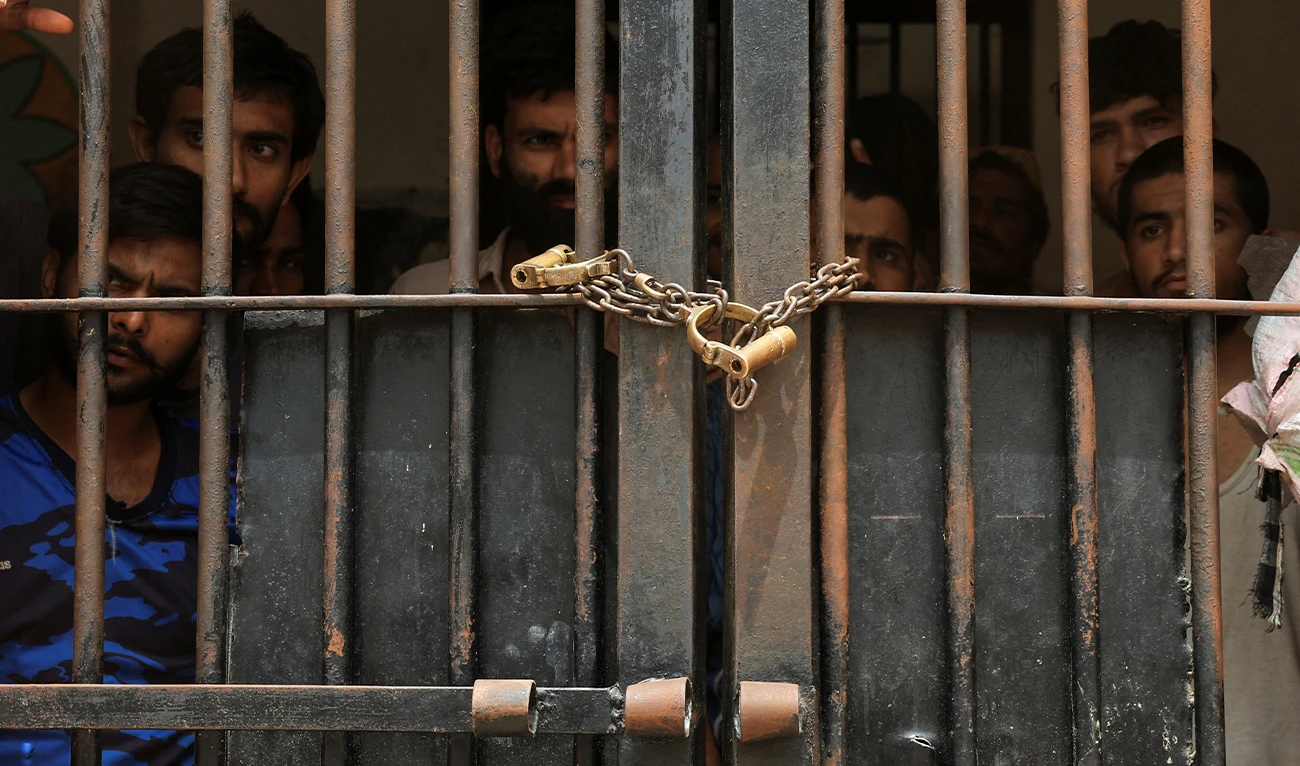
ISLAMABAD: Three out of every four prisoners in Pakistan are awaiting trial, with the country’s overcrowded jails holding more than 110,000 people against a capacity of fewer than 69,000, according to a report released on Thursday.
The findings highlight the strain that prolonged pretrial detention, delays in criminal proceedings and restrictions on access to bail place on Pakistan’s prison system, where the number of people awaiting trial alone exceeds the total space available for all inmates.
The Annual Prisons Data Report 2026, released by the National Commission for Human Rights (NCHR) and legal advocacy organization Justice Project Pakistan (JPP), found that prisons were operating at 160.6 percent of their authorized capacity, holding 110,513 inmates against space for approximately 68,832.
Of the total prison population, 82,988 people, or 75.09 percent, were awaiting trial, exceeding the country’s entire authorized prison capacity by 14,156.
“These are not just numbers. Behind every number is a person, a family and a life that has been disrupted,” Sarah Belal, executive director of Justice Project Pakistan, said in a statement.
“The purpose of this report is to give policymakers, criminal justice actors and donors the evidence they need to make better decisions, and to show that different approaches are possible.”
The report, published with European Union support, examines the impact of arrest and detention practices, access to bail, trial delays and the limited use of alternatives to imprisonment on Pakistan’s prison population.
It found that more than 28,000 people were incarcerated under the country’s Control of Narcotic Substances Act, accounting for more than a quarter of all prisoners. The number represented a 43.4 percent increase since 2023, underscoring the growing contribution of drug-related offenses to prison overcrowding.
The pressure was uneven across Pakistan’s four provinces. Punjab, the country’s most populous province, and Sindh continued to experience rising prison populations and severe overcrowding, while Khyber Pakhtunkhwa and Balochistan had reduced inmate numbers and remained within their overall authorized capacities.
The report identified greater use of probation, parole, diversion and other alternatives to imprisonment as contributing to the reductions in the latter two provinces.
Women and children were also disproportionately affected by aspects of the detention system. The number of women in prison had increased by 45.96 percent since 2024, while 86.2 percent of incarcerated children were awaiting trial.
In contrast, Pakistan’s death-row population had declined by 11.7 percent since 2024 to 3,220 prisoners.
NCHR Chairperson Rabiya Javeri Agha said the findings demonstrated both the seriousness of the prison crisis and the possibility of reform.
“The data is serious, but they also show that change is possible,” she said. “The task now is to turn these commitments into measurable reductions in unnecessary detention and improvements in conditions across Pakistan’s prisons.”
Jeroen Willems, head of partnerships at the EU Delegation to Pakistan, said the treatment of people in custody was an important measure of a country’s justice system.
“This report highlights serious challenges, but also shows that progress is possible,” he said.
The report calls for changes to bail and surety practices, measures to reduce court delays, expanded alternatives to incarceration and stronger prison oversight.
Its authors said the findings should guide practical reforms aimed at reducing unnecessary detention and improving conditions for prisoners, particularly those who have not been convicted of a crime.