- Pakistan has raised electricity prices several times since May to match rising generation costs amid a global energy crisis
- Traders to observe “shutter down” strike from Karachi to Khyber Pakhtunkhwa on August 17, strike could be extended
ISLAMABAD: Traders on Monday announced a nationwide strike against the imposition of sales tax on electricity bills, saying they would not pay the new bills.
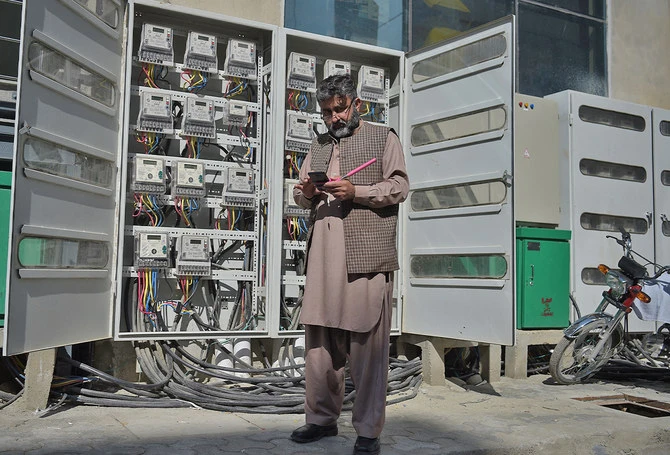
Pakistan has raised electricity prices several times since May to match rising generation costs amid a global energy crisis and a heatwave, even as the country grapples with its highest inflation in over a decade.
Inflation in Pakistan soared to 24.9% in July, the highest pace in 14 years, because of exponential growth in the prices of perishable food and transport groups, the Pakistan Bureau of Statistics (PBS) reported on Monday.
Speaking to the media, the president of the Markazi Tanzeem Tajiran Pakistan (MTTP), Muhammad Kashif Chaudhary, said taxes ranging from Rs3,000-20,000 had been added to electricity bills, in addition to commercial bills, without distinguishing between closed shops and zero-meter reading.
He said traders were already paying advance tax, fuel price adjustment and other taxes.
Chaudhry said if the tax on electricity bills was not withdrawn, traders would go on a complete “shutter down” strike from Karachi to Khyber Pakhtunkhwa on August 17, and the strike would be extended if demands were not accepted.
“The small businessmen of Pakistan cannot afford to pay the bills," Chaudhry told media. "We repeatedly requested the government to abolish this tax, but the finance minister did not talk to our representative before implementing this tax.”
Finance minister Miftah Ismail said on Twitter the government would work to make sure small traders were "completely satisfied" with a new tax law, through the following measures:
"A) Exempt shops with bills of less than 150 units from this tax. B) We will charge Rs 3000 even to those shopkeepers who are not registered with FBR. C) The tax paid will be full and final. D) No tax notice will be issued to shops nor will FBR officers visit their shops."
Pakistan is currently struggling to boost foreign exchange while the rupee has lost 20% of its value in 2022. Reserves have fallen to as low as $9.3 billion, hardly enough to pay for 45 days of imports.
Pakistan last month reached a staff-level agreement with the IMF for $1.17 billion in critical funding under a resumed bailout package.