- Sharif says proposed framework would promote responsible, inclusive AI development across regional bloc
- PM also raises water dispute, Afghanistan militancy, Iran peace efforts and Makkah defense pact
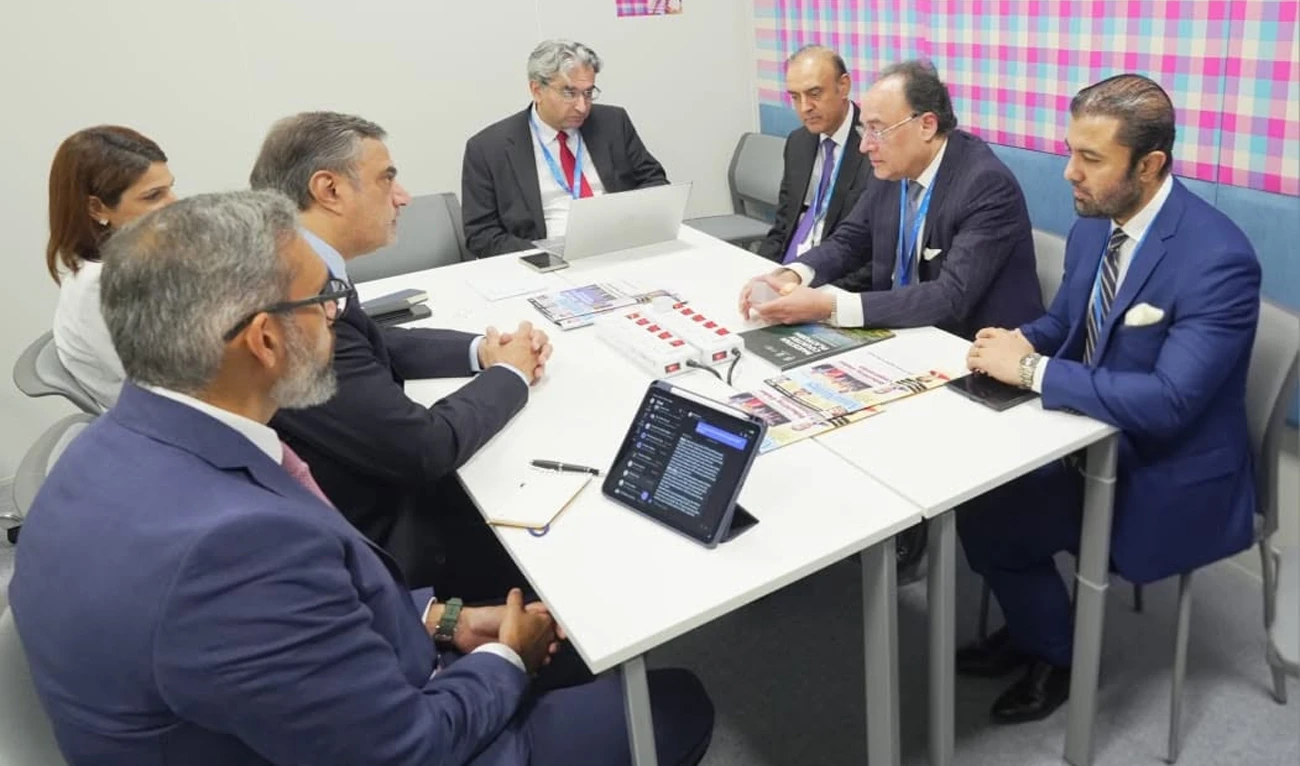
ISLAMABAD: Pakistan on Tuesday proposed establishing sovereign artificial intelligence infrastructure and a governance framework for the Shanghai Cooperation Organization, as Islamabad assumed the rotating chairmanship of the Eurasian political and security bloc for 2026-27.
Prime Minister Shehbaz Sharif announced the proposal at an SCO summit in Bishkek as part of an action plan that will prioritize information technology and AI, energy development, poverty reduction, disaster management, health, culture and sports during Pakistan’s chairmanship.
The initiative comes as the SCO, whose region Sharif said encompasses more than 3 billion people, grapples with rapid technological change alongside geopolitical tensions, energy disruptions and the need for greater regional connectivity.
“In IT and AI, we propose to establish an SCO sovereign AI infrastructure and governance framework to promote responsible and inclusive AI development and also ensure that no member state is left behind,” Sharif said.
The prime minister did not specify what the proposed infrastructure would comprise, how it would be financed or governed, or when Pakistan would seek agreement from other SCO members.
Sharif said Pakistan would pursue its chairmanship under the theme “Turning Vision into Action, Connectivity, Innovation and Shared Prosperity,” while advocating stronger transport, energy and trade links across the region.
“Today, connectivity is no longer a choice. It is a strategic imperative,” he said.
“The recent [Middle East] crisis has also proven that diversified transport networks, secure energy corridors, and resilient supply chains are indispensable to our collective security.”
Sharif said the multi-billion-dollar China-Pakistan Economic Corridor would continue to serve as a gateway linking regional economies to the Arabian Sea, while Islamabad would support trans-regional railway, road and energy projects. He also called the establishment of an SCO Development Bank a “critical step” toward implementing the bloc’s development strategy through 2035.
REGIONAL TENSIONS
Sharif used his address to raise a series of regional security disputes, including Pakistan’s water tensions with India, militancy emanating from Afghanistan and the recent US-Iran conflict.
His comments on water came a day after a Hague-based Court of Arbitration ruled that the 1960 Indus Waters Treaty remained in force and India was bound by its obligations under it, while imposing interim restrictions on construction at India’s Ratle hydroelectric project.
India placed the World Bank-brokered treaty in abeyance in April 2025 following an attack on tourists in Indian-administered Kashmir that killed 26 people. New Delhi blamed Pakistan for supporting the attackers, an allegation Islamabad denies. India has rejected the arbitration ruling and disputes the tribunal’s jurisdiction.
Without naming India, Sharif told SCO leaders that shared water resources could not be used for political leverage.
“Water is the lifeblood of our region,” he said. “It sustains millions of lives, nourishes our lands, and secures the very future of our coming generations. It must never be weaponized.”
“They must be honored unconditionally, in both letter and spirit,” Sharif said of international treaties governing shared waters.
The prime minister also addressed tensions with Afghanistan, saying Pakistan wanted a peaceful and prosperous neighbor but warning that regional stability would remain elusive while militants continued to operate from Afghan soil.
Sharif also cited Pakistan’s mediation efforts in the US-Iran conflict, saying they had culminated in the Islamabad Memorandum of Understanding, which he described as the most viable route toward lasting regional peace.
He sought to reassure SCO leaders about the recently signed trilateral Makkah Joint Defense Agreement between Pakistan, Saudi Arabia and Türkiye.
“It is fundamentally defensive in nature and is neither directed against any state nor intended to create any confrontation or division whatsoever,” Sharif said.