KARACHI: The roar of speeding vehicles mixes with the soft sounds of nursery rhymes as impoverished street children learn on the footpath of an affluent seaside area of Karachi thanks to the help of a unique school project.
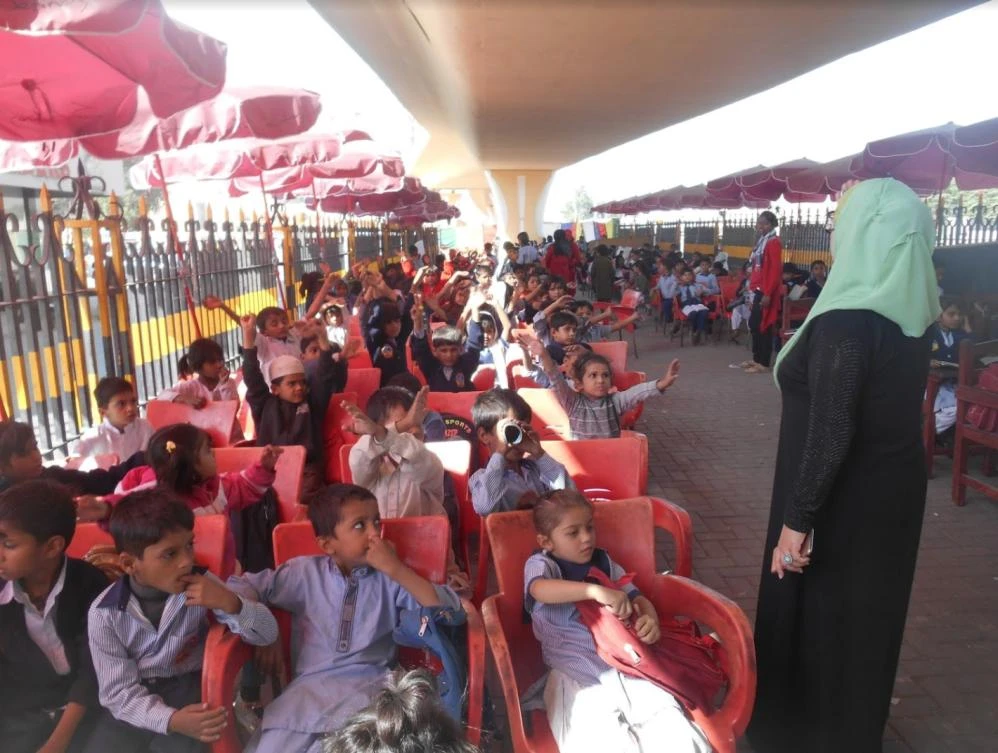
Fifth grader Dilbar is a student of this Footpath School, which convenes under an overhead bridge at Clifton, close to the shrine of Sufi saint Abdullah Shah Ghazi.
Dilbar, 13, who is a resident of Shireen Jinnah Colony, sells plastic bags at the shrine in the evenings as his poor family cannot afford to send him to a regular school.
Non-government organization Ocean Welfare has defied the attentions of the mafia to set up seven such schools in various parts of the port city, providing up to 2,000 students with free education and supplies. They help parents who “could not even think about educating their children,” Syeda Anfas Ali Shah Zaidi, president of Ocean Welfare, told Arab News.
She says she came up with the idea after the 2014 Peshawar school massacre, in which more than 140 people, mostly children, were killed. “I thought about the street children who never got the chance to go to school and [were] more likely fall into the hands of terrorists, who use them,” Zaidi said.
As most of the pupils are from poor families, the Footpath School is not a strange place for them.
“We did not wait for them to come to us, but we went to their doorsteps to convince their families,” Zaidi explained.
The school provides books and stationery and also gives each student Rs50 ($0.45) per day, juice and meals. “If we did not provide them material for studies, they would never come because their parents are unable to afford,” Zaidi said.
Asked how the schools, which provide education up to grade five, were funded, Zaidi said they are run with their own means.
“Sometimes we run out of funds but Allah helps us. To keep the mission alive we have sold our personal belongings,” she said.
As Zaidi was sharing details of her mission, four armed guards kept a vigil at the school site.
“We are struggling with the mafia, who are against the education of these children and wants to see them on roads again with begging bowls,” she said.
Teacher Saima Gul told Arab News the children were “initially unable to even hold pencils, but now they have excelled in reading and writing.”
Dr. Tausif Ahmed Khan, a senior academic, told Arab News it is important for the government to assist such projects.
“We as society need to encourage efforts to teach street and other needy children,” said Dr. Tausif.
Advisers have been advocating that Pakistan needs to increase its education budget by 4 percent of its Gross Domestic Product (GDP).
Fifth grader Dilbar is a student of this Footpath School, which convenes under an overhead bridge at Clifton, close to the shrine of Sufi saint Abdullah Shah Ghazi.
Dilbar, 13, who is a resident of Shireen Jinnah Colony, sells plastic bags at the shrine in the evenings as his poor family cannot afford to send him to a regular school.
Non-government organization Ocean Welfare has defied the attentions of the mafia to set up seven such schools in various parts of the port city, providing up to 2,000 students with free education and supplies. They help parents who “could not even think about educating their children,” Syeda Anfas Ali Shah Zaidi, president of Ocean Welfare, told Arab News.
She says she came up with the idea after the 2014 Peshawar school massacre, in which more than 140 people, mostly children, were killed. “I thought about the street children who never got the chance to go to school and [were] more likely fall into the hands of terrorists, who use them,” Zaidi said.
As most of the pupils are from poor families, the Footpath School is not a strange place for them.
“We did not wait for them to come to us, but we went to their doorsteps to convince their families,” Zaidi explained.
The school provides books and stationery and also gives each student Rs50 ($0.45) per day, juice and meals. “If we did not provide them material for studies, they would never come because their parents are unable to afford,” Zaidi said.
Asked how the schools, which provide education up to grade five, were funded, Zaidi said they are run with their own means.
“Sometimes we run out of funds but Allah helps us. To keep the mission alive we have sold our personal belongings,” she said.
As Zaidi was sharing details of her mission, four armed guards kept a vigil at the school site.
“We are struggling with the mafia, who are against the education of these children and wants to see them on roads again with begging bowls,” she said.
Teacher Saima Gul told Arab News the children were “initially unable to even hold pencils, but now they have excelled in reading and writing.”
Dr. Tausif Ahmed Khan, a senior academic, told Arab News it is important for the government to assist such projects.
“We as society need to encourage efforts to teach street and other needy children,” said Dr. Tausif.
Advisers have been advocating that Pakistan needs to increase its education budget by 4 percent of its Gross Domestic Product (GDP).