- Says over $700 million program will benefit 20 million families, inflation caused by rising prices of commodities globally
- Pakistan’s annual inflation rate rose to 9.2% in October, up from 9% in September, government announced this week
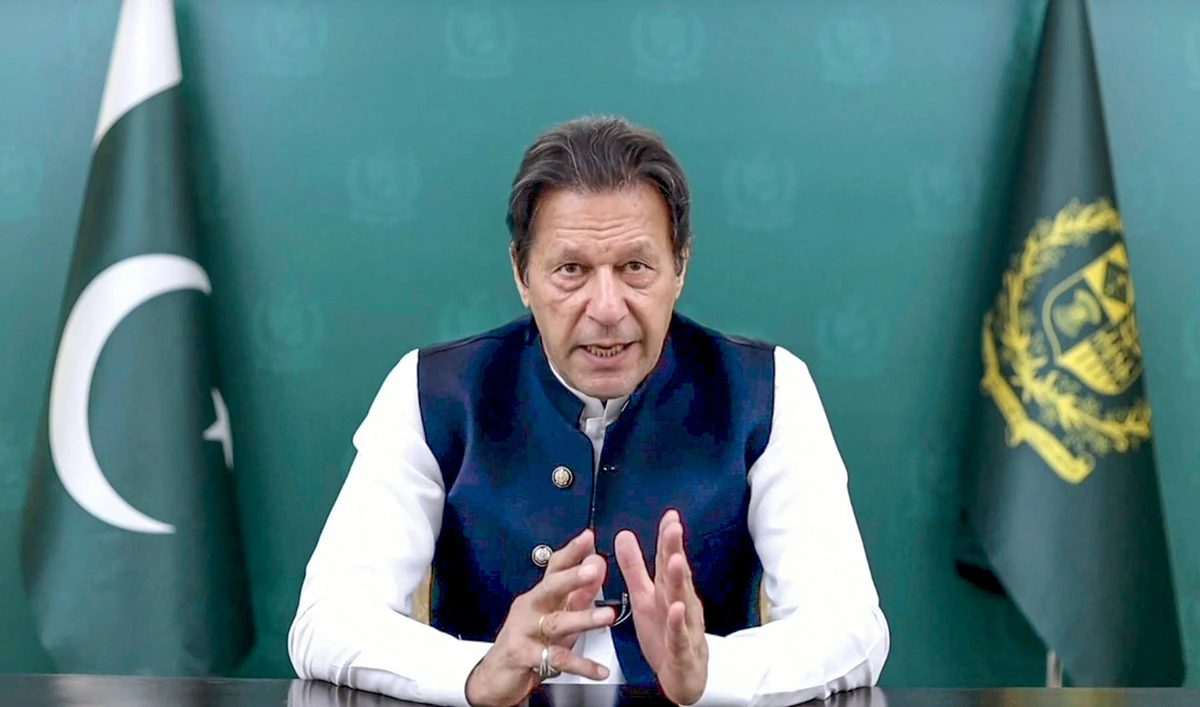
ISLAMABAD: Prime Minister Imran Khan on Wednesday announced what he called the “biggest welfare programme in Pakistan's history,” a Rs120 billion, or over $700 million, package to help the poor amid rising inflation.
The PM’s announcement comes as the statistics bureau announced that Pakistan’s annual inflation rate rose to 9.2% in October, as compared to an increase of 9% in the previous month and 8.9% in October 2020.
On Monday, Khan directed relevant authorities to take necessary measures to bring down the prices of essential commodities. The government says it is facing inflationary pressure due to the rising prices of commodities in the international market, including petroleum products.
"We are offering a Rs120 billion subsidy programme to benefit 20 million families to enable them to buy essential commodities ... during the next six months,” the PM said in a televised address.
The package will offer citizens a 30% discount on per unit purchases of three basic edible items: ghee, wheat, and pulses.
The PM said 130 million people nationwide would be able to avail the program, which was approved by cabinet yesterday, Tuesday.
"What can we do if inflation is being driven because of global factors?" the PM said, citing rising oil and gas prices worldwide and saying due to factors not in his government’s hands, petrol prices would need to be increased further.
Khan quoted rising inflation figures in Europe and the United States, and said oil prices had risen by 100 percent in the last 3-4 months internationally, while they had increased by 33 percent in Pakistan.
"When you say petrol is expensive, it is the cheapest in Pakistan, but we will have to increase the price because otherwise our deficit will increase and we will be further burdened by debt," the PM said.
Khan also thanked allies China and Saudi Arabia for always financially assisting Pakistan.
Pakistan's plunging currency market has bounced back since last week when Saudi Arabia announced a support package of $4.2 billion: $3 billion to support foreign reserves and $1.2 billion financing of the oil derivatives trade during the year.
The PM also spoke about Pakistan’s success in fighting the coronavirus pandemic. The country of 220 million people has recorded less than 30,000 deaths from COVID-19 since last February and a total of 1,274,578 infections. More than 106 million people have received at least one dose of a coronavirus vaccine in Pakistan since the government launched its inoculation drive in February this year.
"We had [allowed] construction industry to operate [during the pandemic] ... we tried to save our exports because if they had stopped, then the dollar would have gone up against the rupee," he said, adding that rice production had gone up by 13.6%, corn 8%, sugarcane 22% and wheat 8%.
"Our policies prevented the economy from collapsing," Khan added.