- Weekly inflation rate has been declining since Nov. 26, mainly due to seasonal price impacts and improvement in supply chains
- Pakistan’s monthly inflation rate measured by Consumer Price Index for November was 8.3 percent, as compared with 8.9 percent in October
KARACHI: Pakistan’s weekly inflation continued to decline for a fourth consecutive week, with Sensitive Price Indicator (SPI) dropping by 0.22 percent during the week that ended on Dec. 17, Pakistan Bureau of Statistics (PBS) data shows.
Pakistan’s monthly inflation rate measured by Consumer Price Index (CPI) for November 2020 was 8.3 percent, as compared with 8.9 percent in October 2020 and 12.7 percent in November 2019. The State Bank of Pakistan expects the inflation rate for financial year 2021 to fall within the range of 7-9 percent.
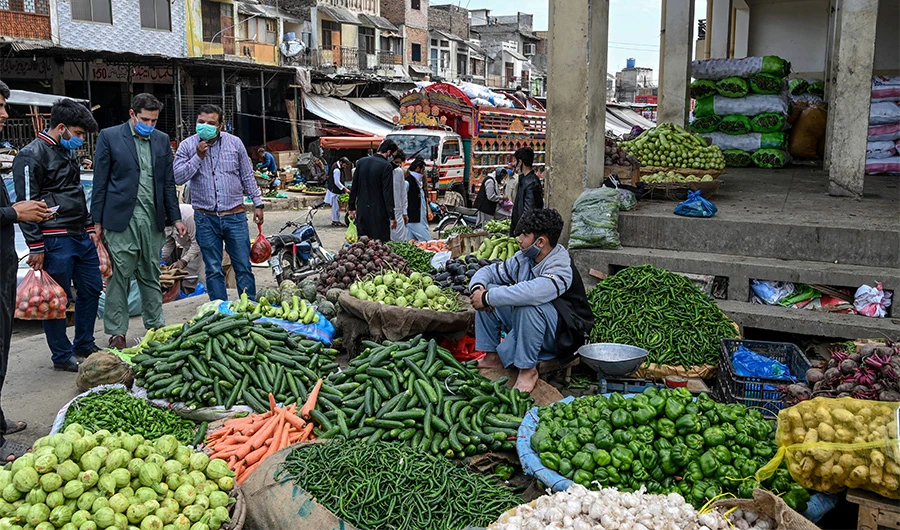
The weekly inflation rate has been declining since Nov. 26, mainly due to seasonal price impacts and improvement in supply chains of essential commodities.
“This is seasonal impact because during the winter the prices of perishable commodities decline including that of tomatoes and potatoes as prices of these commodities remain volatile and impact overall percentage,” Samiullah Tariq, research director at Pakistan Kuwait Investment, told Arab News on Saturday.
“The supply chain of commodities has also improved due to import of wheat and sugar,” he said.
Pakistan has imported wheat worth $407.5 million and 253,405 metric tons of sugar worth $114.8 million during July-November, according to PBS.
The weekly inflation decline is mainly due to the falling prices of food items such as tomatoes, potatoes, onions, poultry, wheat flour and pulses.
Despite the recent inflation rate drop, yearly comparison shows an increase of 8.24 percent in SPI. Compared with the same period last year, the prices of chili powder, for example, increased by over 86.31 percent, poultry by 62 percent, and eggs by 60 percent.
SPI is computed on a weekly basis to assess price movements of essential commodities at shorter time intervals to review the price situation in the country. The indicator comprises the prices of 51 essential items collected from 50 markets in 17 cities of the country.
Farmers say the soaring prices of poultry and eggs were due to a rise in the price of feed such as maize and soybean, which are mostly imported.
“Poultry farmers were facing losses due to higher input costs for last two years,” Abdul Maroof Siddiqui, executive committee member of the Pakistan Poultry Association, told Arab News.
“Circumstances drove many poultry farmers out of the business due to which the shortage of products is pushing prices up. Out of around 25,000 poultry farmers around 25 percent have closed down,” he said.